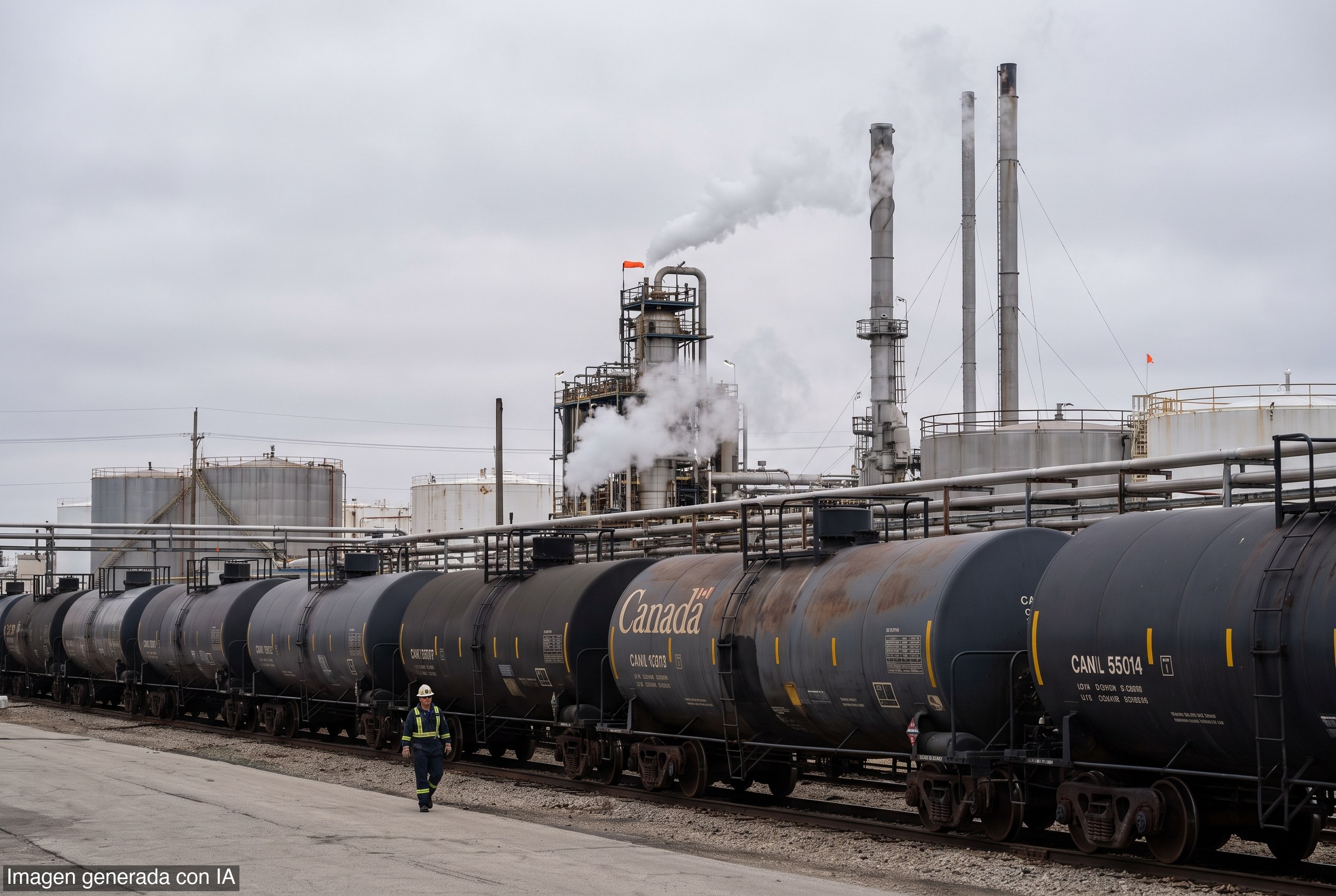
The trade deficit with Canada that has upset Trump is tied in part to crude oil the U.S. buys at a discount for the Midwest. 'It’s the only oil they can use,' the report said of those refineries, underscoring that the flow is not a luxury but a supply chain requirement.
Canada remains a major U.S. trading partner. No country on Earth buys as much from the United States as Canada does, and for American farmers it is second only to Mexico as an export market. A North American trade pact negotiated by Trump in his first term means most American products enter Canada duty-free.
Still, the relationship has deteriorated. Trump said Saturday that America has been 'ripped off for 50 years by Canada,' and he has moved against Canadian goods with tariffs on $20 billion worth of products. Canada retaliated with tariffs of its own, and Trump then said he would ban imports of whey, most alcoholic beverages, motorcycles and mopeds from Canada, while later saying some items such as toilet paper, bedsheets and fishing rods would be removed from tariff targets.
The trade numbers matter, but so do the incentives behind them. Canada’s trade equals 64% of its economic output, the World Bank says, versus 25% for America. The Heritage Foundation ranked Canada No. 14 on its Index of Economic Freedom, while the United States landed at No. 22. The Fraser Institute ranked Canada No. 11 on its Economic Freedom of the World report.
Yet Canada also protects several domestic industries. The report cites decades of U.S. complaints about subsidies for Canadian softwood lumber producers. It also describes Canada’s dairy system as a complex shield with tariffs of more than 200% on most dairy products and nearly 300% on some items, such as butter, after quotas are exceeded.
That is the real tension here: open trade where it helps, protection where politics intervenes, and a White House that is willing to turn a strategic relationship into a tariff fight. The market has already voted on where value flows. The question is whether Washington will let producers, refineries and consumers keep the benefit, or force them to pay for a political gesture.
For the taxpayer, the lesson is familiar. Capital rewards clear rules, not erratic punishment. When trade policy starts treating necessary inputs like bargaining chips, the bill usually lands on producers first and consumers next.