Working Americans are taking home the smallest share of economic output since the Bureau of Labor Statistics began tracking the metric in 1947. The labor share now stands at 52.8%, while corporate profits have surged alongside it.
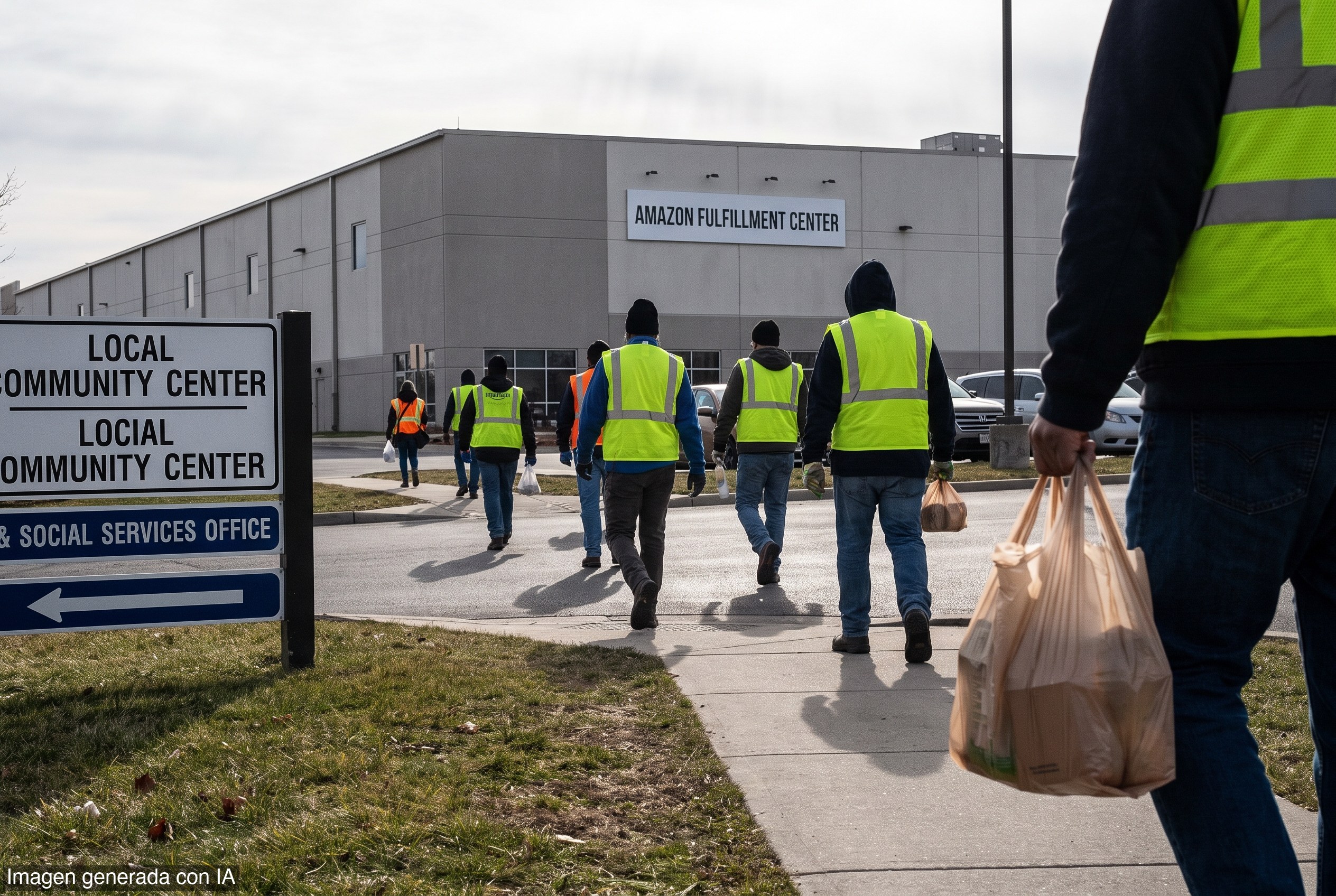
That gap is no abstraction. A recent Government Accountability Office report found that across 11 states sampled, Amazon has 12,346 workers on Supplemental Nutrition Assistance Program benefits and 11,338 relying on Medicaid. The report said that was nearly triple the number of Amazon employees needing federal assistance compared with 2020.
The same period delivered a very different result for Amazon’s bottom line. The company’s annual profits climbed from $11.6 billion to $77.7 billion, and 2025 revenue rose 12% year-over-year, from $638 billion to a record $717 billion.
Amazon spokesperson Rachael Lighty said Fortune’s conclusion from the GAO report is 'wrong' and said it is misleading to look at raw numbers rather than percentages. She said Amazon pay is among the best in the industry, that regular full-time employees have access to health care from their first day at 'only $5 per week with $5 copays for employee-only coverage,' and that 74% of regular full-time employees are enrolled in an Amazon health insurance plan, above the 65% private-sector take-up rate for full-time workers.
The issue is bigger than one company. Fortune reported that Walmart and FedEx saw similar increases in the number of workers taking federal assistance, as did rideshare and delivery companies. Kathryn Larin, director for education, workforce, and income security issues at GAO, said the data show Americans using safety net programs are overwhelmingly in the workforce, with most working full time.
The SNAP income threshold is about 130% of the poverty line, according to Larin. She said the analysis points to 'the large number of people who have very low incomes and continue to have very low income,' adding that these are families that are 'really barely able to make ends meet, and yet they are working, and they are working a lot.'
Diane Swonk, chief economist and managing director at KPMG, warned about the hidden consequences of a shrinking labor share, saying the economy can look stable on paper while most Americans face an affordability crisis. KPMG found in February that since 1982, corporate profits as a share of U.S. GDP rose from 8% to 15.85%, while employee compensation fell from 66.6% to 61.9%.
Anna Stansbury of MIT Sloan said the trend has been about 50 years in the making. She pointed to fewer workers in unions — 20.1% in 1983 versus 10.0% in 2025 — and to the fissuring of the workplace, where companies increasingly rely on gig workers and subcontractors instead of direct employees.
For taxpayers, this is the kind of economy that quietly shifts the bill from payrolls to public assistance. For free enterprise, it is a warning that record revenue does not automatically translate into broad-based prosperity.
Capital rewards clear rules. When labor share keeps falling and federal aid fills the gap, the market may be efficient for shareholders, but it is not delivering the kind of wage growth that sustains a healthy middle class.