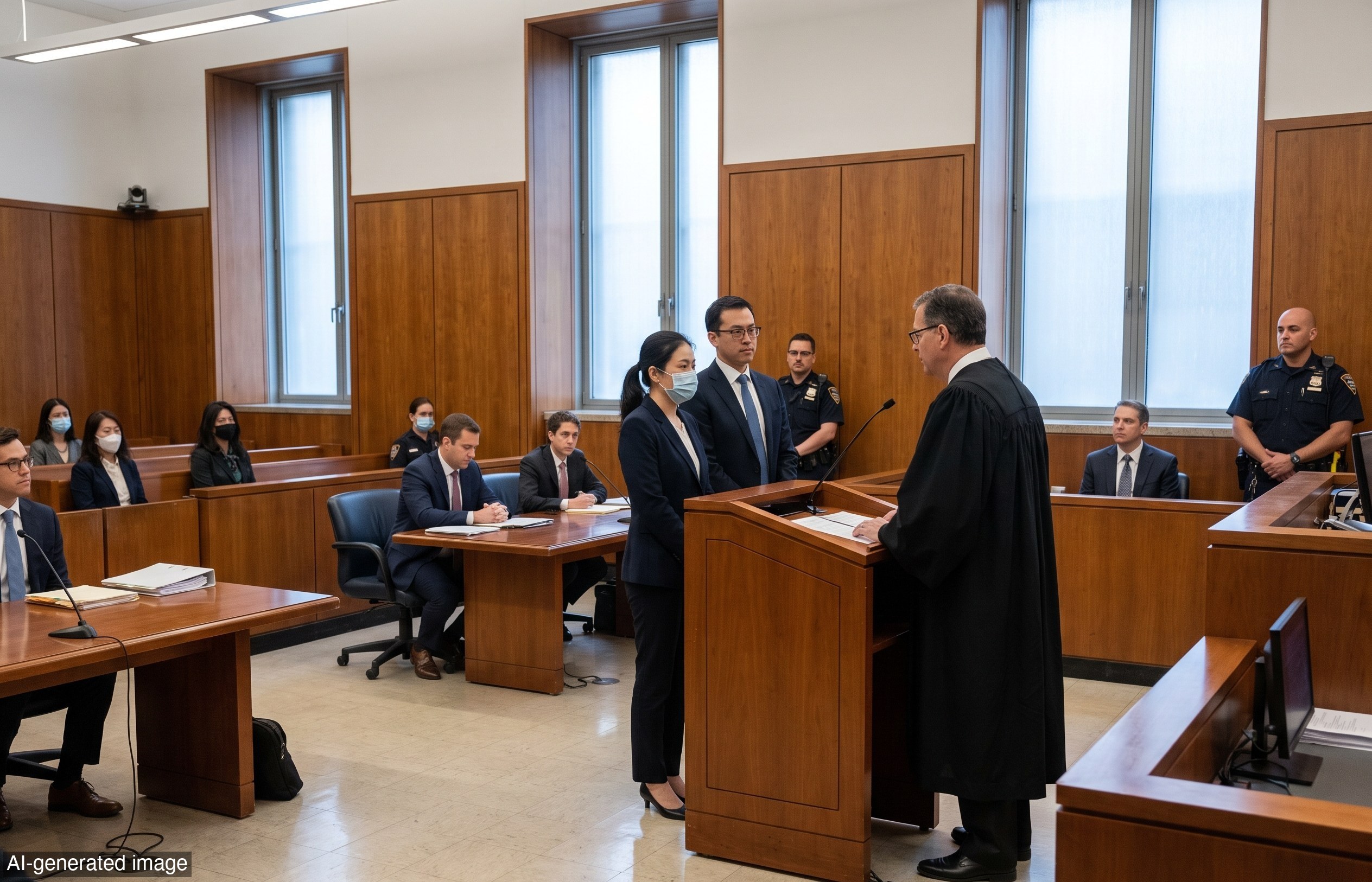
The numbers come first. A New Mexico jury imposed $375 million in civil penalties against Meta in March. On Aug. 6, First Judicial District Judge Bryan Biedscheid added a $567 million abatement fund on top of that figure, bringing the company's total New Mexico liability to $942 million. The court also ordered five years of operational reforms: age verification, overnight limits on push notifications, and mandatory time-use limits for users under 18.
One day before 29 state attorneys general were set to deliver opening statements in a separate federal trial in Oakland, California, New Mexico Attorney General Raúl Torrez told the Guardian he is working with state lawmakers to draft two new bills. The first would remove the cap on penalties for violating New Mexico's consumer protection laws. The second would extend protections beyond social media to cover artificial intelligence and chatbots.
'I think there's a lot of momentum coming out of our victory in court, and the idea is to build on that momentum,' Torrez told the Guardian.
Torrez also told the Guardian his office is pursuing a second, separate case against Meta over data privacy and civic harms, with a trial expected to begin in September. He added that he is preparing to file a lawsuit against an AI company over a chatbot he said children have formed emotional attachments to. The New Mexico Attorney General's office declined Fortune's request for comment.
Meta pushed back directly. 'We disagree with the ruling and will appeal,' a Meta spokesperson told Fortune. 'We work hard to keep people safe on our platforms and have been transparent about the challenges of identifying and removing bad actors and harmful content. We remain confident in our record of protecting teens online and will continue to defend ourselves against claims that misrepresent the facts.'
The federal trial in Oakland was brought by California, Colorado, Kentucky and New Jersey as part of the broader 29-state coalition that sued Meta in 2023. Congress, meanwhile, has moved in fits and starts on the Kids Online Safety Act and the App Store Accountability Act, while the Federal Trade Commission has pulled back from social media rulemaking. Reporting cited in Fortune notes that most Americans doubt existing age verification laws will actually work, and that Gen Alpha users have found ways around age checks that do exist.
Child safety advocates welcomed Torrez's push. 'States have been leading the charge to improve our children's safety and data privacy online,' Haley Hinkle, policy counsel at child advocacy group Fairplay, told Fortune. Julie Scelfo, founder and executive director of Mothers Against Media Addiction, told Fortune: 'No company should be allowed to profit from products that intentionally addict and harm our kids.'
The real question for free-enterprise readers is where liability ends and regulatory overreach begins. Removing penalty caps entirely — with no ceiling — hands state attorneys general a weapon that can be wielded against any digital product company, not just the bad actors. Capital rewards clear rules; open-ended exposure does the opposite. The market has already voted on Meta's legal risk: the company faces a $942 million judgment in one state, a federal multi-state trial, a second New Mexico case set for September, and now the prospect of legislation that could multiply penalties without limit. Whatever one thinks of Meta's conduct, the architecture being built here — state by state, bill by bill — is one that any technology company doing business in America will have to price into its cost of capital.