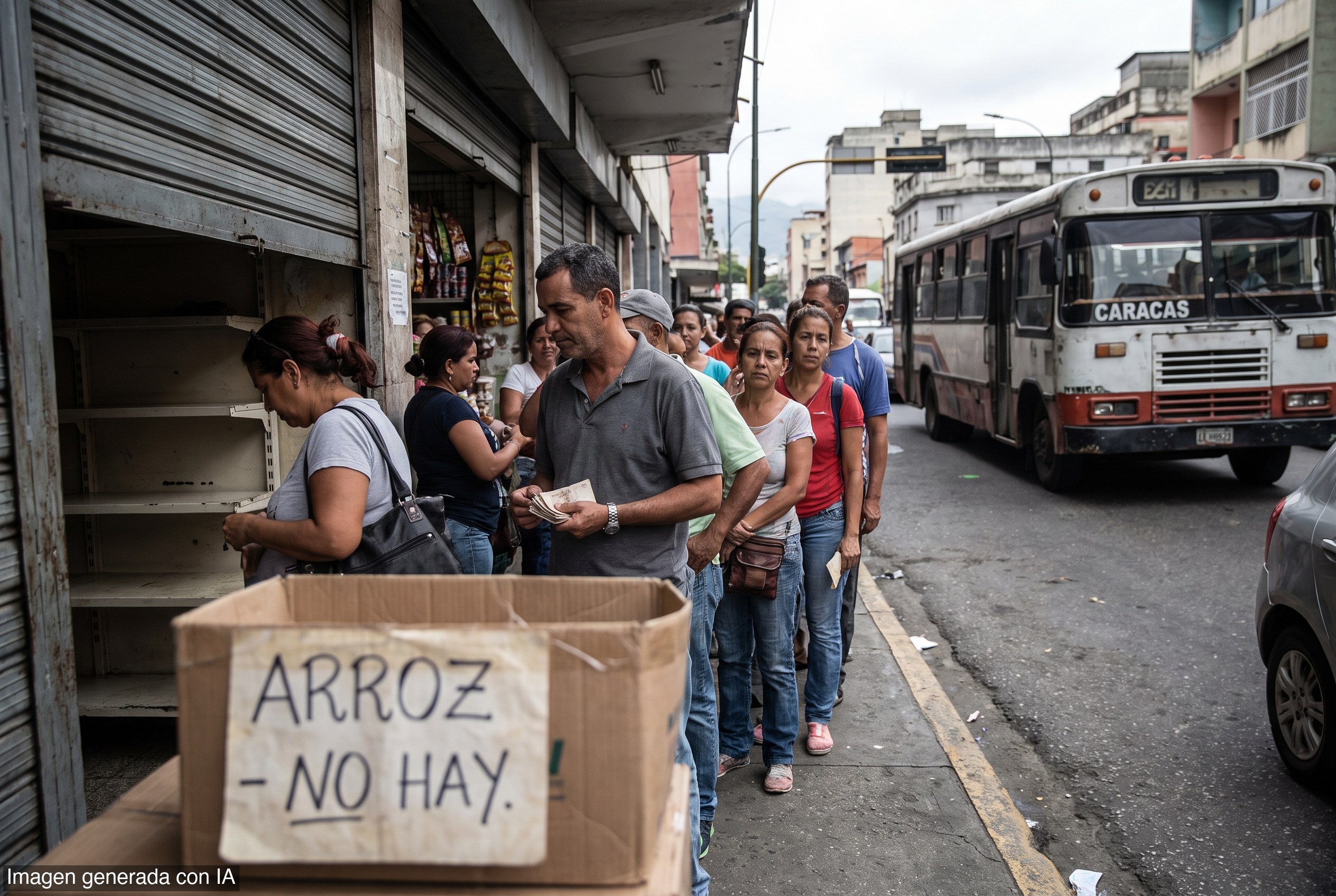
Venezuela's National Assembly is actively debating how to end what economists Steve H. Hanke and Emilio Ocampo call the world's highest inflation rate and retire the bolivar, which they describe as the world's worst-performing currency. One proposal gaining traction in Caracas: adopt the monetary framework Peru has used since 2002. Hanke and Ocampo, writing in Fortune, say that idea is not only wrong — it is dangerous.
Peru's Record Is Real
The appeal is understandable. After hyperinflations in 1988 and 1990 and an economic collapse, Peru introduced an inflation-targeting regime that has hit or come close to its 1%–3% target most of the time. Inflation has exceeded the upper bound of that range only four times in 24 years, and three of those four years fell during the COVID pandemic. The result: a relatively stable currency, resilience to major economic shocks, and sustained economic growth.
The Peruvian central bank (BCRP) achieves this through a combination of interest-rate policy, extensive foreign-exchange intervention, large precautionary reserves, sterilization, countercyclical reserve requirements, and macroprudential measures. Crucially, Peru operates what the authors call a de facto dual monetary system: the sol is legal tender, but Peruvians hold a constitutionally guaranteed right to hold and use U.S. dollars, and the banking system operates in both currencies. That currency competition, Hanke and Ocampo argue, provides an additional source of discipline for the central bank.
The Ingredients Are Not Exportable
The BCRP's success rests on a foundation Venezuela does not have. Velarde has led the BCRP since 2006 — an unusually long tenure across governments of very different political orientations — backed by a highly professional technical staff with considerable institutional memory. Peru's Ministry of Economy and Finance has maintained a parallel degree of technocratic continuity, running prudent fiscal policy and accumulating financial buffers during good years rather than spending windfalls.
Those institutions were forged in a specific political crucible. Alberto Fujimori came to power in 1990, imposed a severe fiscal and monetary adjustment — the 'Fujishock' — and, after his autogolpe of April 1992, dissolved Congress and suspended the constitutional order. The 1993 Constitution that followed established BCRP autonomy and restricted the central bank's ability to extend credit to the government. The current operational system was not put in place until 2002, after years of credibility-building.
'Countries like Venezuela, where populism reigns supreme, have not followed, and cannot follow rules that discipline monetary and fiscal affairs,' Hanke and Ocampo write.
The Deeper Lesson
The numbers come first, and the numbers tell a clear story: institutional credibility is not a policy switch that can be flipped. It is the accumulated product of decades of rule-following, technocratic insulation, and fiscal restraint — precisely the qualities that Venezuela's Bolivarian model has systematically destroyed.
For free-market readers, the Peruvian case is instructive in a different direction than its Venezuelan admirers intend. Peru's success was not built on central-bank activism alone; it was built on constitutional constraints that limited government's ability to raid the monetary system for short-term political gain. The lesson for Caracas — and for any economy tempted by monetary shortcuts — is that sound money requires sound institutions first. Importing a framework without importing the discipline that sustains it is not reform. It is theater.