The numbers come first.
Come September 8, some $20 billion worth of U.S. goods will face Canadian counter-tariffs of up to 50%, matching the duties Washington imposed on Canadian goods on August 22. The trigger: the U.S. declined to extend the U.S.-Mexico-Canada trade agreement in July. For a country that sent 65% of its goods and services exports to the United States in the first half of 2026 — down from roughly 75% in 2024 — the math is unforgiving.
The destination of choice for the rerouted capital is Asia, and the energy sector is already leading the charge.
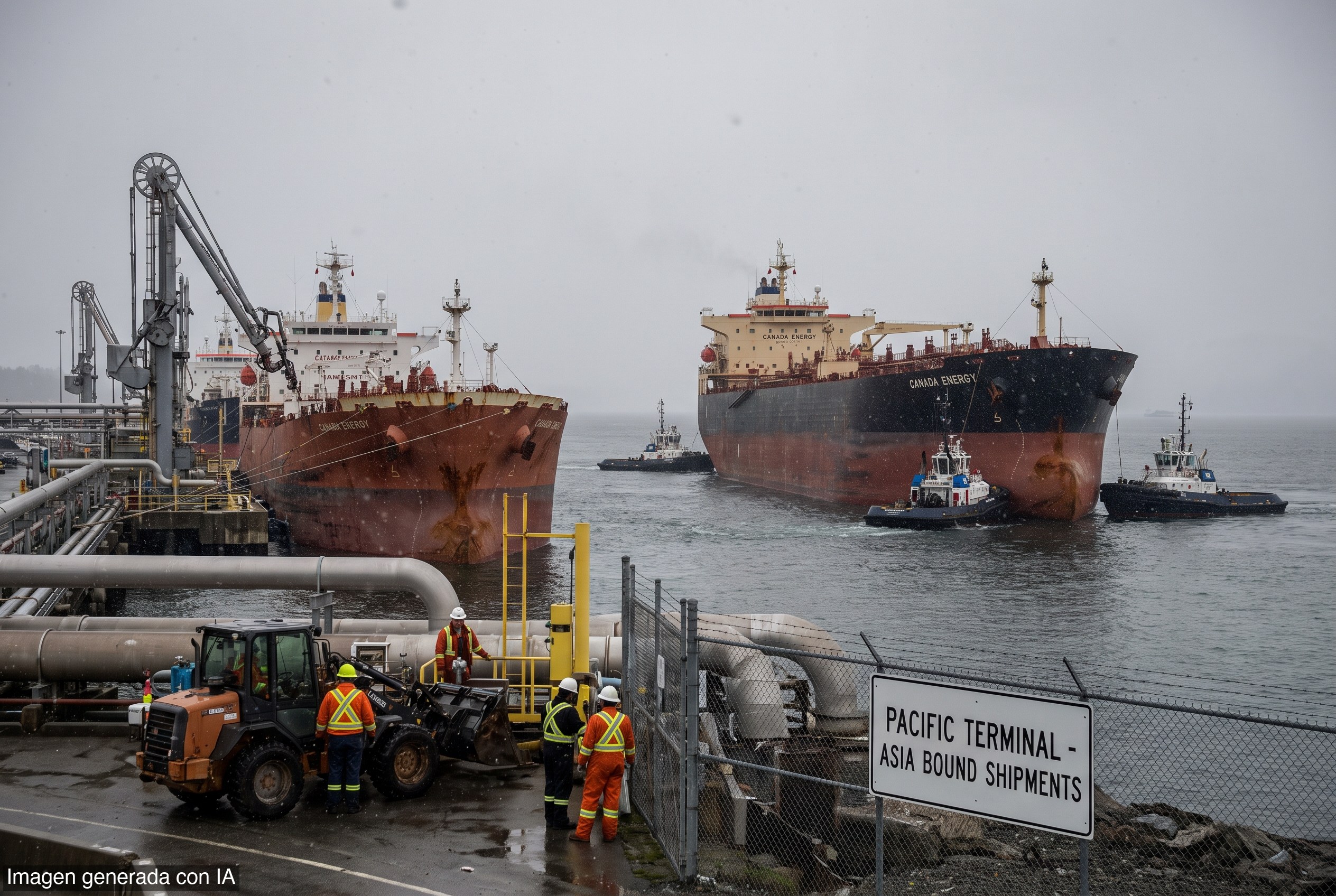
The Canadian Energy Regulator reports that crude oil exports to destinations other than the United States were worth $10 billion in 2025, averaging roughly 430,000 barrels a day — up from effectively zero before 2024. Alberta's oil exports to China and South Korea rose by 122% and 227%, respectively in the first four months of 2026. LNG Canada, backed by Petronas, Korea Gas, Mitsubishi, and PetroChina, is already shipping across Asia. Those energy flows cross the Pacific without passing through a contested chokepoint — a logistical and geopolitical advantage that is not lost on buyers.
Beyond hydrocarbons, the pivot targets agrifood, forest products, aluminum, machinery, and digitally delivered services. Japan and South Korea are the immediate priorities, given their purchasing power, rule of law, and existing trade links. Much of Canada-Japan and Canada-Korea trade already is, or soon will be, tariff-free. A Taiwan-Canada Trade Cooperation Framework awaits signing. Vietnam, Malaysia, and Singapore — all CPTPP partners — offer manufacturing demand, industrial opportunity, and a sophisticated regional hub, respectively. India and Indonesia represent higher-friction but high-growth markets for machinery, industrial technology, and infrastructure inputs.
The architecture is largely in place. Trade agreements, joint business councils, and chambers of commerce already span the Pacific. The bottleneck is awareness — and it runs in both directions.
Polling by the Angus Reid Institute for the Asia Pacific Foundation of Canada found that 73% of Canadians say they know little or nothing about South Korea; 82% say the same of Singapore; and 90% of Malaysia. Yet 78% supported Canada's CPTPP membership — endorsing an agreement while knowing almost nothing about the countries inside it. On the other side, a Kadin Business Pulse survey of 276 Indonesian firms found that 84% had either never heard of or knew very little about the Canada-Indonesia free trade agreement.
The market has already voted on energy. The question is whether Canadian businesses in agrifood, technology, and manufacturing can close the knowledge gap fast enough to convert treaty access into actual revenue.
---
For free-market readers, the lesson here is structural, not sentimental. Four decades of regulatory and commercial life organized around a single trading partner — the U.S. market — created a dependency that no sovereign nation should accept as permanent. The tariff shock is painful, but the diversification it is forcing is the kind of discipline that capital markets reward over time. Clear rules, multiple counterparties, and energy exports that travel without geopolitical interference: that is a portfolio, not a prayer.
The risk is that Ottawa responds to the crisis with subsidies and managed-trade schemes rather than letting Canadian firms find their own footing in Asia. If government gets out of the way and lets the trade agreements do their work, the pivot will stick. If bureaucracy fills the gap that awareness left open, the $10 billion in oil exports will remain an outlier rather than a foundation.