Mathew Davis lives in a homeless shelter in Austin, Texas. He earns a few hundred dollars a month donating blood plasma. Even a $450-a-month tiny home with no running water and a shared bathroom is out of reach.
'I don't make enough money really to afford anything,' Davis, 49, said. 'I just keep trying to swim uphill.'
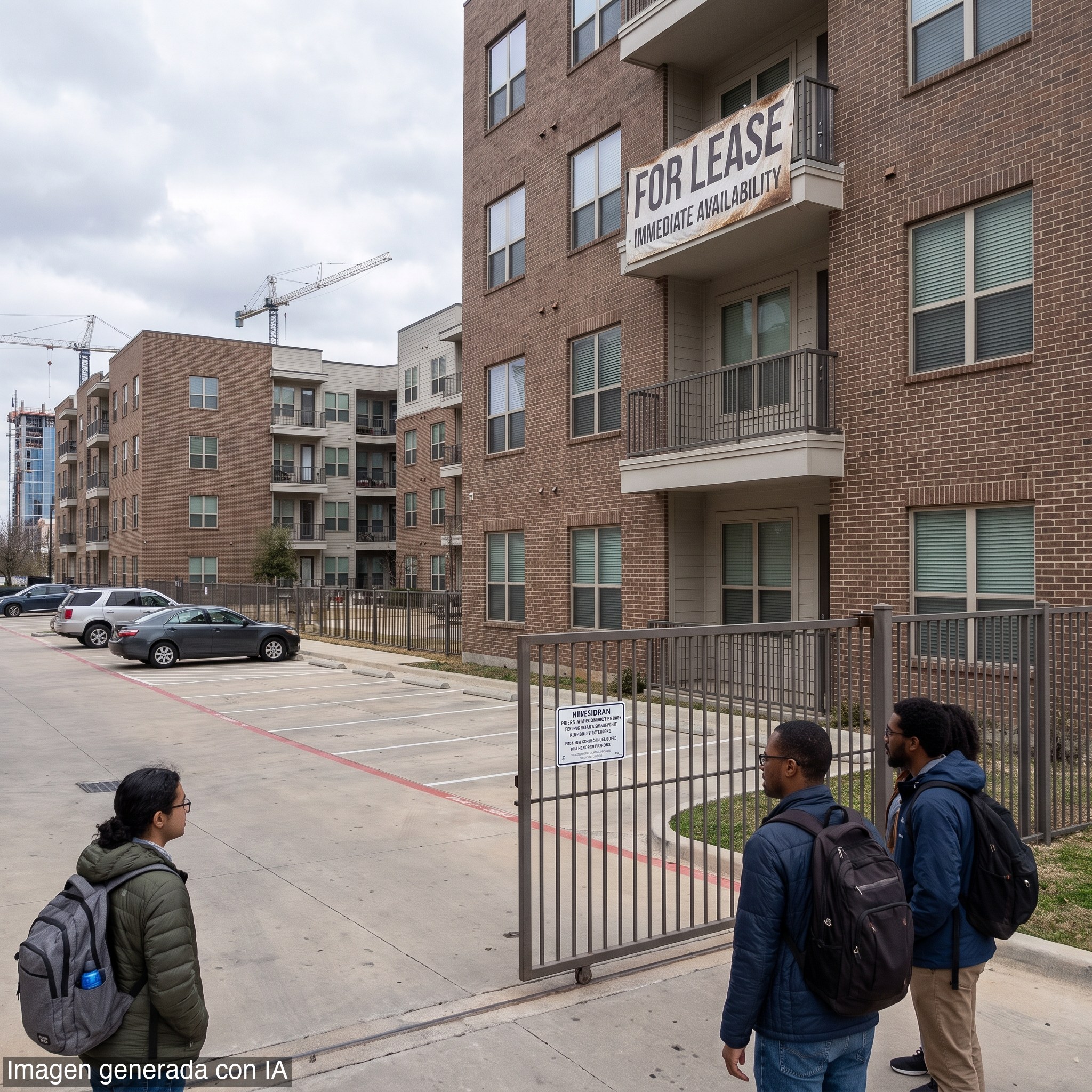
Meanwhile, more than 4,500 units the city classifies as 'affordable' — nearly 16% of the stock — sit empty, according to real estate data firm CoStar.
The numbers come first. Nationally, there are only about 4 million affordable rental units for 11 million extremely low-income renter households, according to the National Low Income Housing Coalition. That group is defined as earning under roughly $16,000 a year or 30% of area median income, whichever is higher — about a quarter of all U.S. renter households. Three-quarters of them spend more than half their income on rent and utilities.
Yet homes for that population made up only about 12% of units financed in 2024 by the Low-Income Housing Tax Credit, the federal program that gives developers tax credits in exchange for capped rents, according to the National Council of State Housing Agencies. Most units instead target renters at 50% of area median income or above — in Austin, a single earner making roughly $47,000 a year, versus an extremely low-income renter making under $28,000.
Chris Edwards, an economist at the libertarian Cato Institute, told Congress the program's complexity 'spawned' a whole industry of law and accounting firms just to administer it. 'It's enormously complex and bureaucratic, and it raises the cost of construction enormously because the rules are so complicated,' he said, arguing that if government is going to subsidize housing, it should hand the money directly to tenants through vouchers instead.
Other housing experts counter that the tax-credit program and vouchers work together, since properties built with the credit must accept vouchers while many market-rate landlords do not. But the voucher system itself is starved: only about one in four eligible families ever receives one, and waitlists run for years.
Carmen Romero, president and CEO of Washington-area developer True Ground Housing Partners, laid out the arithmetic. A unit for renters earning 60% of area median income — nearly $70,000 a year — brings in $1,715 a month in rent. After $1,575 in mortgage and operating costs, only $140 is left. An extremely low-income tenant would pay half that rent. 'The math does not lie,' Romero said. 'Our expenses don't make it really possible to create a 30% AMI unit, unless there was this extraordinary amount of subsidy that just doesn't exist.'
As rents on 'affordable' units in Austin, Denver, and Portland climb toward market rates, tenants are increasingly choosing faster-approval market apartments over income-verified affordable units — leaving the subsidized stock vacant even as the poorest go without shelter.
This is what four decades of a federally engineered market looks like when the incentives point the wrong way. Washington built a tax-credit apparatus so complex it requires its own cottage industry of lawyers and accountants, then wonders why the subsidy lands on the middle class instead of the man sleeping in a shelter. Capital rewards clear rules; this program rewards compliance departments. A voucher handed directly to the tenant, as Edwards argues, lets the market — not a bureaucrat's formula — decide where the money goes.