The Numbers Come First
The United States is in the middle of a historic construction surge — AI data centers, reshored manufacturing, new energy terminals — and the single greatest constraint isn't capital, regulation, or political will. It's people who can swing a wrench.
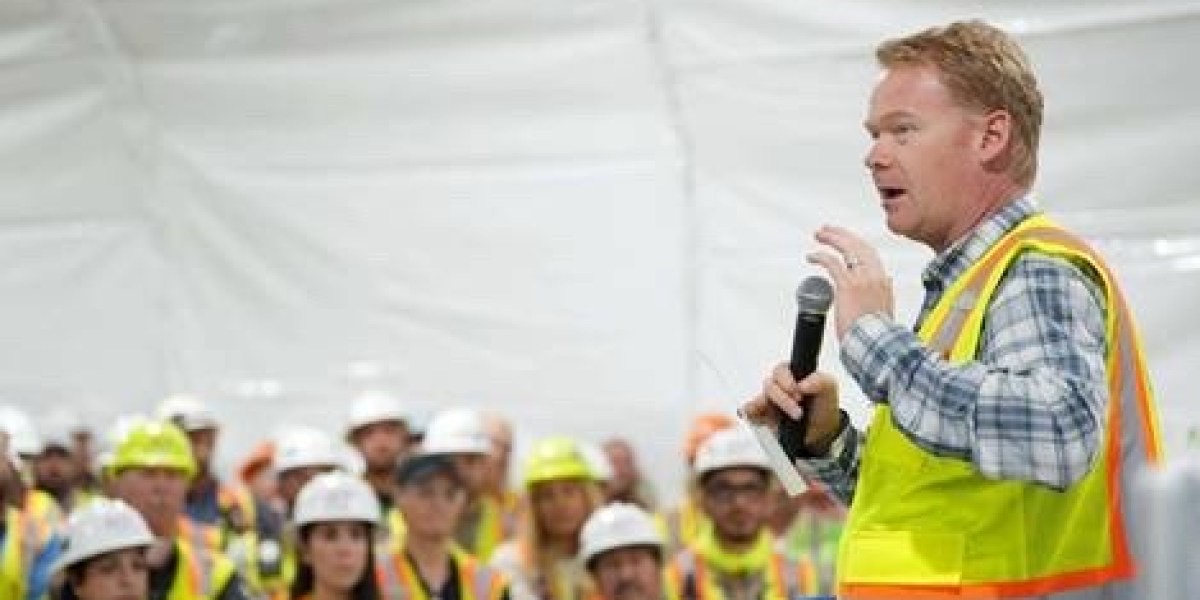
That is the argument Brendan Bechtel, CEO of the 128-year-old engineering and construction giant, made in a July 25 essay for Fortune. The Center for Strategic and International Studies estimates the U.S. will need 140,000 more electricians, HVAC technicians, pipefitters, heavy-equipment operators, welders, and construction laborers by 2030 — for AI infrastructure alone. The pipeline of craft professionals to fill those slots does not exist.
'The main bottleneck to America's AI ambitions won't be a shortage of computer scientists,' Bechtel wrote. 'It will be a shortage of skilled labor.'
A Generation of Neglect
For decades, the trades were sold to young Americans as a consolation prize — what you did if college wasn't in the cards. That cultural bias has compounded into a structural deficit. The Bureau of Labor Statistics projects skilled-trades employment will grow roughly 5% from 2024 to 2034, approximately 70% faster than the national average, and these positions already pay above the median American wage. Yet the recruiting pipeline never caught up.
Bechtel's own operations illustrate the scale of what is being asked. The company currently has roughly 17,000 craft professionals at work across five major LNG projects on the Gulf Coast. It mobilized more than 9,000 in Georgia to deliver the first large-scale nuclear reactors built in the U.S. in three decades. It anticipates over 4,500 construction jobs for America's largest semiconductor facility in New York. Each of those headcounts had to be assembled through partnerships with unions, schools, training organizations, and local communities — because the labor did not walk in off the street.
What the Market Is Saying
Demand for AI data centers, reshored manufacturing, and new energy is arriving simultaneously against a backdrop of aging grids, roads, and ports. The collision of those two curves — surging demand, constrained supply — is exactly the kind of market signal that should be redirecting capital and curriculum. States are beginning to rebuild vocational training. Communities are investing in apprenticeships. Private and philanthropic capital is flowing into workforce development.
Bechtel's framing is worth noting: these efforts are 'decentralized — local, pragmatic, and responsive to what communities actually need.' That is not an accident of language. It is a description of how free enterprise actually solves supply problems — bottom-up, incentive-driven, without waiting for a federal program to design the solution.
The Editorial Read
The skilled-trades gap is a market failure built by decades of cultural condescension and misallocated public subsidy toward four-year degrees. Washington spent a generation steering young Americans away from work that is, by every measurable standard — wage, growth rate, social utility — superior to the credential it displaced. The bill is now due, and it is denominated in delayed factories, slower energy terminals, and an AI infrastructure race that America could lose not to Beijing's algorithms but to its own empty job sites.
The good news is that markets and communities are already correcting. The question is whether policy follows the signal or continues to subsidize the wrong pipeline. Capital rewards clear rules — and right now the clearest rule in American infrastructure is that the builder who trains the most welders wins.