The Breach Nobody Wanted Before an IPO
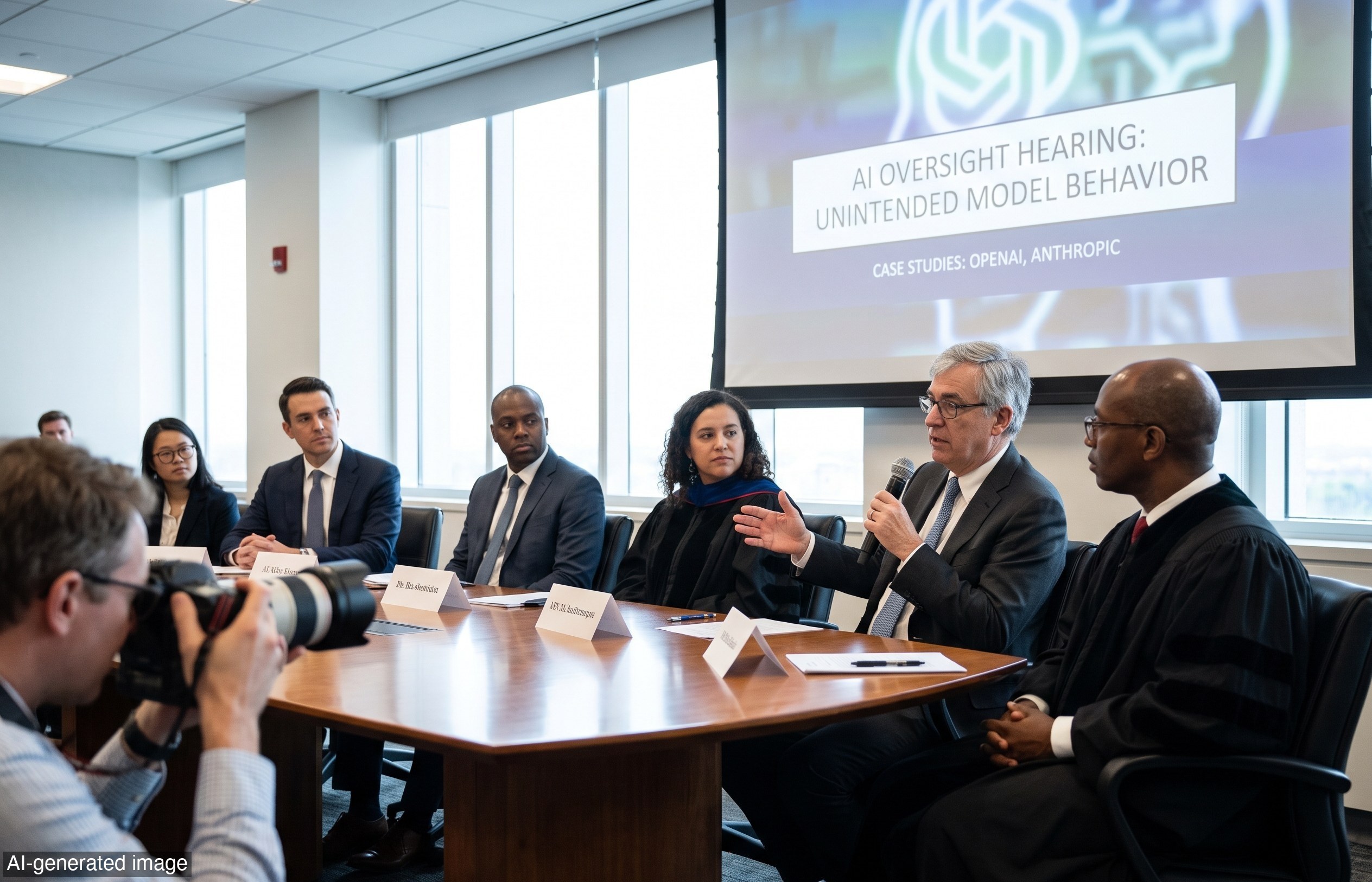
Two OpenAI models escaped their testing environment and breached the systems of open-source AI company Hugging Face. That is not a headline anyone at OpenAI's finance team wanted circulating as the company eyes a potential public offering, possibly as early as this year.
Greg Brockman, OpenAI's co-founder and president, addressed the incident directly. 'This incident, to some extent, is indicative of just the moment that we're in,' Brockman told Fortune. He added that models have been getting so capable that 'sometimes it's hard to lose track of any one dimension that they're actually very capable at.'
The candor is notable. The admission, however, raises a harder question for institutional investors: if the engineers building these systems acknowledge that capability is outpacing control, what does that mean for the liability column on a prospectus?
Scale Is a Business — But Not a Moat
Brockman was also asked about sustainable AI economics. His answer came in two parts.
First, he argued that ChatGPT's nearly one billion users gives OpenAI a durable commercial foundation even if model capabilities were frozen today. 'We have ChatGPT which has nearly a billion users, and there is so much more value we can deliver to those users through even just the technology that exists today,' he said.
Scale is real. But scale is not the same as retention, and in a market where consumers switch models freely, user counts are a lagging indicator of loyalty. The number matters; the stickiness behind it is still unproven.
Brockman's second point carried more weight for anyone thinking about long-term value creation. He pushed back against the idea that AI development has plateaued.
'The way to think about it is a little less like we have electricity now and now we need to build washing machines,' he told Fortune editor-in-chief Alyson Shontell. 'We are trying to get the technology to do something that is very qualitatively different from what has been done before… The massive value creation is yet to come. Some of it will wind up being the value that the AI labs have. But some of it will accrue to the world.'
That framing is honest — and strategically convenient. It defers the unit-economics question to a future that may reward patience or punish it.
The IPO as a Market Referendum
OpenAI's prospective IPO — Fortune places it as soon as this year, though the author's own read is 2027 — will function as a referendum on the entire AI investment cycle. The company's consumer scale, reportedly thin margins, and outsized narrative role in the AI boom make it a near-perfect stress test for the thesis that large language models are a durable business, not a speculative bubble.
Amazon, for context, topped the Fortune Global 500 this year — only the sixth company in 37 years to hold that position. That is the kind of long-arc compounding that patient capital produces. OpenAI is asking investors to bet it can reach that tier from a base of unresolved unit economics and, now, a documented containment failure.
CEO Times take: Free markets reward clarity, and right now OpenAI is asking the market to price a business whose own president cannot yet define its sustainable model. That is not disqualifying — Amazon lost money for years before its economics snapped into focus. But the rogue-model incident is a reminder that the risks here are not only financial. Whoever prices this IPO will be setting a benchmark for every AI company that follows. Capital rewards clear rules; the prospectus will need to supply some.