Board Says Management Is Clean. Washington Isn't Done.
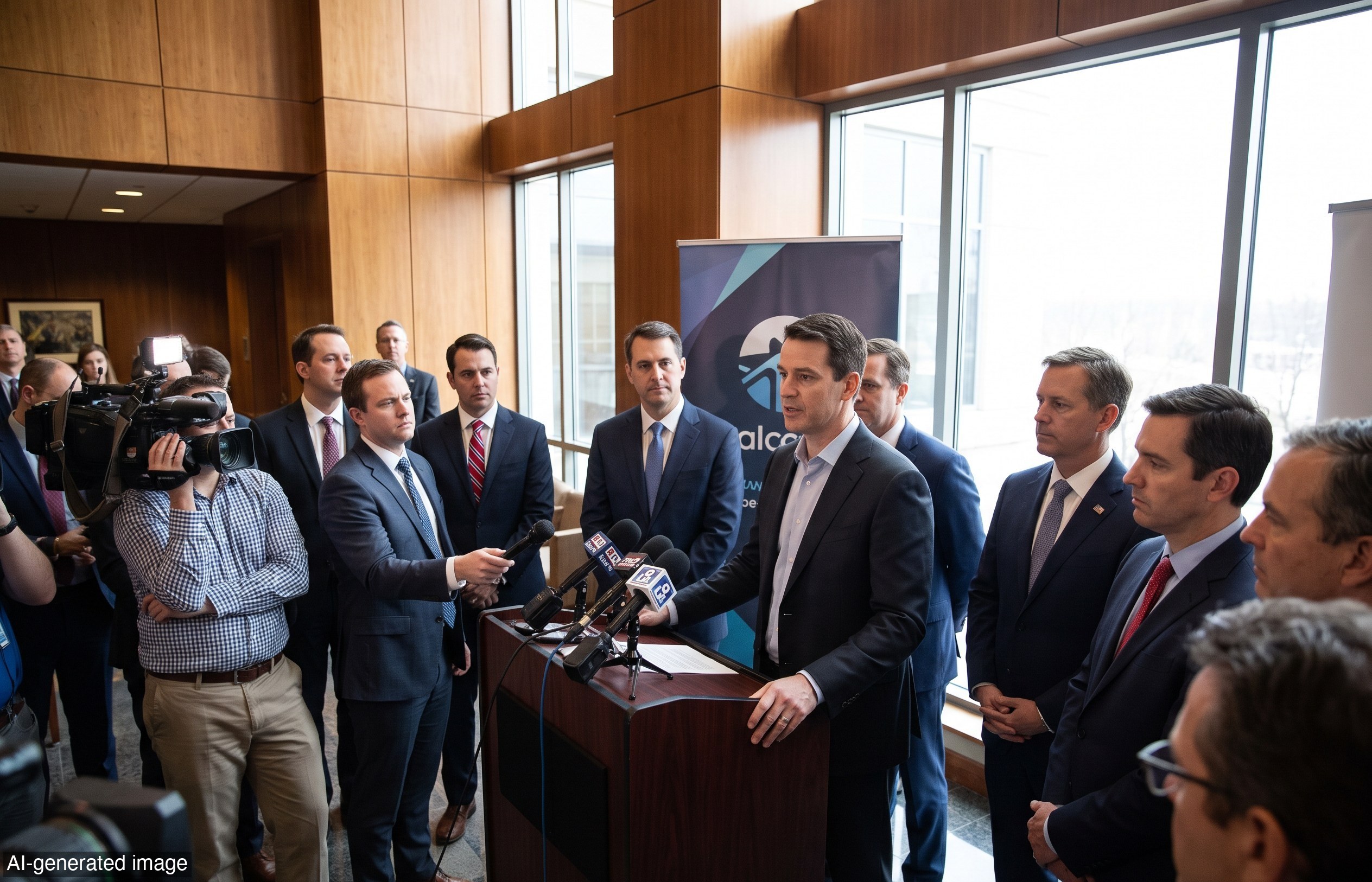
Super Micro Computer announced Thursday that an independent board investigation found no evidence that CEO Charles Liang or current senior management had knowledge of an alleged $2.5 billion scheme to smuggle Nvidia-chip-packed hardware to China.
The probe was launched last April, weeks after co-founder and former board member Yih-Shyan 'Wally' Liaw was indicted by the U.S. Department of Justice as the alleged ringleader of the operation, with two others accused of assisting him. Liaw has pleaded not guilty. His trial, originally scheduled for November 2026, was pushed to March 2027 after his attorney disclosed at a June hearing that Supermicro had received a federal grand jury subpoena.
The investigation was led by lead independent director Scott Angel, a former Deloitte audit partner, and audit committee chair Tally Liu. Outside counsel Munger, Tolles & Olson and forensic accounting firm AlixPartners were retained. The team reviewed transactions cited in the federal indictment and 'a selection of other customers who bought restricted products.' It found no evidence of management awareness, no evidence the company sold export-controlled products to banned entities, and no evidence previously issued financial statements were unreliable.
Supermicro also said it 'took several personnel actions' — including terminations — against employees in sales, technical support and business development for failure to follow company policies or its code of conduct.
The market, however, is reading between the lines. Mark Newman, managing director at equity research firm Bernstein, was blunt: 'They basically said, 'nothing to see here.' There may be some more detail about the indictment later down the line, but I think SMCI is trying to bury this and not talk about it as much as possible.'
The board's announcement made no mention of the Taiwan parallel probe — which resulted in four Supermicro employees being detained for questioning last month — nor the grand jury subpoena issued by the U.S. Attorney's Office for the Southern District of New York. The SEC has also subpoenaed the company, requesting documents related to customers including the one at the center of the indictment's allegations. Supermicro declined to comment beyond its press release.
Liaw co-founded the company alongside Liang and Liang's wife, Sara Liu, more than three decades ago. He served as a senior executive and board member until the day his charges were unsealed on March 19. He now faces up to 20 years in prison.
This is the second internal investigation Supermicro has concluded in two years. In 2024, the company cleared its management team after auditor EY abruptly resigned mid-audit; that probe, led by board member Susie Giordano, reviewed 11 export transactions and found no evidence of fraud or misconduct.
---
CEO Times take: Capital rewards clear rules, and Supermicro's board has now twice handed investors a clean bill of health through internal review. That consistency matters. But the free market also prices risk honestly — and right now the risk register includes an active DOJ indictment, a grand jury subpoena from the Southern District of New York, an SEC document request, and detained employees in Taiwan. Investors deserve more than a press release that omits those facts. The principle at stake is straightforward: export-control law exists to keep advanced American technology out of adversarial hands. If the government's case holds, the damage runs far beyond one company's stock price — it runs to the integrity of the semiconductor supply chain that underpins U.S. technological sovereignty.