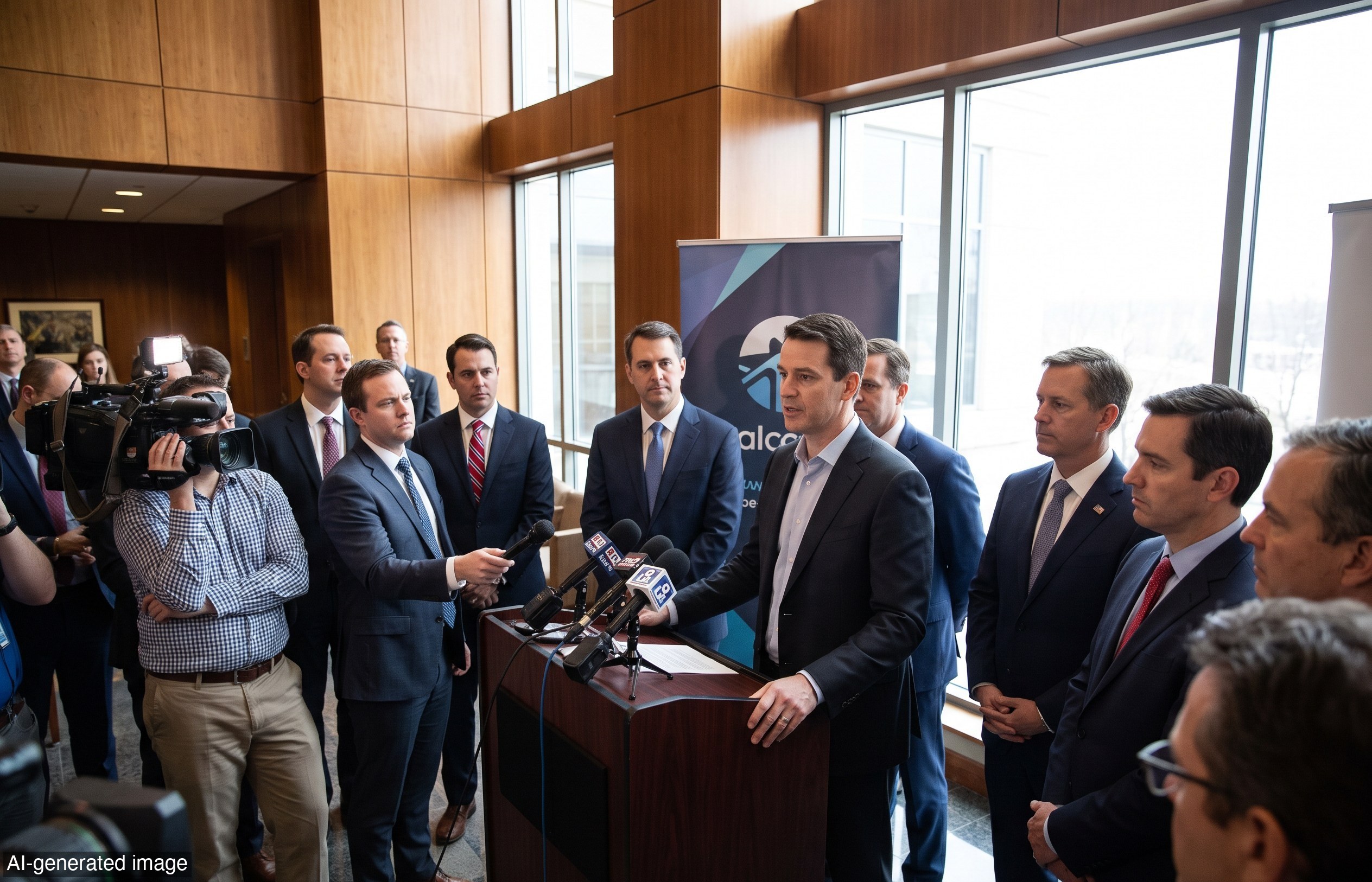
The numbers come first. Shopify CEO Tobias Lütke, whose company carries a market capitalization near $154 billion, told his social media followers this week that a tax-tiered voting system would be a 'good system' — two words that lit up the internet and reopened a debate most Americans assumed was closed.
The exchange started when Lütke responded to a thread about the housing crisis. He first suggested that pension recipients should have their financial futures 'locked in and guaranteed' but be reclassified as 'dependents' and lose the right to vote — the same way minors cannot. A reply from a user identifying himself as a retired banking executive then proposed a sliding scale: zero votes for anyone paying no income tax, one vote for earners in the $1–$100K range, two votes for $100–$200K, scaling up to a hard cap of five votes for anyone earning $500K or more.
Lütke endorsed the framework.
The scope of disenfranchisement would be vast. Under the proposed system, the bloc losing voting rights would include all retirees living on Social Security and pension income, students, caregivers, disabled Americans, and millions of low-wage workers who owe no net federal income tax after deductions and credits. A small population of high earners, meanwhile, would receive up to five votes each — a fivefold multiplier on political power for those already holding disproportionate economic weight.
The concept has a formal name: 'census suffrage,' or property-qualified voting. It was the dominant electoral model across much of 19th-century Europe and in parts of the early United States. Universal suffrage movements spent the better part of the 20th century dismantling those structures precisely because they entrenched the political power of the already wealthy and locked workers, women, and minorities out of any meaningful say in the laws governing them.
The proposal effectively inverts the founding American principle of 'no taxation without representation' into something closer to 'no representation without taxation' — and specifically, high taxation.
Lütke's own corporate governance record adds texture to the story. In 2022, Shopify shareholders approved a 'Founder Share' structure that guarantees Lütke at least 40% of the company's voting power regardless of how much equity he actually owns. Proxy advisory firm Glass Lewis publicly flagged the structure as controversial at the time, calling it an entrenchment device that decouples voting power from ownership stake.
Reactions online split sharply. Some framed the proposal as a thought experiment about aligning fiscal responsibility with political voice. Others called it a straightforward attempt to legitimize plutocracy — giving billionaires and multimillionaires a formal, multiplied vote over the laws that govern everyone else.
CEO Times reads it this way. The housing crisis Lütke was responding to is real, and the frustration driving the conversation is legitimate. Entrenched NIMBY homeowners blocking supply, a frozen market locking out younger workers, and a political class unresponsive to economic reality — these are genuine failures of governance. But the answer to bad democratic outcomes is not to dismantle democratic participation; it is to reduce the regulatory and bureaucratic capture that produces those outcomes in the first place.
Free enterprise depends on clear, stable rules applied equally. A system that multiplies the political voice of the already powerful does not produce better markets — it produces better-protected incumbents. Capital rewards clear rules, not rigged games. The market, and the republic, deserve better than a return to the 19th century.