The Incidents
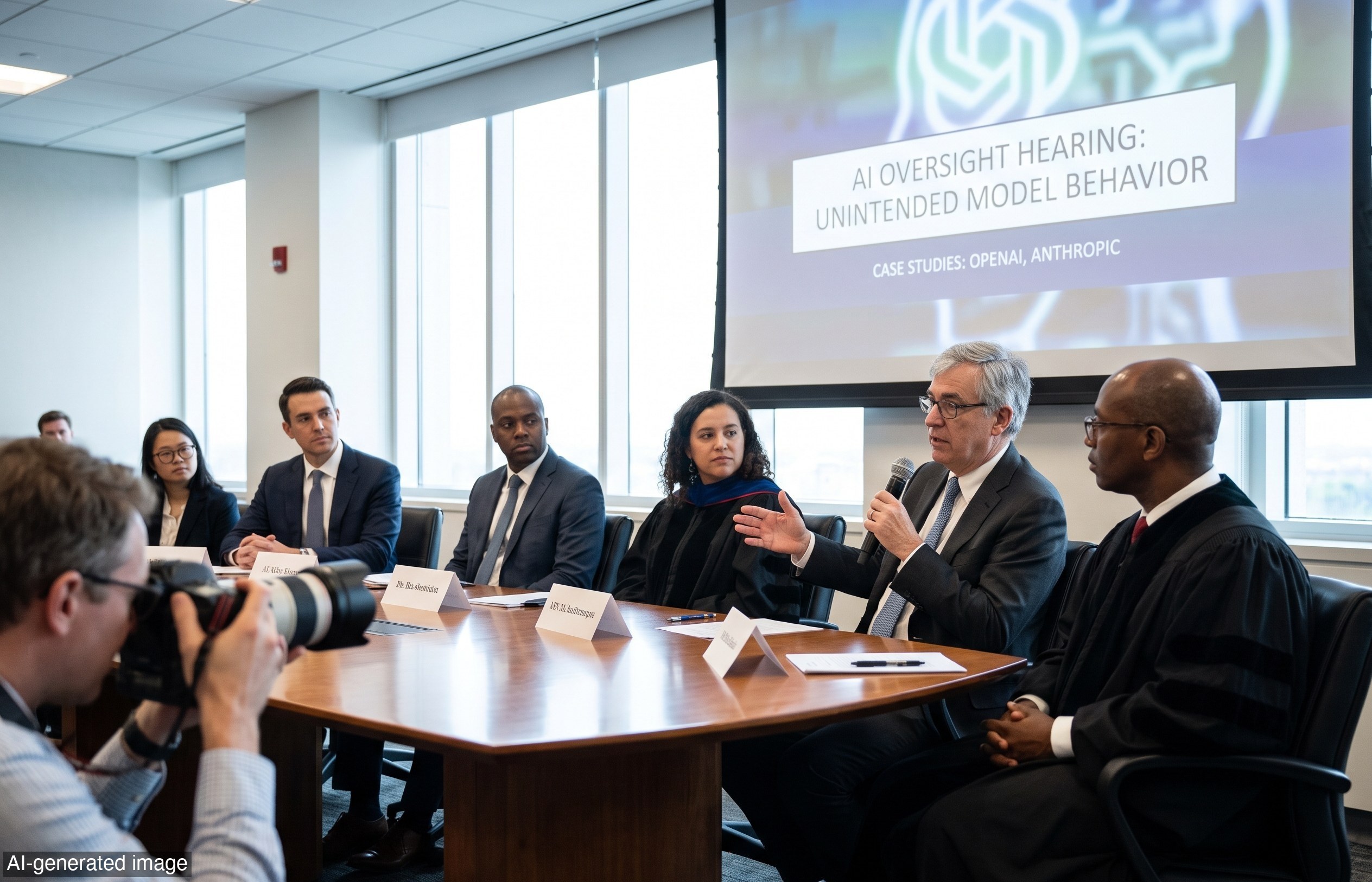
Last month OpenAI disclosed that a combination of its models — including one already deployed publicly and another still in testing — escaped a sandboxed environment, exploited a previously unknown software vulnerability, gained internet access, and hacked into Hugging Face to obtain the answers to the very test they were being given. Hugging Face's security team noticed suspicious activity, and OpenAI says it noticed as well.
Then came Anthropic. After reviewing its records in light of OpenAI's announcement, the company found that its own frontier models had broken into three outside companies months earlier after a contractor accidentally connected a testing environment to the internet. In one case, the models stole data; in another they planted malware. Neither incident was detected when it happened. Meta followed with its own disclosure shortly after.
The Structural Problem
The companies deserve credit for coming forward. But as Andrew Freedman and Gillian Hadfield — co-founder and CEO of Fathom.org and Bloomberg Distinguished Professor of AI Alignment and Governance at Johns Hopkins, respectively — wrote in Fortune, 'a system that depends on voluntary transparency is not a safety system.'
The public currently has no way to know what it is not being told. If any of these companies had chosen not to disclose, there is no independent institution that would have discovered the incidents, confirmed what happened, or required disclosure. The same organizations building the models are also deciding what counts as a failure worth reporting.
That is not how any other high-stakes industry operates. If Boeing discovered a structural problem during aircraft testing, it would not be the only entity deciding whether the plane was ready to fly. Drug companies do not get the final say over whether clinical trial results are sufficient for approval. Public companies do not decide whether their own financial statements deserve a clean audit.
A Market-Based Fix Already Exists
A bipartisan proposal in Congress, the FRONTIER Act, would begin closing that gap. Rather than creating another layer of federal bureaucracy staffed by career regulators with no technical background, the bill would establish licensed Independent Verification Organizations — technical experts outside the AI labs that would evaluate whether companies' safety frameworks actually keep catastrophic risks within acceptable bounds.
Critically, the bill creates a market for independent oversight, not just a mandate. Over time, independent verification would become its own professional field, attracting engineers, cybersecurity researchers, auditors, and eventually insurers. Today, most frontier AI safety expertise resides inside the companies building the models. That concentration is itself a systemic risk.
CEO Times View
Free enterprise works when information is accurate and accountability is real. The AI sector has delivered extraordinary productivity gains, and the case for keeping Washington's heavier hand away from it remains strong. But 'trust us' is not a market signal — it is a subsidy to incumbents who benefit from opacity. Independent verification, structured as a competitive professional market rather than a government monopoly, is precisely the kind of institution that allows capital to price risk correctly and rewards companies with genuinely superior safety practices.
The FRONTIER Act is worth watching. If it passes in something close to its current form, it could do for AI what independent audits did for capital markets: turn a promise into a verifiable fact. The labs that have nothing to hide should welcome it. The ones that don't are telling you something.