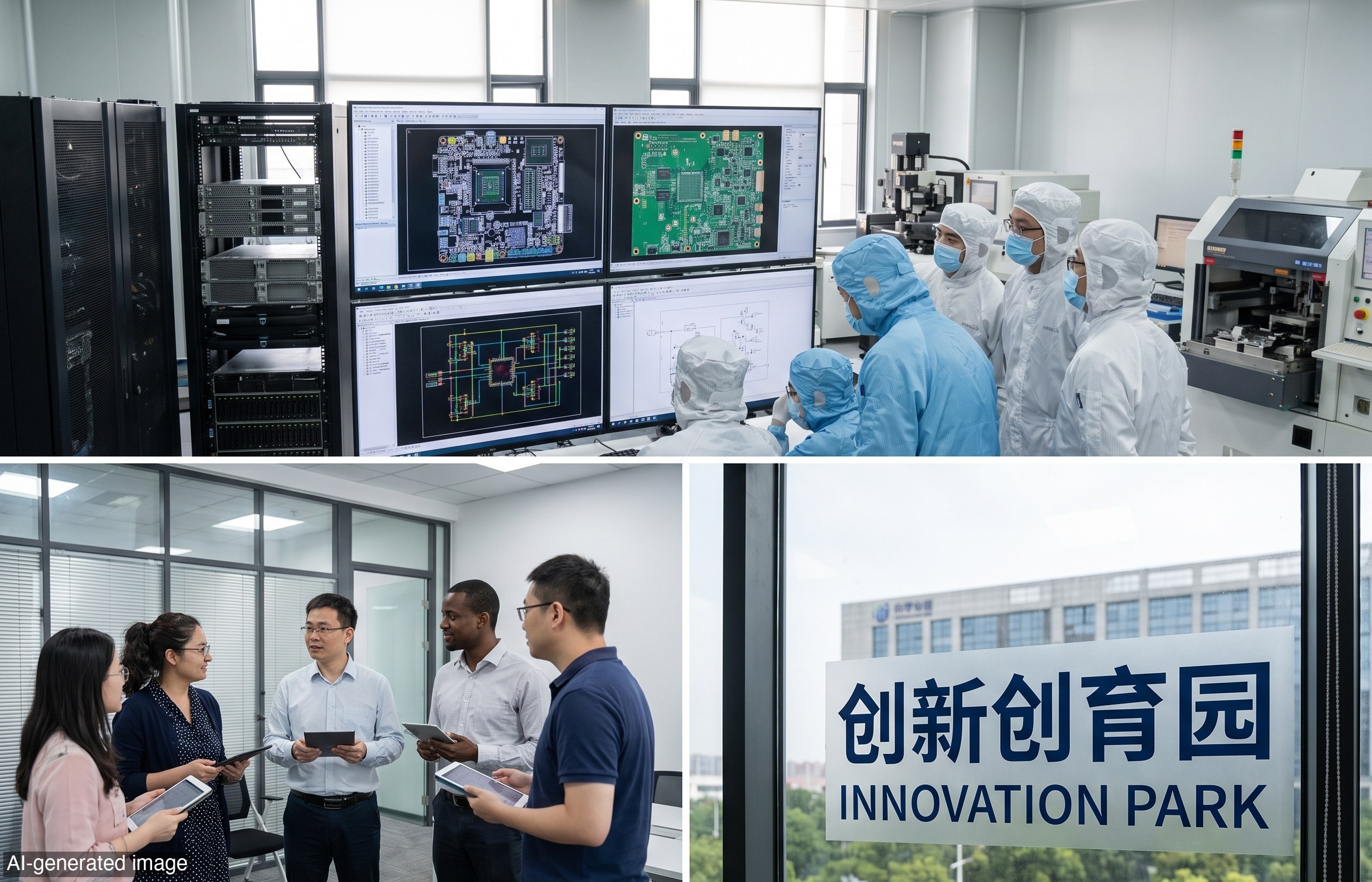
Two competing frameworks are now vying for control of the global AI supply chain. Washington's Pax Silica, launched in December 2025, aims to secure semiconductor supply chains, AI technology, and rare earth minerals. Beijing's rival, the World Artificial Intelligence Cooperation Organization (WAICO), launched in Shanghai in July 2026 with 29 founding members, markets itself as a champion of emerging economies and low-cost, open-weight AI models.
The numbers come first. Of the eleven members of the Association of Southeast Asian Nations, only two — Singapore and the Philippines, both longtime U.S. security allies — have signed onto Pax Silica. Malaysia, Indonesia and Thailand, all with significant exposure to both American and Chinese technology ecosystems, have stayed out.
Under Secretary of State Jacob Helberg, the architect of Pax Silica, said in January at a Hudson Institute event that Washington was not interested in imposing a "purity test," adding, "If you held everyone to that standard, you would quickly run out of friends." But according to an internal draft viewed by Reuters, the State Department is preparing a letter to Pax Silica partners stating that "to be part of everything is to be part of nothing." The State Department declined to comment on the letter to Reuters.
Washington's leverage over the system was demonstrated in June, when the Commerce Department issued an emergency export control order requiring Anthropic to restrict access to its Mythos 5 and Fable 5 models to U.S. nationals only. The order was later lifted, but it showed that the U.S. can cut off access to frontier American models at will.
Malaysia has been explicit about pursuing neutrality, with its former trade and industry minister stating the policy includes securing chips from both Nvidia and Huawei. The country accounts for 13% of global outsourced semiconductor assembly, testing, and packaging, and its electrical and electronics sector makes up 44.3% of total exports. Chinese AI models, meanwhile, are considerably cheaper thanks to more efficient designs and lower energy and infrastructure costs — a price advantage that is winning converts among governments weighing their options.
Singapore, by contrast, is leveraging its scarcity of land, energy and population to set the regulatory agenda for data centers, positioning itself as a reference point for what it calls "responsible" digital infrastructure.
Capital rewards clear rules, and that is the real fault line running through Southeast Asia's AI strategy. Singapore and the Philippines have chosen the predictability of a market-democracy alliance built on enforceable property rights and transparent regulation — the kind of framework that lets private capital plan for the long term. Malaysia, Indonesia and Thailand are betting they can extract cheap Chinese compute without paying the price of Beijing's state-directed model, in which subsidies and market access are political instruments, not commercial ones.
Washington's threatened letter may be clumsy diplomacy, but the underlying instinct is sound: an alliance of market democracies built on the rule of law is worth more to the region's long-term investors than a discount on chips from a system with no rules at all.