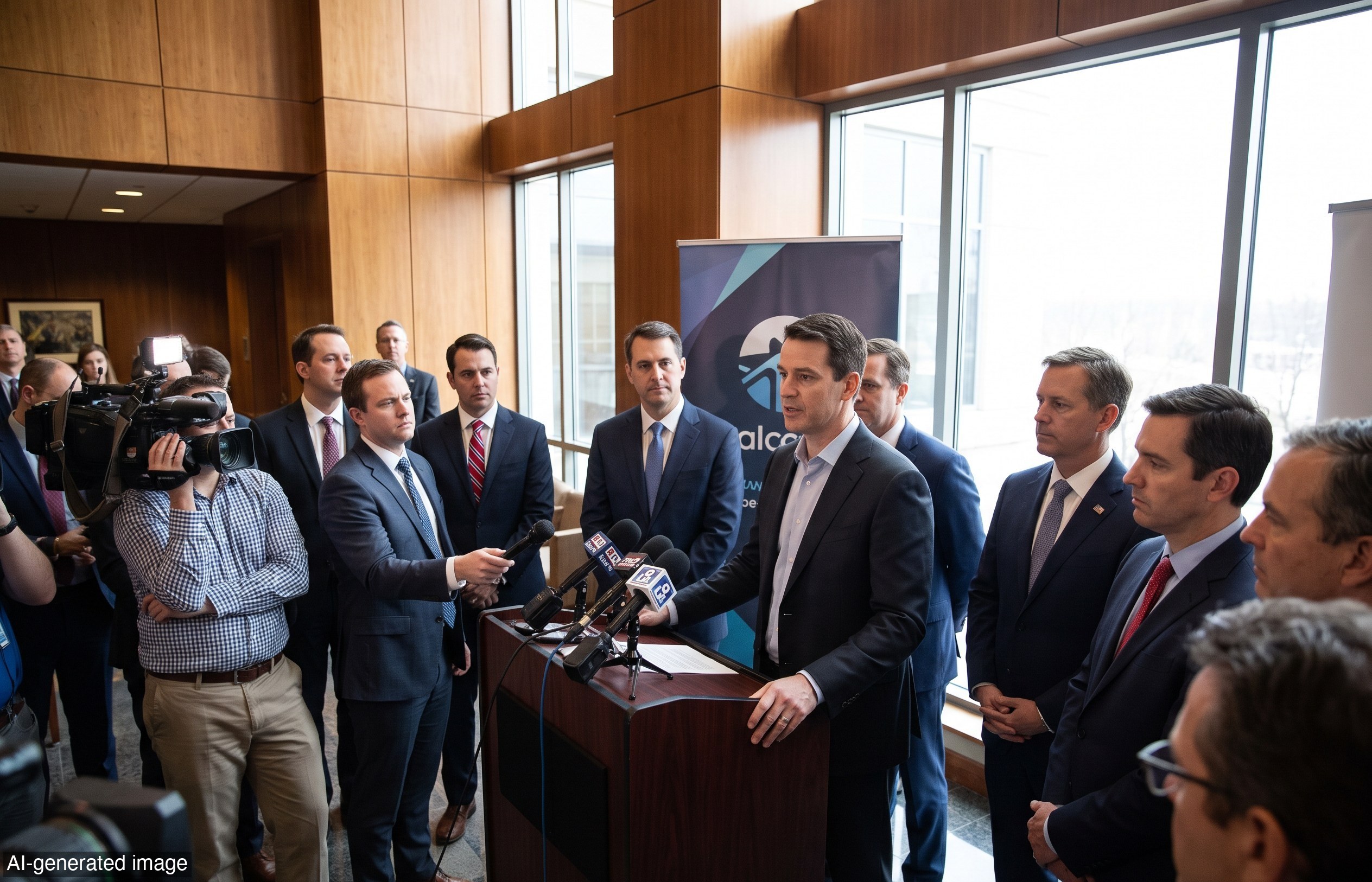
The numbers come first. Nvidia, Google, Meta, Microsoft, and OpenAI have jointly signed a letter arguing that U.S. leadership in artificial intelligence should not be measured by a single frontier model, but by whether the country builds a broad, open ecosystem. The signatories include companies that also compete fiercely in closed, proprietary AI — which is precisely what makes the letter notable.
The case for coexistence
Deutsche Bank analyst Adrian Cox framed the debate in a note last week by reaching back to the 1880s, when direct current and alternating current battled for dominance in the early electrical grid. He also invoked the VHS-vs.-Betamax fight of the late 1970s and early 1980s. Betamax was considered the superior technology, yet it lost. VHS prevailed because JVC licensed it broadly, allowing a self-reinforcing ecosystem to develop around it. Cox's point: open-source AI doesn't have to beat closed rivals on performance — it only needs to be good enough, cheaper, and ubiquitous.
But Cox stopped short of predicting a single winner. 'The most likely outcome is a combination of the two,' he wrote, likening the probable end-state to today's smartphone market, where Apple's controlled premium ecosystem coexists with Google's larger, more customizable Android platform. Open models, he argued, will force closed competitors to cut prices and stay flexible, while closed models will continue setting the bar on quality and safety — each exerting 'a positive gravitational force on the other.'
Nvidia CEO Jensen Huang reinforced that argument on Friday, stating publicly that the world needs both frontier closed models and frontier open models.
The competitive stakes
The letter signed by the tech coalition did not sidestep the geopolitical dimension. U.S. AI companies have warned that Chinese open models are rapidly closing the performance gap, with potential military implications. Critics of open models add that without safety guardrails, advanced weights could be misused to develop nuclear, biological, or cyber weapons.
The letter acknowledged those security risks directly, but argued the answer is maintaining access to open models to bolster defenses — not cutting off access. It also pointed to history: the development of open-source software in the 1980s not only lowered costs but 'created a shared foundation of knowledge on which generations of American engineers and entrepreneurs built their institutional sovereignty.'
On concentration of power, the letter was explicit: 'Open weights also strengthen competition, and competition is what keeps the gains of AI broadly shared rather than concentrated in a few hands. By allowing many organizations to build, adapt, and deploy advanced models, open weights create rivalry not only among model developers but across cloud chips, applications, and services. That competition spurs innovation, drives down costs, and distributes the benefits of AI broadly across our economy.'
The letter also flagged a concrete downside of closed-model dependence: regulatory risk. The U.S. government effectively banned Anthropic's most powerful Claude models for several weeks over security concerns, leaving users of those closed systems with no alternative.
CEO Times take
Free enterprise does not require picking one winner in advance. The coalition letter is, at its core, a market argument: rivalry across open and closed AI keeps prices down, distributes innovation, and prevents any single gatekeeper — government or corporate — from controlling access to a foundational technology. That is exactly the kind of competitive architecture that built American dominance in software.
The alternative — a regulatory regime that effectively locks in today's closed-model incumbents under the banner of 'safety' — would protect established players at the taxpayer's and entrepreneur's expense. Capital rewards clear rules and open markets. Washington should resist the temptation to pick the format war's winner before the market has voted.