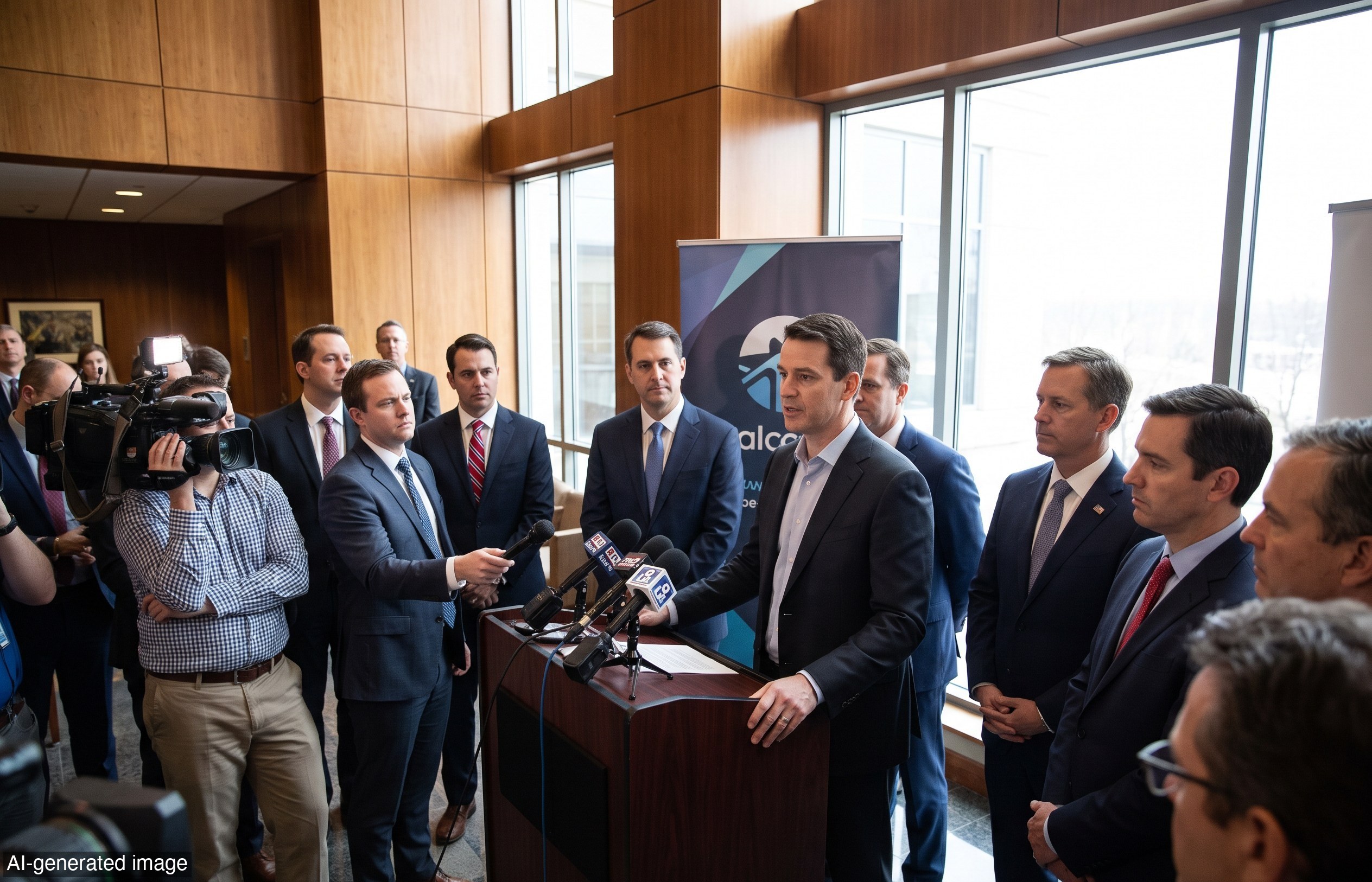
The numbers came in Wednesday morning, and the market answered before lunch.
Moderna and Merck announced that their personalized mRNA cancer vaccine, intismeran autogene, met both primary endpoints in a Phase 3 trial targeting melanoma — the first time a therapy of its kind has succeeded at that stage of testing. Moderna shares rose 120% in early trading; Merck shares climbed more than 10%. Merck is currently valued at roughly $371 billion and Moderna at around $62 billion.
The trial enrolled 1,137 patients with high-risk, surgically removed stage IIB–IV melanoma. Patients were randomized to receive either intismeran combined with Merck's immunotherapy Keytruda, or Keytruda alone, for approximately one year. The combination therapy extended both recurrence-free survival (RFS) and distant metastasis-free survival (DMFS) compared with Keytruda alone — results the companies described as 'statistically significant and clinically meaningful.'
Full data have not yet been released. Moderna and Merck said they will present the complete findings at an upcoming international medical conference and submit results to regulators.
The Phase 3 readout builds on earlier Phase 2 data showing a 49% reduction in the risk of recurrence or death and a 59% reduction in the risk of distant metastasis or death, compared with Keytruda alone. Merck referenced those figures directly in Wednesday's release.
The vaccine works by sequencing a patient's own tumor, identifying up to 34 cancer-specific mutations, and encoding synthetic mRNA to train the immune system to attack cells carrying those mutations — the same delivery platform Moderna used for its Covid-19 vaccine.
'For many years, the idea of creating an mRNA treatment designed specifically for an individual patient's cancer was aspirational. We are now helping turn that vision into a reality,' Moderna CEO Stéphane Bancel said in a statement.
Dean Li, president of Merck Research Laboratories, framed the result as evidence for earlier intervention: 'By intervening earlier in the course of disease, when many cancers are considered most treatable, the goal of adjuvant therapy given after surgery is to increase the possibility of cure for more patients.'
Georgina Long, the trial's principal investigator and medical director of Melanoma Institute Australia, called it 'a landmark moment for adjuvant melanoma treatment.' University of Oxford cancer expert Lennard Lee noted it is 'the first positive Phase III trial of an individualized neoantigen therapy and an mRNA-based cancer treatment,' while cautioning that magnitude of benefit, subgroup analyses, and mature overall-survival data remain outstanding.
Dr. Danish Nagda, founder and CEO of Rezilient Health and a physician who has treated head and neck melanoma patients, told Fortune the stock move still underestimates the platform's value. 'Moderna is still incredibly undervalued,' Nagda said, adding that he expects the company to trade 'significantly higher' over the next 12 to 18 months. He also described the result as a potential acquisition catalyst.
For context on the disease burden: melanoma accounts for roughly 1% of skin cancer cases but drives the largest share of skin cancer-related deaths. Five-year recurrence-free survival for advanced stage III–IV patients currently runs around 20 to 35%, according to Nagda.
The market has already voted, and the verdict is straightforward: free enterprise, when given room to run, produces results that government programs alone never could. A private partnership between two companies — not a federal mandate — just delivered the first Phase 3 win for personalized mRNA cancer therapy. The capital that flowed into mRNA platforms after Covid-19, the competitive pressure to find new indications, and a regulatory environment that Nagda credited with helping move drugs forward faster all converged in Wednesday's readout. The principle at stake is simple: innovation compounds when incentives are clear and bureaucracy steps aside. Patients with high-risk melanoma are the direct beneficiaries — and so, plainly, are shareholders who bet on science over skepticism.