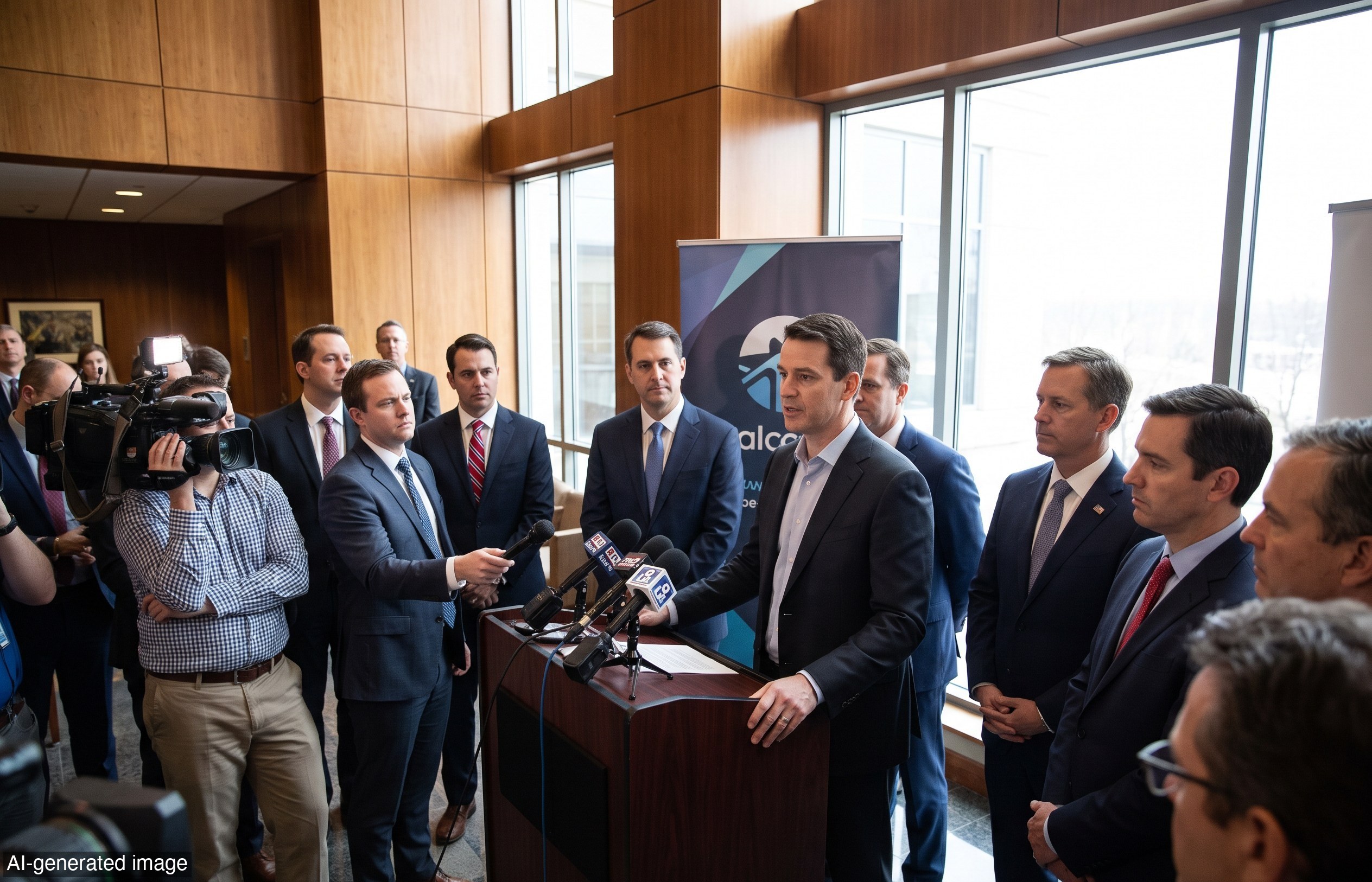
Joshua Kushner, founder of venture firm Thrive Capital and brother of Jared Kushner, said his firm regrets its role in a collapsed plan to let private investors buy into FIFA's World Cup commercial rights.
In a statement first published by Axios, Kushner said Thrive "failed to appreciate the political dynamics of global football, and the lengths some would go to." He added: "Had we known what this would devolve into, we would not have gotten involved."
The proposal, called FIFA Forward Enterprise (FFE), would have created a commercial subsidiary holding FIFA's broadcasting, licensing and ticket-sales rights. Thrive was set to lead an investor group that included BANN Ventures CEO Greg Maffei, putting in as much as $4.2 billion for roughly 20% of the business — a stake that would have valued the enterprise at about $20 billion. FIFA would have kept control, with outside investors holding non-controlling minority stakes.
Under the plan, each FIFA member association would have immediately received $20 million in increased development funding, with more to follow. Kushner said the structure was meant to route capital toward "underdeveloped nations" and their soccer infrastructure, arguing that money in the sport "has historically been concentrated amongst a small group of countries."
FIFA, a nonprofit, scrapped the FFE plan in late July after UEFA, CONCACAF and the Asian Football Confederation publicly rejected it. Critics — including former FIFA president Sepp Blatter and current president Gianni Infantino — objected to giving outside investors a long-term stake in FIFA's most valuable assets and questioned how the $20 billion valuation was calculated.
UEFA is now reportedly preparing a criminal complaint in Switzerland alleging that Infantino and other FIFA officials drafted the FFE plan with a small circle of advisers and investors without notifying the FIFA Council or member associations. UEFA has asked U.S. federal courts in Florida and the Southern District of New York for discovery to gather documents and testimony for a potential Swiss criminal case. FIFA has asked the courts to defer that request or let it object first, telling filings that UEFA is chasing a foreign proceeding "that doesn't exist yet" and accusing UEFA of a "smear campaign." UEFA has said Kushner and Thrive themselves are not suspected of wrongdoing; Thrive has engaged attorney Alex Spiro of Quinn Emanuel Urquhart & Sullivan.
Infantino, up for reelection as FIFA president in March 2027, has lost the backing of several European member associations but retains support from the African and South American confederations, representing 64 member associations combined.
The episode is a case study in what happens when private capital tries to do business with an organization structured as a nonprofit but run like a geopolitical fiefdom. Thrive put real money behind a plan to unlock World Cup value for smaller federations, and it got caught in a governance turf war it did not start.
The lesson for investors eyeying global sporting or quasi-governmental institutions is straightforward: clear property rights and accountable boards attract capital; opaque, politically captured bureaucracies — even ones calling themselves nonprofits — repel it. Kushner's regret is the market's verdict on FIFA's governance, delivered before a single dollar of the $4.2 billion ever changed hands.