The New Oil Has a Pricing Problem — and Wall Street Smells the Fee Revenue
When the Iran war sent jet-fuel prices spiking, Lufthansa was insulated: hedging contracts had locked in pre-war prices on more than 80% of its upcoming fuel purchases. Companies burning through AI compute today have no equivalent tool. Kalshi CEO Tarek Mansour wants to change that — and the numbers he is throwing around are staggering.
On a recent TBPN podcast, Mansour predicted compute will be a $10 trillion industry by 2030. If compute futures follow the same pattern as derivatives markets for other commodities — typically growing to 10 to 15 times the size of the underlying spot market — the futures layer alone could reach $100 to $150 trillion. That is not a rounding error. That is a market-creation event.
Three Firms, One Race
Kalshi moved first in public. In July the prediction-markets platform announced a new series of events contracts and data tools it says can serve as the foundation of a compute derivatives market. It is currently listing wagers on five chip types, including a contract on whether the average hourly cost to rent Nvidia's H200 chip in August will finish above or below $5. As of August 6, the 'yes' side of that bet was trading at 30 cents, paying $1 on a correct call.
But Kalshi is not alone. CME Group revealed in May that it plans to roll out a compute product later this year in partnership with an AI data firm. Intercontinental Exchange made a similar announcement the same month. When two of the largest derivatives exchanges on the planet move in the same direction in the same month, the market has already voted on the opportunity.
Why This Is Harder Than Oil
The history of commodities markets counsels patience. When oil-price shocks hit in the 1970s, demand for a futures market was immediate — but it took years before traders agreed on standards like Brent crude and West Texas Intermediate. Compute faces a comparable standardization problem, and arguably a harder one.
Kalshi's Head of Research, Nicole Kagan, put it plainly: 'Compute is very different in that it's very opaque. The way compute is priced is via B2B executed contracts from suppliers like Nvidia directly with corporations like HP, which then go and sell them on. So it's very difficult to even understand what the expected pricing is on that thing.'
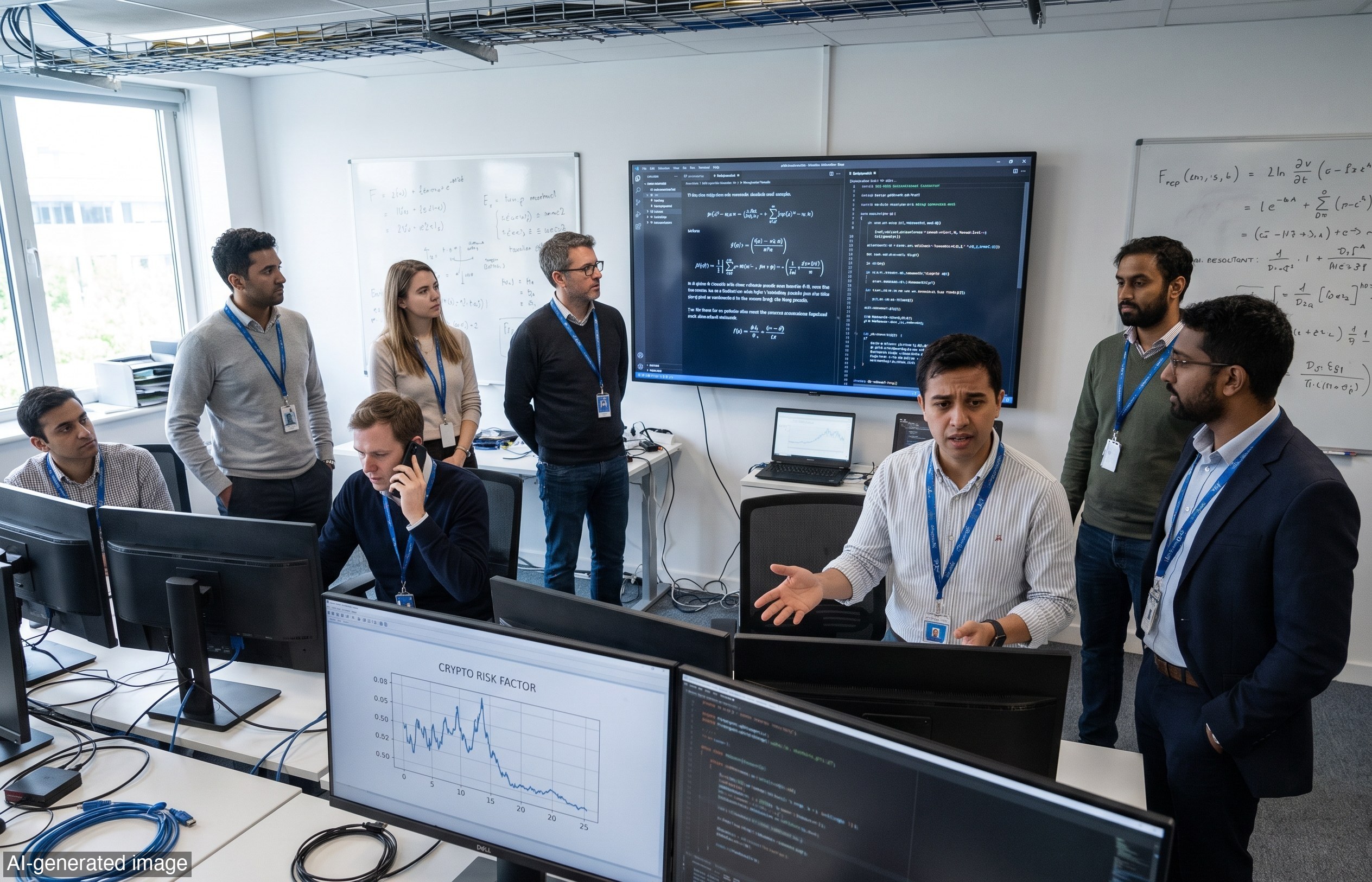
Kagan added a second complication: unlike oil or wheat, compute is not a static commodity. Newer chips deliver higher efficiency, but the pace of that efficiency gain is hard to predict — which makes pricing future contracts genuinely difficult. Research firm Allium puts hourly compute price volatility at as much as 137% over the course of a year, a figure that underscores both the hedging need and the modeling challenge.
To resolve the settlement question, Kalshi relies on a firm called Ornn, which publishes a dashboard tracking compute pricing data.
The Editorial Read
This is free enterprise doing what it does best: identifying a real economic pain point — unpredictable input costs for a critical resource — and building a price-discovery mechanism around it. Companies that consume large amounts of compute have a legitimate need to hedge; investors and speculators provide the liquidity that makes hedging possible. No regulator mandated this market. No taxpayer funded it. The competition among Kalshi, CME and Intercontinental will sharpen the product and compress the cost of access.
The open question is standardization. Whoever solves the 'what exactly is a barrel of compute' problem first will own the benchmark — and in derivatives markets, owning the benchmark is worth more than any single contract. Capital rewards clear rules, and the first mover to publish a credible, transparent pricing standard will find that the rest of the market follows.