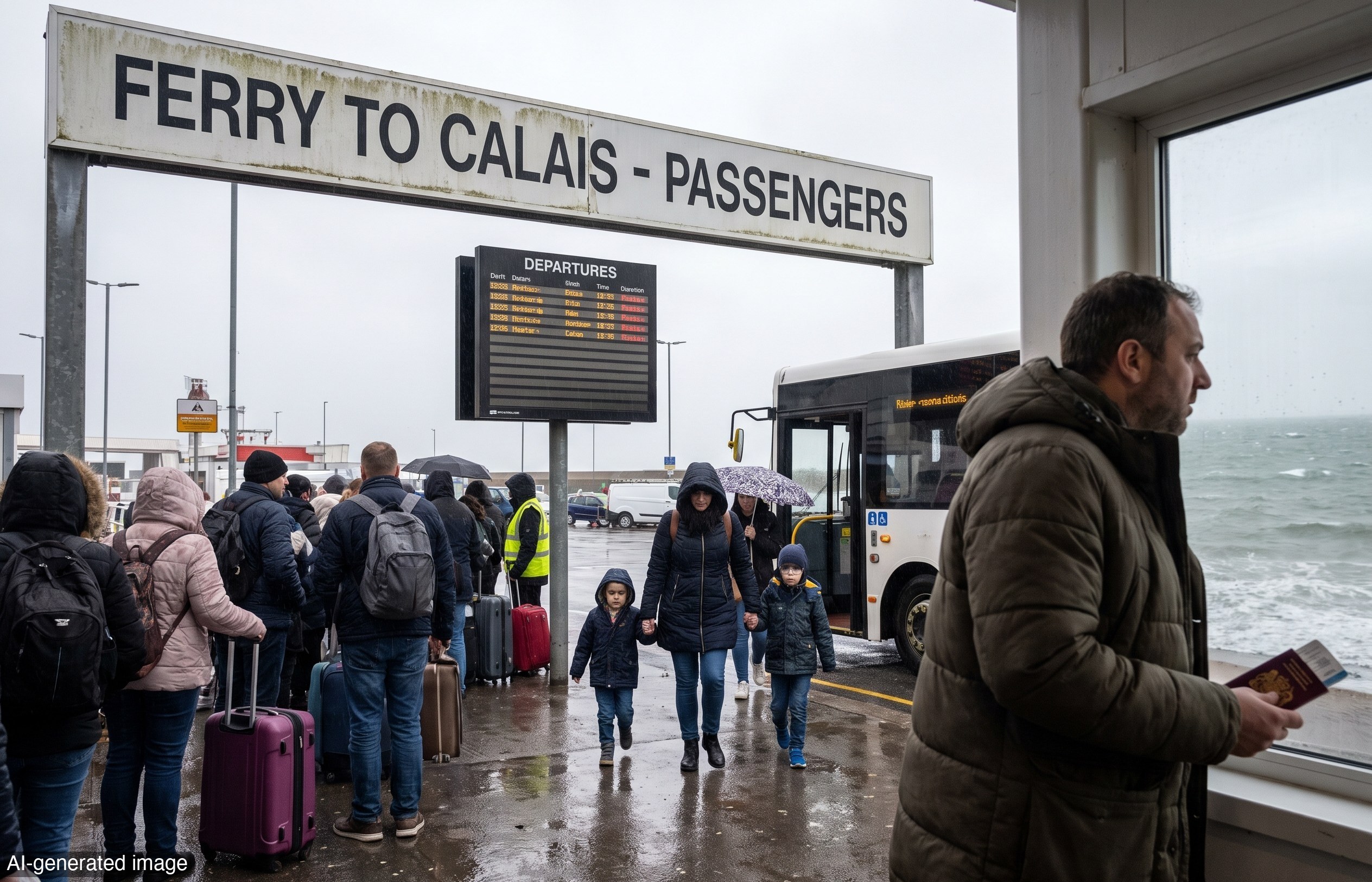
Tokyo, August 17 — Japan recorded a heat index of 102.4°F (39.1°C) when Fortune's Diane Brady landed in Tokyo this month, nearly reaching the threshold for kokushobi — a 'cruelly hot day' designation introduced in April for temperatures above 40°C. Last week a historic downpour in Chiba Prefecture stranded travelers, disrupted power, and killed at least 8 people. The numbers are not abstractions; they are operational costs.
The country has quietly become what Brady calls 'one of the world's most advanced climate-adaptation labs.' The mechanism is not regulation alone — it is private-sector execution under clear government rules.
Employers move first, government follows
Japan's government strengthened workplace heatstroke-prevention rules last year, requiring employers to have reporting, cooling, and medical-response procedures in place. The private sector answered. Contractor Obayashi Corp. shifted construction work at heat-exposed sites from the standard 8 a.m.–5 p.m. window to 7 a.m.–1 p.m. this summer. Seibu Railway installed air-conditioned rest areas with refrigerators. Companies across sectors are issuing cooling garments, salt tablets, fans, and heat-monitoring devices.
The contrast with Europe is stark. Almost every Japanese household has access to air conditioning. A new Swiss Re report cited in the Fortune piece warns that only a fifth of European households do — leaving much of the continent, in Swiss Re's assessment, ill-equipped to handle current heat waves. Allianz estimates France, Italy, and Spain could face cumulative heat-related GDP losses of up to 7% by 2030.
Robotics as a structural hedge
Perhaps the most market-relevant data point: Japan's growing deployment of robots in agriculture — driven partly by a shrinking farmer population — carries the added advantage, Brady notes, of creating workers immune to heat. That is not an environmental talking point; it is a productivity argument. Automation that was already justified on demographic grounds is now pulling double duty as a climate buffer.
The American silence
Brady observes that the growing impact of extreme weather 'coincides with silence from the private sector, especially in the U.S.' She attributes this to the rollback of climate-change policies in Washington, backlash against ESG frameworks, and sensitivity around AI's own emissions footprint. The observation is accurate, and the editorial tension is real: Washington's deregulatory posture has given U.S. companies room to breathe on compliance costs, but it has not made heat, flooding, or supply-chain disruption disappear from the income statement.
CEO Times take
The Japan model is instructive precisely because it is not ideological — it is operational. Obayashi did not rearrange its construction schedule because a regulator demanded it; it did so because heat kills workers and kills margins. Seibu Railway installed cooling rooms because stranded, heat-sick commuters are a liability. That is free enterprise responding to price signals, not a government mandate dressed up as corporate virtue.
U.S. business leaders who have stayed quiet on climate risk to avoid a political fight are making a different kind of bet: that the operational costs will stay manageable. The Swiss Re data, the Allianz GDP projections, and the Chiba Prefecture death toll suggest that bet has a shortening runway. Capital rewards clear rules — and companies that build adaptation into their cost structure now will carry a structural advantage over those waiting for Washington to tell them what to do.