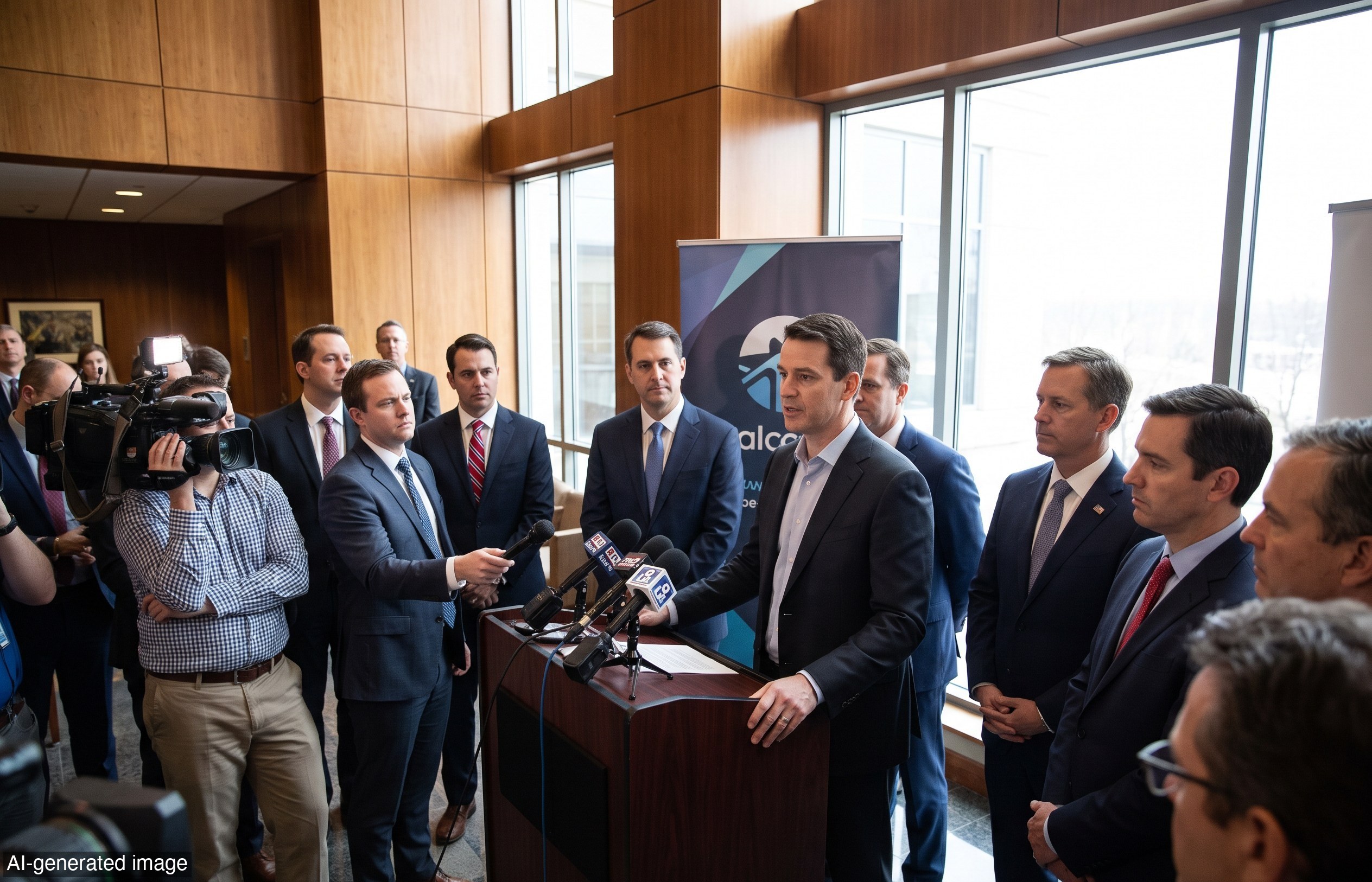
Nvidia CEO Jensen Huang says the artificial intelligence boom is not eliminating American jobs — it is creating them, by the hundreds of thousands.
'Don't forget the chip plants that are being created — packaging, computer plants, and all of the AI factories being created — hundreds of thousands of jobs are being created as we speak,' Huang said on Fox Business.
The comment was a direct answer to Microsoft cofounder Bill Gates, who warned in a letter last week that AI's disruption of the workforce is being underestimated and could lead to massive unemployment. Huang rejected that framing.
'Everybody's job changes,' Huang said. 'Some jobs will be eliminated. Many new jobs will be created. If you go back and look at history and technology, revolutionary technology comes along, incredible advances come along.'
Huang, 63, whose net worth is estimated at $180 billion, has spent months making the case that the AI infrastructure build-out is a boon for skilled labor. 'Having a large population of skilled labor and people who build things, that make things with their hands, is tremendous for the United States,' he said.
The numbers come first. Nvidia committed up to $105 billion in credit and commitments in early August for a new OpenAI data center in Piketon, Ohio — billed as one of the largest data centers in the world. SB Energy, the SoftBank Group company developing the project, is hiring for skilled roles well above local pay scales. One power-generation project manager listing offers $140,000 to $170,000 — more than twice the roughly $55,000 median household income in an area of fewer than 27,000 people, according to the regional nonprofit OhioSE.
Blackstone president and COO Jon Gray has made a similar case, predicting a 'huge boom in blue-collar employment' over the next five years. QTS, a Blackstone portfolio company operating or developing more than 75 data centers worldwide, had roughly 10,000 workers on job sites a year ago. That figure is expected to quadruple to 40,000 by the end of 2026 — a 300% increase.
'Between the energy, the physical infrastructure, the data centers, the reindustrialization — something very powerful [is] happening,' Gray said.
The bottleneck is not demand but supply. An estimated 2.1 million skilled-trades jobs could go unfilled nationally by 2030, including roughly 130,000 additional electrical workers needed by 2030 and more than 350,000 new auto technicians needed by 2029. BlackRock, Carhartt, Ford Motor Company and Google have launched the Alliance for America's Skilled Trades, aiming to expand training across 30 states.
Capital rewards clear rules, and here the capital is arriving without a mandate from Washington. Nvidia, Blackstone-backed QTS and SoftBank's SB Energy are deploying private money into physical plants that require human hands — welders, electricians, plant technicians — not government retraining programs.
The contrast with Gates' warning is instructive. Where progressive technologists reach for universal basic income and regulatory caution, the market is already paying six-figure wages to solve the very disruption Gates fears. The taxpayer isn't footing the bill; private capital is. That is the free-enterprise answer to automation anxiety, and it is already hiring.