The numbers come first. A new report from the Bridgespan Group, a U.S.-based philanthropy advisory firm, released September 7 at the Philanthropy for Better Cities Forum in Hong Kong, finds that Asia's wealthy families run their giving the way they run their companies: hands-on, metrics-driven, and rarely outsourced.
About 94% of the Asian families Bridgespan studied are in their first or second generation of wealth, compared with 85% of families in high-income economies elsewhere. A similarly high share still control the businesses that built their fortunes, versus 68% outside the region.
That continued ownership shapes the giving model. Business-linked philanthropy is used by 95% of wealthy families in Asia's middle-income economies and 80% in its high-income ones. Outside Asia, just 28% of high-income families give through their businesses — most, like Bill Gates and Warren Buffett, spin off separate foundations instead of channeling capital through Microsoft or Berkshire Hathaway.
'The level of control that families expect to have over their giving — because they're still so used to having that level of control over the corporate — is definitely a lot more hands-on,' said Gwendolyn Lim, head of Southeast Asia at Bridgespan and an author of the report. She traces the pattern to Asia's conglomerate era, when tycoons built sprawling groups by spotting market gaps and grew comfortable running unrelated operations directly — a habit that carried straight into their charitable arms.
More than three-quarters of Asian family philanthropies partner with government, versus 58% outside the region. Lim says Asian families, accustomed to dealing with ministries through their businesses, see little friction in doing the same through their charities, while Western donors 'get nervous' about working that closely with the state.
On transparency, Asia scores notably higher on raw output: more than 80% of Asian families report metrics like schools built or teachers trained, compared with 45% of families in high-income economies elsewhere. Few families anywhere, however, measure actual outcomes — a gap Lim calls 'pretty terrible.'
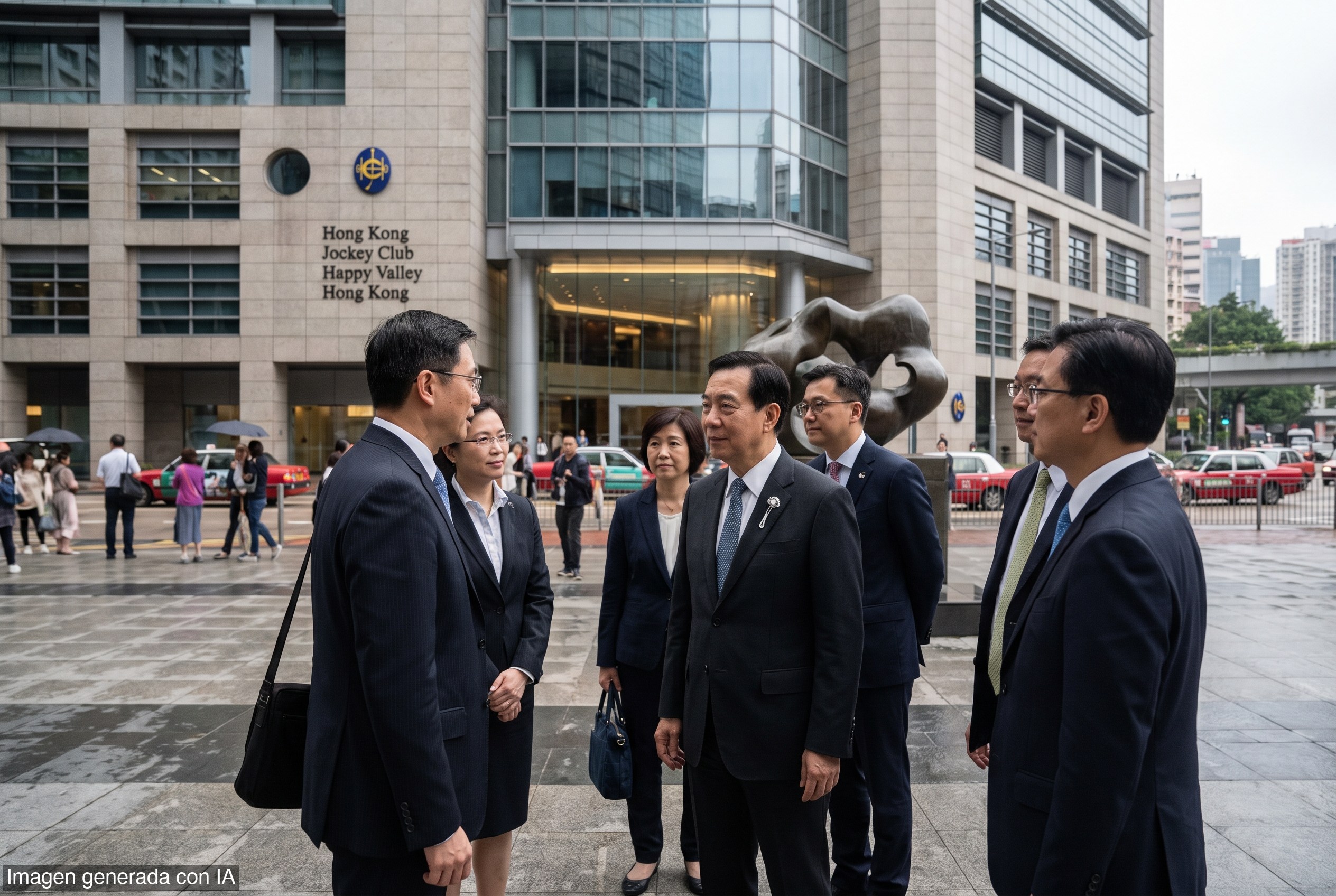
Bridgespan also updated its global giving rankings for 2020–2024. The Hong Kong Jockey Club, the city's only licensed betting operator, leads Asia's corporate givers at $774 million a year, ahead of Tencent at $404 million. Globally it ranks No. 8, behind Deutsche Telekom and well behind Johnson & Johnson, the world's top corporate giver at $3.8 billion annually. Its charitable arm, the Hong Kong Jockey Club Charities Trust, gave $705 million a year on average — the region's top philanthropic organization, just short of the global top 10, where the Gates Foundation leads at $6.5 billion a year.
The pattern here is straightforward. Capital that stays inside a family-controlled enterprise tends to stay accountable to the people who earned it, not to a grant committee three steps removed from the balance sheet. Asia's philanthropists report their outputs at nearly double the Western rate precisely because they never stopped thinking like operators.
The heavier reliance on government partnership, though, is worth watching. Free enterprise built these fortunes without ministries; philanthropy built on the same private capital shouldn't need to lean on the state to scale.