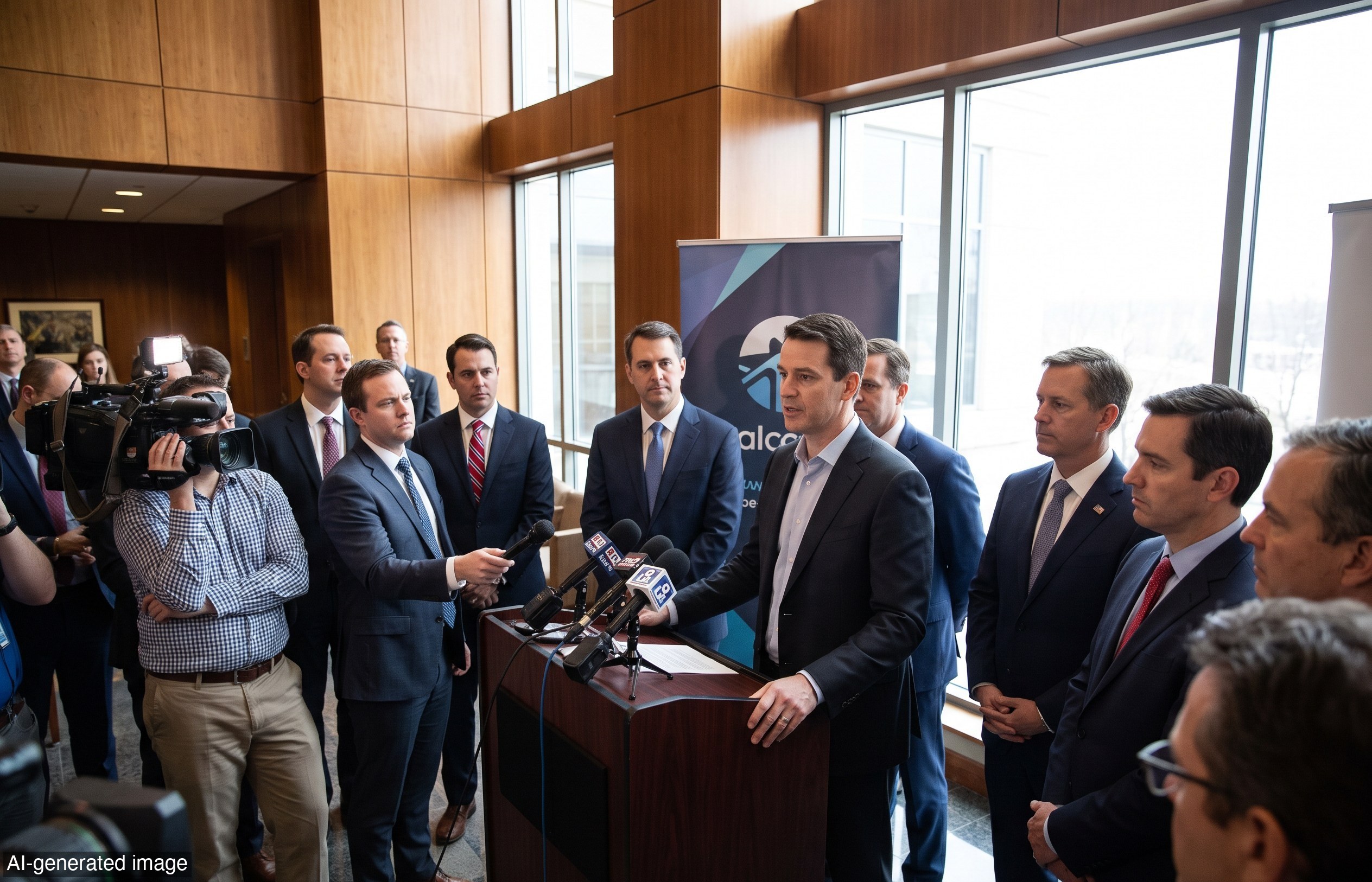
The numbers come first: since going public in March on the Nasdaq Global Market, Greenland Energy's market cap has plunged nearly 85% to roughly $54 million. For a company that went public on the promise of unlocking what CEO Robert Price calls the next Prudhoe Bay, that is a brutal verdict from the market — even if Price insists the underlying prize has not moved.
What happened
Greenland Energy, a Texas-based driller, holds the only exploration licenses still active in Greenland's Jameson Land Basin — grandfathered rights originally won by London-based White Flame Energy and later acquired through U.K.-based 80 Mile, which partnered with Price's team to take the company public via a reverse merger earlier this year. The plan was straightforward: drill a first test well this summer, with a camera crew overseen by producer Phil 'Dr. Phil' McGraw documenting the effort.
It did not go as planned. Local opposition escalated, permitting slowed, and the Greenland government asked the company to shift drilling to winter for environmental reasons — birds migrated, tundra frozen, easier surface access. Price's team mobilized equipment accordingly. A drilling rig left Calgary en route to Montreal. Then, this week, the government signaled it needed more time, and the project was pushed back to the end of 2027 — an 18-month delay from the original schedule.
'It was very frustrating. We've had some ups and downs in the last week or so,' Price told Fortune. 'We had a drilling rig in Calgary that was en route to Montreal. So there were some sunken costs.'
The asset case
Price is not walking away. He argues the single test well could hold up to 2.9 billion barrels of oil. 'The prize is still there, and the upside is still there. The timing is the only thing that's changed,' he said. The company says it has preserved cash and remains financially sound, though Price did not provide specific liquidity figures beyond that characterization.
The Jameson Land Basin on Greenland's east coast has never been drilled onshore, despite decades of geological study. Earlier offshore efforts — including more than $100 million in seismic work by ARCO in the 1970s and Cairn Energy's abandoned program in 2011 — produced mixed or failed results. Price's onshore thesis is therefore unproven but also untested, which is precisely the point.
Greenland operates under a climate-related moratorium on new oil licensing. Greenland Energy's licenses survive only because they predate that moratorium — a grandfathered loophole that makes them uniquely valuable and uniquely exposed to political risk, particularly as the White House has repeatedly signaled interest in annexing the territory to access its petroleum and critical minerals.
What it means
Capital rewards clear rules, and Greenland Energy is learning what happens when the rules are anything but. The 85% market-cap collapse reflects not a failure of geology but a failure of regulatory predictability — the kind of permitting uncertainty that drives exploration dollars toward jurisdictions with stable legal frameworks and away from politically contested territories.
For free-enterprise advocates, the story is a familiar one: a small operator with a legitimate resource thesis, grandfathered rights, and private capital at risk finds itself hostage to bureaucratic timelines and shifting government signals. The Greenland government's last-minute reversal — after equipment was already rolling — imposed real costs on private investors with no compensation. That is not a climate policy. That is regulatory risk dressed up as one. The market priced it accordingly before lunch.