The numbers come first. Scalable Capital, the Munich-based digital investment platform with more than €60 billion in client assets and over 1 million customers, has opened its brokerage infrastructure to AI assistants including ChatGPT, Claude and Grok. The company told Reuters it is the first bank in Europe to do so.
The service, branded 'Agentic Investing,' connects customer accounts to supported AI agents through the Model Context Protocol — an open technology standard, not a formal partnership with OpenAI or Anthropic. Customers can analyze portfolios, set up savings plans and place trades through natural-language prompts. Scalable Chief Product Officer Alexander Seipp told Fortune the integration is designed to let investors begin their financial 'client journey' inside an AI assistant and complete it through Scalable's regulated banking infrastructure.
'It certainly creates a level-playing field,' Seipp said. 'Access to information and to compute and to intelligence is now available — really — literally in your pocket, 24/7.'
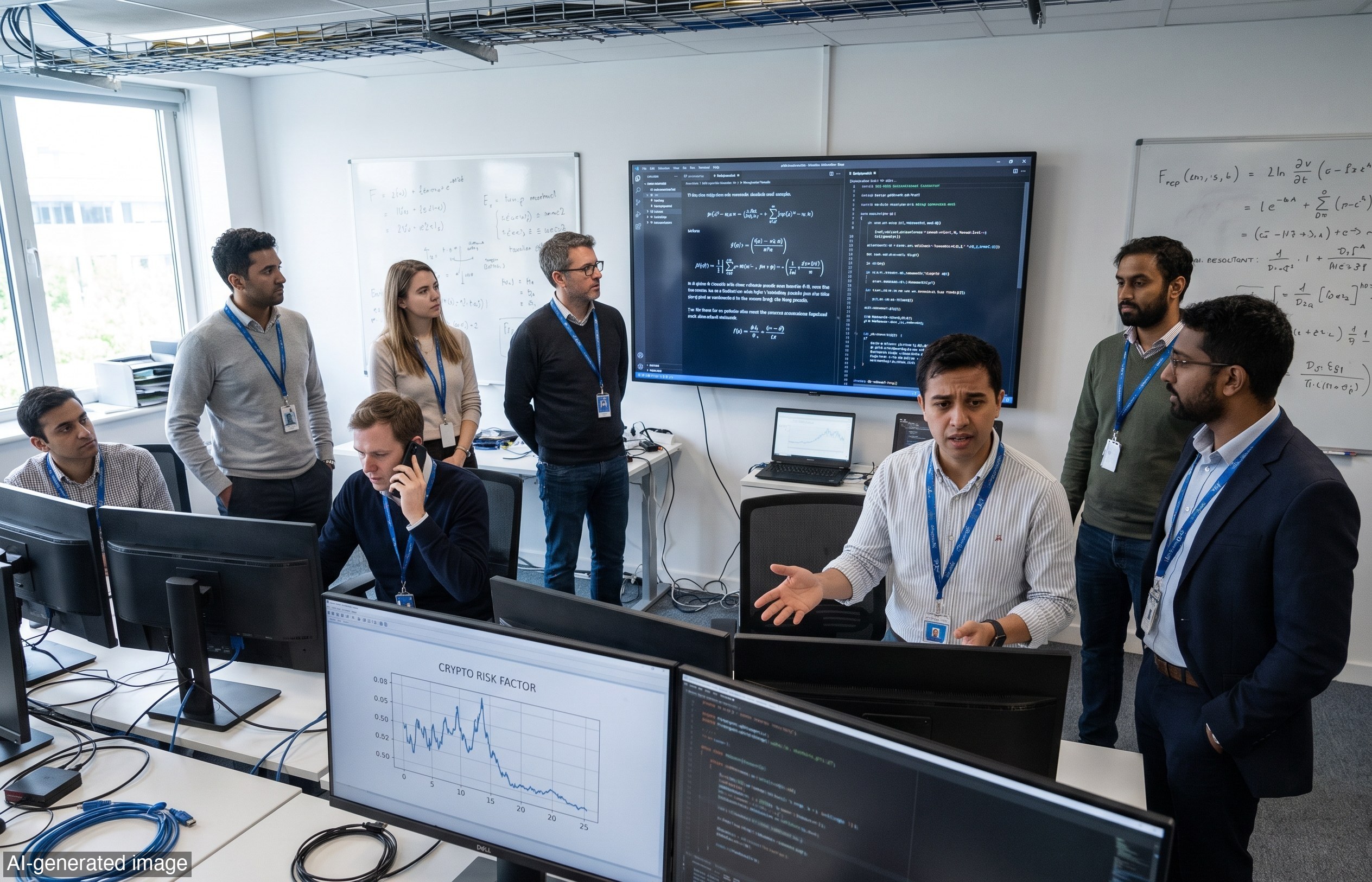
The performance data is striking — and complicated. A June research report from Elm Wealth tested Claude, ChatGPT, Gemini and Grok in a 'Crystal Ball Challenge,' feeding the models historical Wall Street Journal front pages with market-moving information while withholding actual market outcomes. Across roughly 200 sessions, Claude beat human players in 76% of sessions. ChatGPT beat them in 63%. Gemini managed 43% and Grok 51%.
But researchers Jerry Bell, Victor Haghani and James White identified a critical flaw: the models took far too much risk relative to the trade context. Average position sizing in stocks ran 7x to 12x across the AI systems. The study noted that the US stock market has moved by over 5% on 23 days and by over 9% on seven days since the year 2000 — a frequency that makes leverage of that magnitude a recipe for catastrophic capital loss. The models understood risk-management concepts such as the Kelly criterion in theory, the researchers found, but failed to apply them when executing simulated trades.
Scalable has built guardrails into the system. Users must approve every trade and savings plan before execution. The current platform does not allow AI assistants to make payments or withdraw money from accounts. Seipp said the AI connection follows the same core security protocols as Scalable's existing applications, including strong customer authentication.
Seipp acknowledged the rollout will not reach all customer segments at the same pace. 'Maybe not for all client segments at the same speed,' he said. 'But we clearly see potential that there is a large group of clients that would be interested in doing it.'
Founded in 2014, Scalable has expanded beyond Germany and Austria into Italy, Spain, France and the Netherlands. In July the company said it would offer more than 1.8 million derivatives from seven major issuers. OpenAI, Anthropic, Google and xAI did not respond to Fortune's request for comment on the use of their AI assistants for financial trading.
CEO Times reads this as a genuine market-structure moment — and a cautionary one. When a regulated European bank opens its trading rails to open AI protocols, it signals that the administrative moat protecting legacy financial intermediaries is eroding faster than regulators can redraw it. Free enterprise rewards the innovators here, and Scalable deserves credit for moving first. But the Elm Wealth data is a hard reminder that raw predictive power and sound risk management are not the same skill. Capital does not forgive leverage errors because the model scored well on direction. The human approval layer Scalable has retained is not a bureaucratic formality — right now, it is the last line of defense between a clever algorithm and a catastrophic drawdown.