The numbers come first.
When the Iran war began, the world held roughly 4.4 billion barrels in commercial and strategic crude stockpiles. Refined products — gasoline, diesel, jet fuel — started at only 1.4 billion barrels. Both piles have since dropped by 200 million barrels each, according to Susan Bell, senior vice president of downstream research at Rystad Energy. The math is unforgiving: crude had room to absorb the draw; refined products did not.
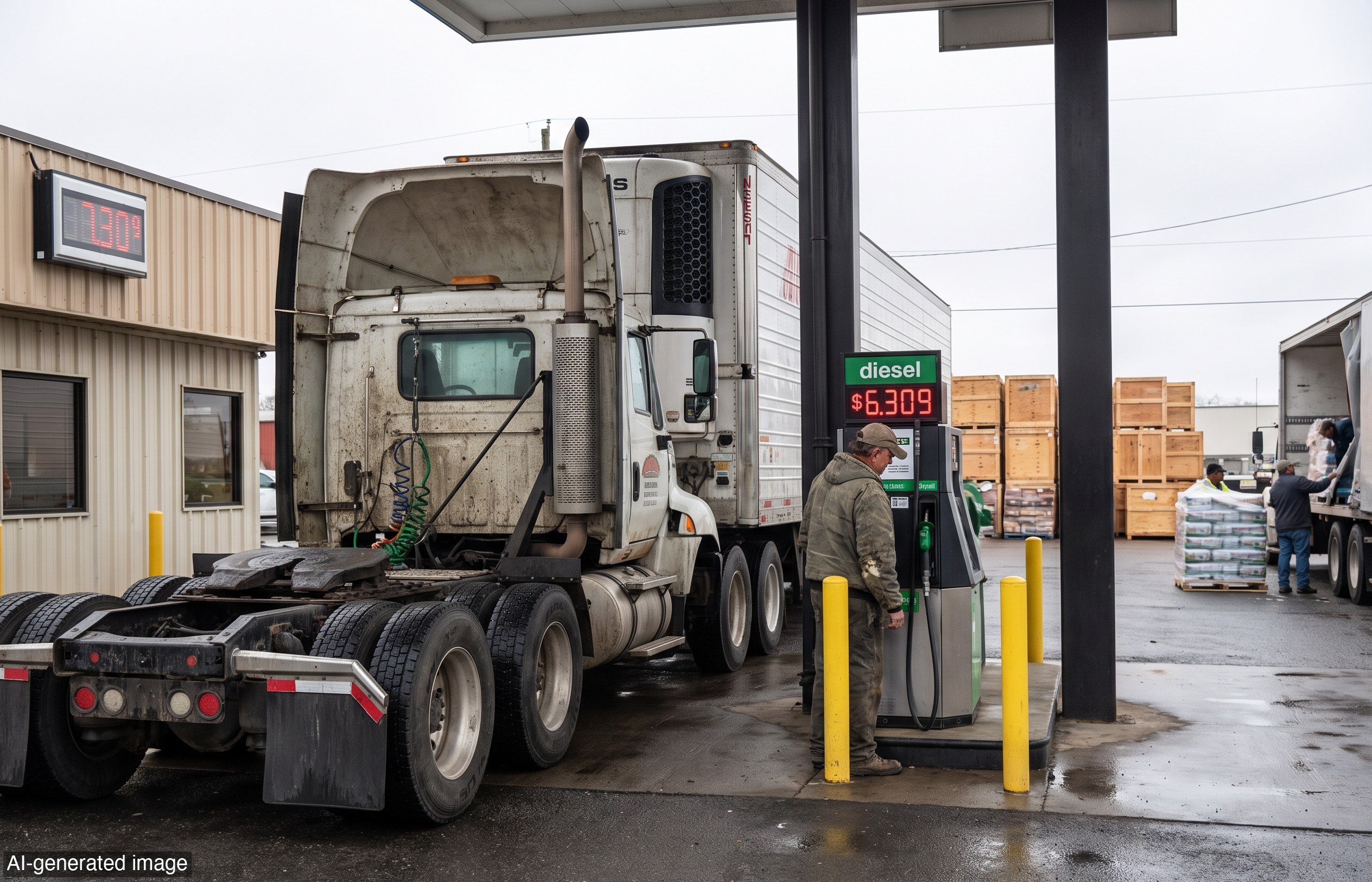
The consequence is visible at the pump. At the start of the conflict the U.S. gasoline crack spread — the margin between crude oil and finished fuel — stood at roughly $8 a barrel. It now sits at $40 to $50, Bell told Bloomberg TV on Wednesday. 'Products just had a lot less to start with, so the crisis is intensifying on product stocks,' she said.
Three chokepoints, one administration.
The geography of the problem is almost deliberately cruel. Iran and the U.S. have paused hostilities in the Persian Gulf while diplomacy proceeds, but no deal recognizing Tehran's control over the Strait of Hormuz is acceptable to Washington or its regional partners. Simultaneously, Iran-backed Houthi rebels are threatening vessels in the Bab el-Mandeb Strait, the southern gate of the Red Sea that Saudi Arabia uses to route oil around Hormuz. Ships can detour through the Suez Canal, but the canal cannot accommodate the largest crude tankers — and Helima Croft, head of global commodity strategy at RBC Capital Markets, told CNBC on Thursday that Iran could attempt to strike the Suez Canal as well. 'So we are starting to talk about the kind of no way out scenarios because of this new Red Sea unrest,' Croft said.
Add the Black Sea. Ukraine has been striking Russian oil infrastructure and tankers carrying crude and refined products; Russia, one of the world's top diesel producers, has already banned exports to protect domestic supply after refinery damage slashed output. 'It's really tightening the products market as well as the crude market,' Croft added. 'This administration now in Washington — they're facing an everything everywhere all at once situation.'
A Ukrainian strike on an Iranian vessel in the Caspian Sea, suspected of ferrying military supplies between Tehran and Moscow, rounds out the picture.
Washington's toolkit is nearly empty.
Dan Pickering, founder of Pickering Energy Partners, told Fortune that if both the Bab el-Mandeb and the Strait of Hormuz are effectively closed, oil prices could return to the late-April high of $124 per barrel in August. 'We don't have multiple months because we're already starting from a tougher spot,' Pickering said. 'It's going to be on us pretty quickly.'
President Trump has already exhausted most conventional relief valves. Emergency reserves have been largely depleted. A gas-tax holiday requires congressional approval that a divided legislature is unlikely to provide. U.S. producers and refiners are already operating near all-time highs. The Jones Act has been waived to allow more fuel shipments along domestic coastlines. Crude oil is flirting again with $100 a barrel.
CEO Times take. Free markets can absorb a single supply shock; they struggle when three major transit corridors face simultaneous disruption. The refined-products gap is the story the commodity desks are not yet screaming loudly enough about: crude can sit in a tanker waiting for a route to clear, but gasoline and diesel cannot wait long before the consumer feels it. Washington's best move now is the one it has historically resisted — getting out of the way of domestic energy investment so that the next crisis finds American production and storage capacity at genuine maximum, not just a statistical peak. Capital rewards clear rules, and the clearest rule of all is that energy security begins at home.