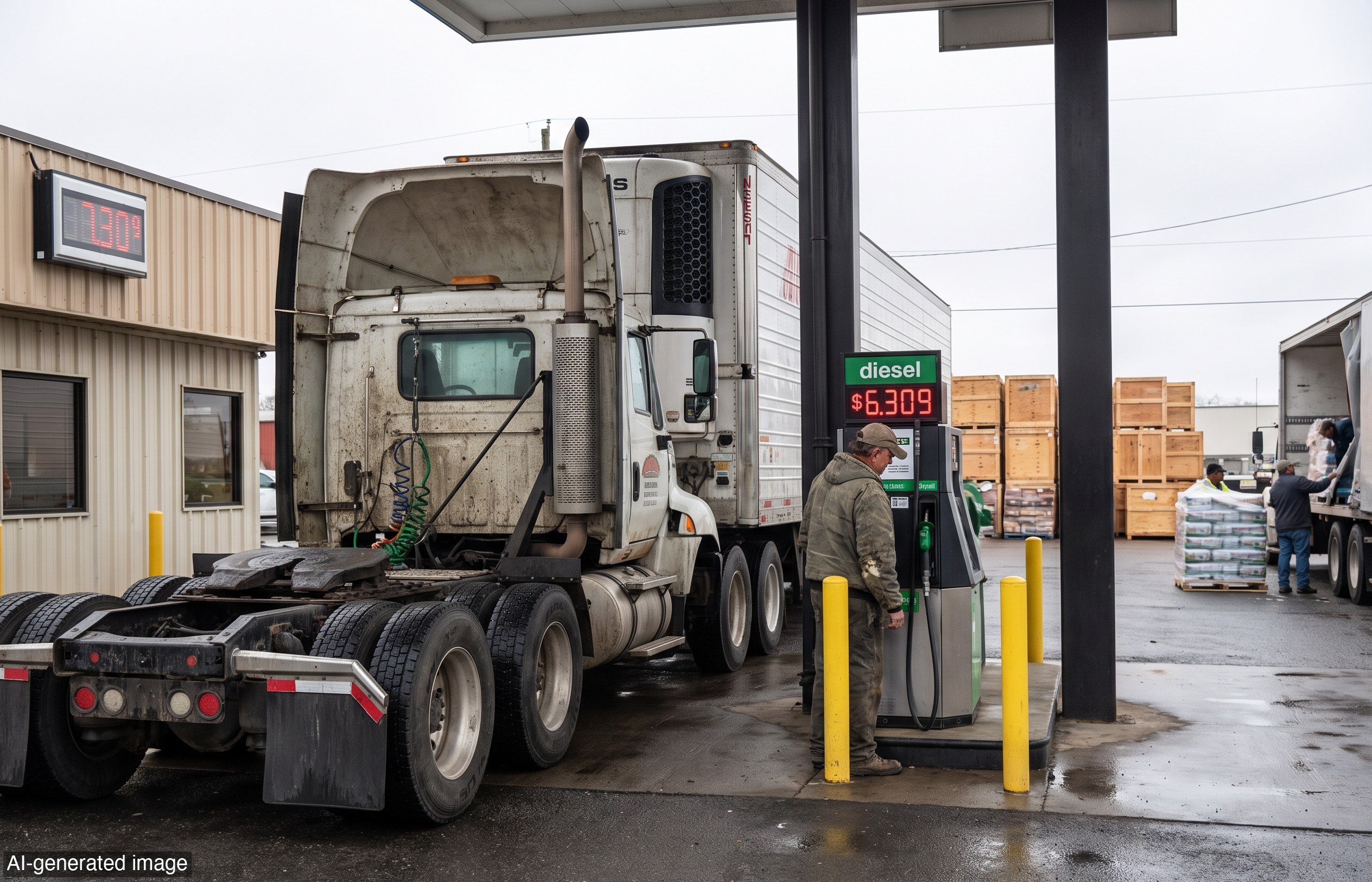
Diesel climbed to an average of $5.85 a gallon nationwide on Friday, a record high, as the ongoing war between the U.S. and Iran continues to disrupt global fuel supply, according to the Associated Press.
The spike traces directly to crude oil. Brent crude, the international benchmark, was trading above $95 a barrel on Friday, up from roughly $70 before the war began, with most tanker traffic bottlenecked in the Strait of Hormuz. Before the U.S. and Israel launched their campaign against Iran in late February, the national average for diesel was about $3.76 a gallon, per AAA.
Because diesel powers the trucks, trains, cargo ships, farm equipment and fishing boats that move food from field to shelf, the cost pressure is already reaching the grocery aisle. Fuel accounts for roughly 15% to 30% of the total cost of food, according to the Independent Grocers Alliance, a group of 7,500 supermarkets worldwide. Perishables that require refrigeration during transport are typically first to show it, according to David Ortega, a professor of food economics and policy at Michigan State University.
Regular gasoline has climbed too, though less sharply. The average price hit $4.15 a gallon, up from $3.20 a year ago and from $2.98 before the war, AAA data show — still well below the 2022 record of nearly $5.02.
The last comparable diesel spike came in June 2022, when prices reached almost $5.82 a gallon following Russia's invasion of Ukraine and the sanctions that followed. Adjusted for inflation, that 2022 peak would run about $6.56 today, and diesel's pre-2008-crisis high of $4.74 a gallon would equal roughly $7.20 in 2026 dollars, according to government data — a reminder that today's nominal record, while real, is not unprecedented once inflation is factored in.
The pain lands at a politically sensitive moment. AP-NORC polling this summer found two out of three U.S. adults disapprove of how President Trump is handling the economy, and higher diesel costs risk compounding that sentiment ahead of November's midterms, per the Associated Press.
Some businesses have already passed costs on to consumers through added fees on online orders and shipments, and experts warn further sticker shock could hit clothing, cosmetics and furniture, not just food, the longer diesel stays elevated.
The underlying story here is supply, not spending. This price shock did not originate in Washington's tax code or in a new regulation on trucking; it originated in a war bottling up crude at the Strait of Hormuz, and the market is pricing that scarcity in real time. Capital and freight networks have no easy substitute for diesel the way a household driver might cut back on a Sunday trip.
The lesson for policymakers is straightforward even if the politics are uncomfortable: domestic energy production and refining capacity, not price controls or fresh mandates on carriers, are what shorten the distance between a geopolitical shock and a grocery bill. The taxpayer and the family buying refrigerated goods are the ones absorbing the difference until supply catches up.