The numbers come first. Cigna Group, ranked 14th on the latest Fortune 500 with $275 billion in annual revenue, has committed two distinct AI investment packages this summer. The first: a projection that AI and predictive analytics tools used to identify chronic conditions — including cancer, kidney disease, and high-risk pregnancy — can save an estimated $200 million over the next three years by connecting patients with clinicians earlier. The second: a $100 million investment through 2028 aimed at reducing the documentation burden on clinicians and accelerating the prescription process.
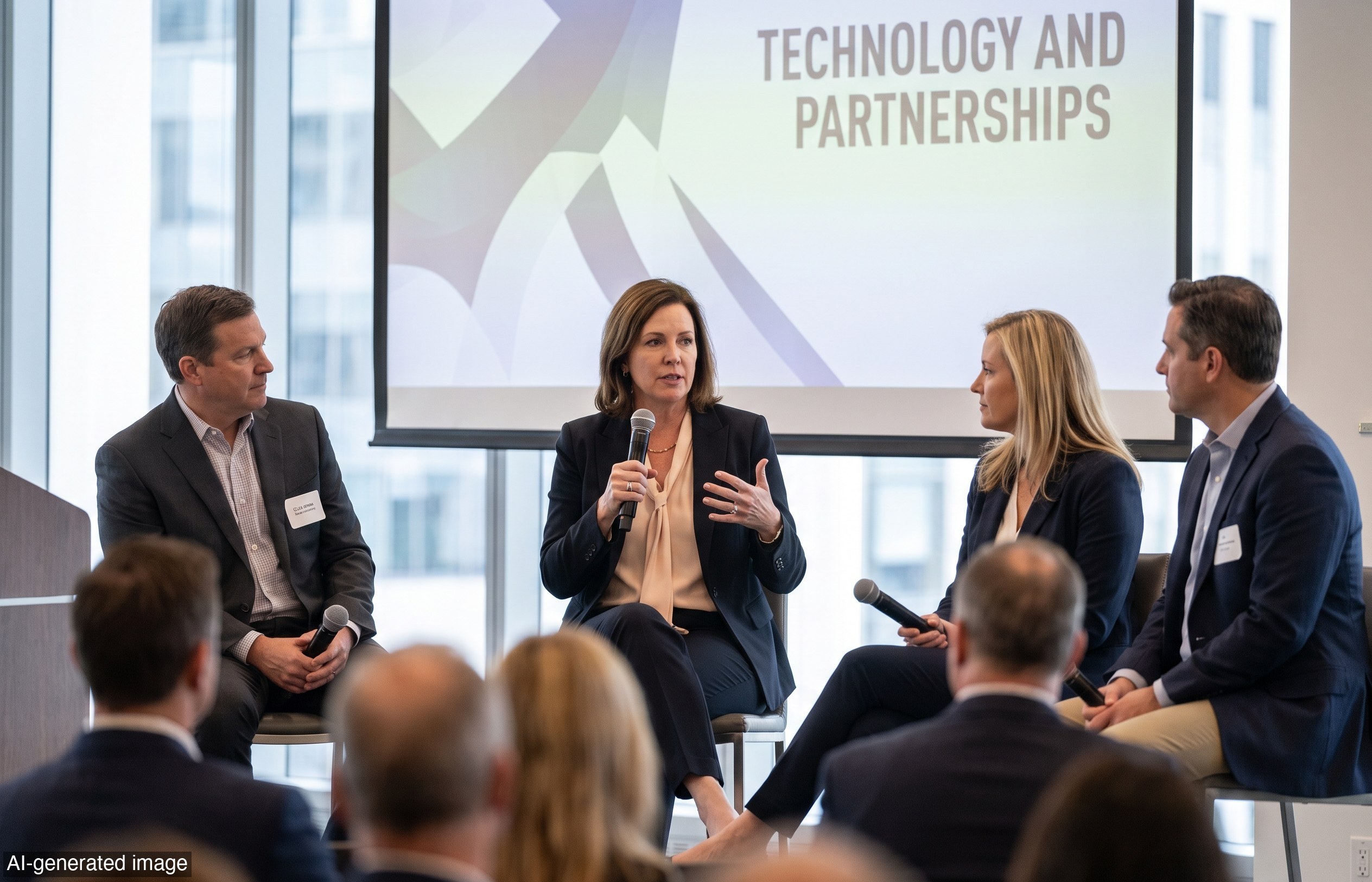
Behind both commitments is Katya Andresen, Cigna's chief data, digital and AI officer, who joined the company in September 2021. Andresen argues the industry has been asking the wrong question. 'We've been on a mission to change that question to, how do I lead in an age of AI?' she told Fortune. Her framework deprioritizes chasing individual use cases and instead demands measurement that ties AI spending directly to health outcomes.
One concrete example illustrates the approach. Cigna analyzed thousands of prior customer conversations about biologics and biosimilars — cheaper FDA-approved alternatives made from living organisms. The biologic Humira, used to treat inflammatory and autoimmune conditions, can cost a patient $7,000 per month. Using those conversation insights, Cigna crafted targeted digital messaging to encourage a switch to the biosimilar alternative. The result: more than 80% of targeted patients opted for the cheaper option. 'That led to a lot more margin,' Andresen said. 'But more importantly, it created a couple hundred million dollars of savings for patients.'
The urgency is real. National healthcare spending now exceeds $5 trillion annually, driven by the rise of chronic conditions, an aging population, and soaring drug and hospital costs. Meanwhile, a Gallup survey published in April found that nearly six-in-ten Americans now use AI to research health information before a doctor visit, and roughly 14 million adults say they have skipped a provider visit after consulting an AI chatbot.
Andresen is candid about the governance challenge that scale creates. 'The good news is, because we are highly regulated, we have a massive amount of controls in place to begin with,' she said, noting that compliance frameworks for machine learning models have been in place for over a decade at Cigna, and extend to third-party vendor data access.
Personal stakes have sharpened her focus. Andresen says a close family member's breast cancer diagnosis forced her to navigate the same fragmented system her company is trying to fix, reinforcing her conviction that 'personalization, not just navigation, is the differentiator that AI can provide.'
CEO Times take: When a $275 billion enterprise deploys capital this deliberately — tying every AI dollar to a measurable outcome in margins or patient cost — it is a case study in how free enterprise, not federal mandate, drives healthcare innovation. The biosimilar campaign alone demonstrates what happens when a company is incentivized to align its margins with patient savings: the market finds the efficiency that regulators rarely can. The $5 trillion annual healthcare bill will not shrink through bureaucratic redesign. It will shrink when companies like Cigna are rewarded for results. The early data suggests the model works.