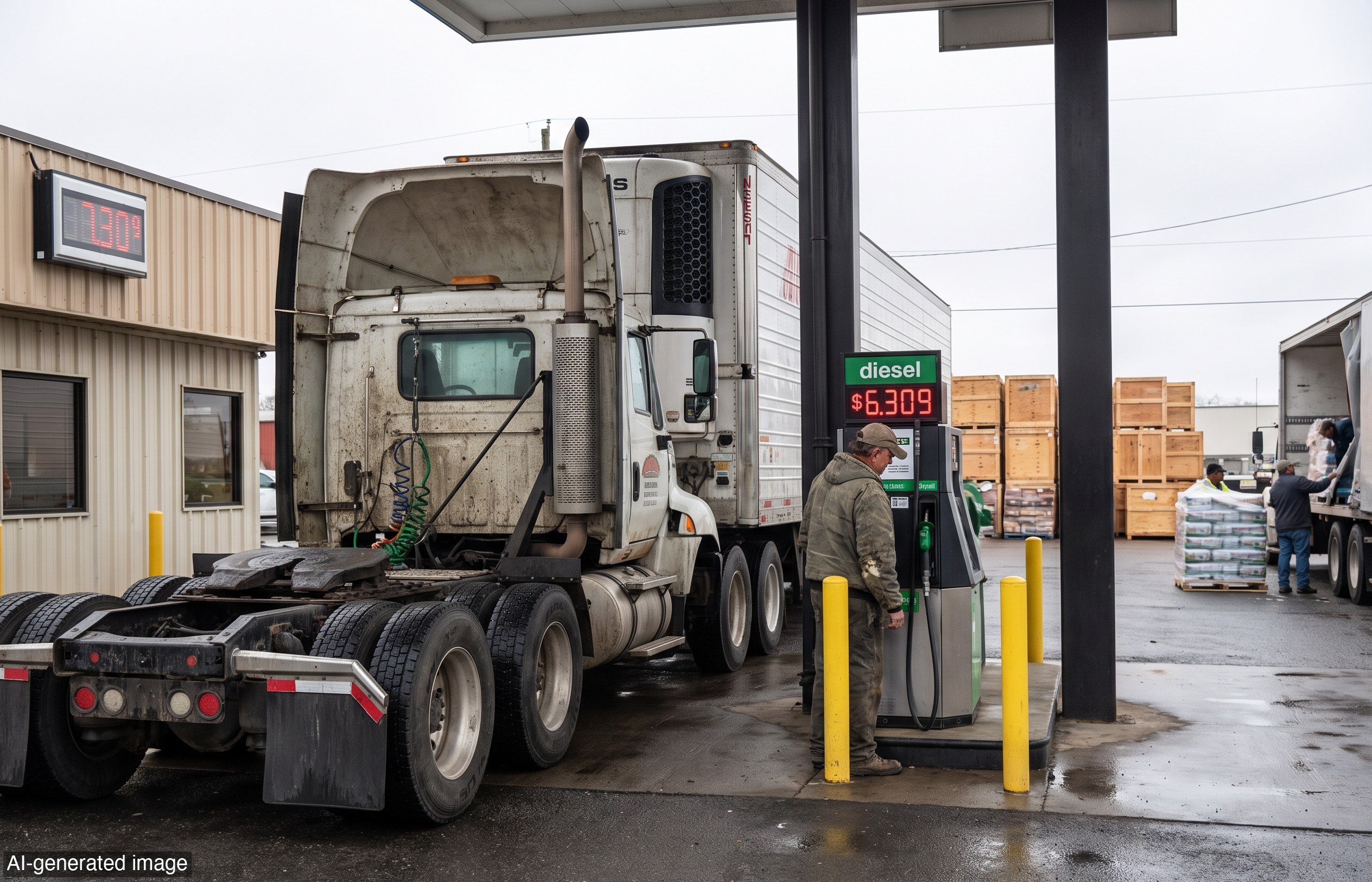
Brent crude touched $89.68 per barrel by 7:15 a.m. Eastern Time on August 27, 2026, according to Fortune. That is $2.27 above the prior morning's price and roughly $21.90 higher than the same time a year ago.
The move matters beyond trading floors. Crude typically accounts for more than half of what drivers pay at the pump, so sharp increases in the benchmark tend to show up quickly at the gas station. Declines move more slowly — the so-called 'rockets and feathers' effect, where prices race up but drift down.
Every gallon bundles crude costs with refining, wholesale markups, government taxes and station-level pricing. When crude spikes, all of those layers get squeezed on top of the base commodity price.
The U.S. Energy Information Administration now uses Brent as its primary reference in its Annual Energy Outlook, a shift that underscores how central the global benchmark has become to American price-setting, even though domestic supply decisions still shape the outcome.
Washington keeps a Strategic Petroleum Reserve for emergencies — sanctions, storm damage, war — but it functions as a short-term safety net, not a long-term fix, according to Fortune's reporting. It exists to keep essential services and industries running through a shock, not to permanently offset market forces.
Supply policy remains the lever with lasting effect. In 2025, the Trump administration moved to reopen more than 1.5 million acres in the Coastal Plain of the Arctic National Wildlife Refuge for oil and gas leasing, reversing the Biden administration's restrictions on Arctic drilling. Shale reserves — oil and natural gas still locked in rock formations — represent additional untapped capacity; the more of it the U.S. can access, the more supply exists to blunt future price spikes.
Oil and natural gas markets are also linked. When oil prices climb, some industries substitute natural gas where they can, pushing demand — and eventually price — higher across that market too.
The numbers come first, and they tell a simple story: global demand and constrained supply are pushing crude higher, and that cost is landing directly on American households through gasoline, heating, and the shipping costs baked into everyday groceries.
The deeper lesson is one of leverage. A government reserve can smooth a shock for a few weeks; it cannot manufacture barrels. Only new leases, new pipelines and new drilling turn scarcity into supply. The 2025 decision to reopen the Coastal Plain, reversing years of restricted access, is the kind of policy that actually moves the long-run price curve — not by decree, but by letting American energy producers answer higher prices with more production.
For consumers bracing for pricier fill-ups this fall, the contrast is instructive. Restriction breeds scarcity and higher costs; access breeds supply and, eventually, relief. Capital and drill bits, not mandates, are what bring barrels — and prices — back down to earth.