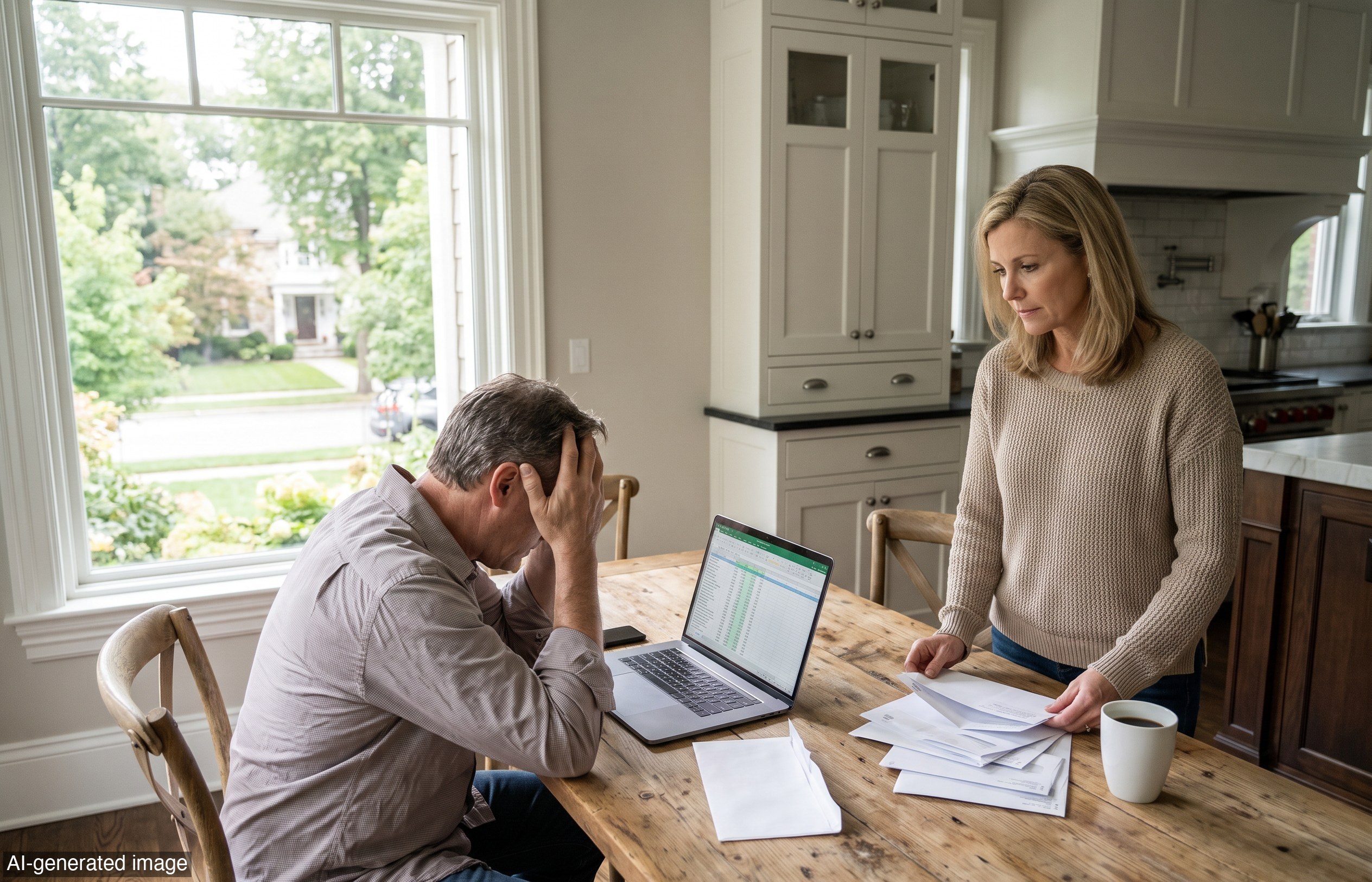
The bill is arriving — and it is large
The bond market is not waiting for the Federal Reserve. Yields on the 30-year U.S. Treasury pushed higher again after Treasury Secretary Scott Bessent's $4 billion buyback plan for longer-dated government debt managed to calm markets for barely a day before another sell-off. With the national debt now topping $40 trillion, Washington is paying close to $3.2 billion a day in interest — a figure that concentrates the mind far more than any Fed statement.
Bessent has argued the United States can 'grow its way' out of its fiscal burden. Few in the bond market appear to share that confidence right now.
Higher rates, real consequences
The repricing is not abstract. A Fed rate increase looks increasingly likely when the committee meets again in September. Higher yields feed directly into mortgage rates, squeezing consumers and homebuilders alike. KB Home CEO Rob McGibney has already flagged the pressure on his sector.
On the fiscal side, the picture is mixed. The Treasury Department reported that business investment rose nearly 10% in the first half of the year, a tangible dividend from lower taxes and reduced regulatory burdens. But the evaporating tariff windfall delivered a $200 billion hit to this year's budget — a trade-off that bond investors are pricing in real time.
AI debt: the hyperscaler premium
Layered on top of sovereign risk is a corporate borrowing surge driven almost entirely by artificial intelligence infrastructure. Alphabet, Amazon, Meta, Microsoft and Oracle are issuing record amounts of debt to fund data centers and compute capacity. According to Goldman Sachs, there has been roughly $500 billion in AI-related debt issuance so far this year. Alphabet alone raised almost $32 billion in debt in 24 hours in February, including a 100-year bond.
Investors are beginning to distinguish between platforms with proven cash flows and promises that have yet to materialize. But the gravitational pull remains toward the same hyperscalers that dominate equity markets — and their appetite for capital is crowding out smaller borrowers, tightening credit conditions across the broader economy.
Walmart reads the room
Not every headline is grim. Walmart has received nearly $3 billion in tariff refunds and says it will reinvest the money in lower prices, particularly in groceries and general merchandise. The retailer currently has more than 11,000 items on 'rollback.' With higher gas prices and more cautious consumers weighing on traffic, the move is as much competitive necessity as goodwill.
---
CEO Times take: The bond market is the most honest accountant in the room, and right now it is sending a clear invoice. The pro-growth framework — lower taxes, lighter regulation, higher business investment — has delivered measurable results. But fiscal discipline is the other half of that equation, and a $40 trillion debt load paying $3.2 billion in daily interest is not a rounding error. Capital rewards clear rules and credible balance sheets; it punishes ambiguity. The administration that champions free enterprise most effectively will be the one that pairs deregulation with a credible path to spending restraint. The bond market is not asking for a press release — it is asking for the math.