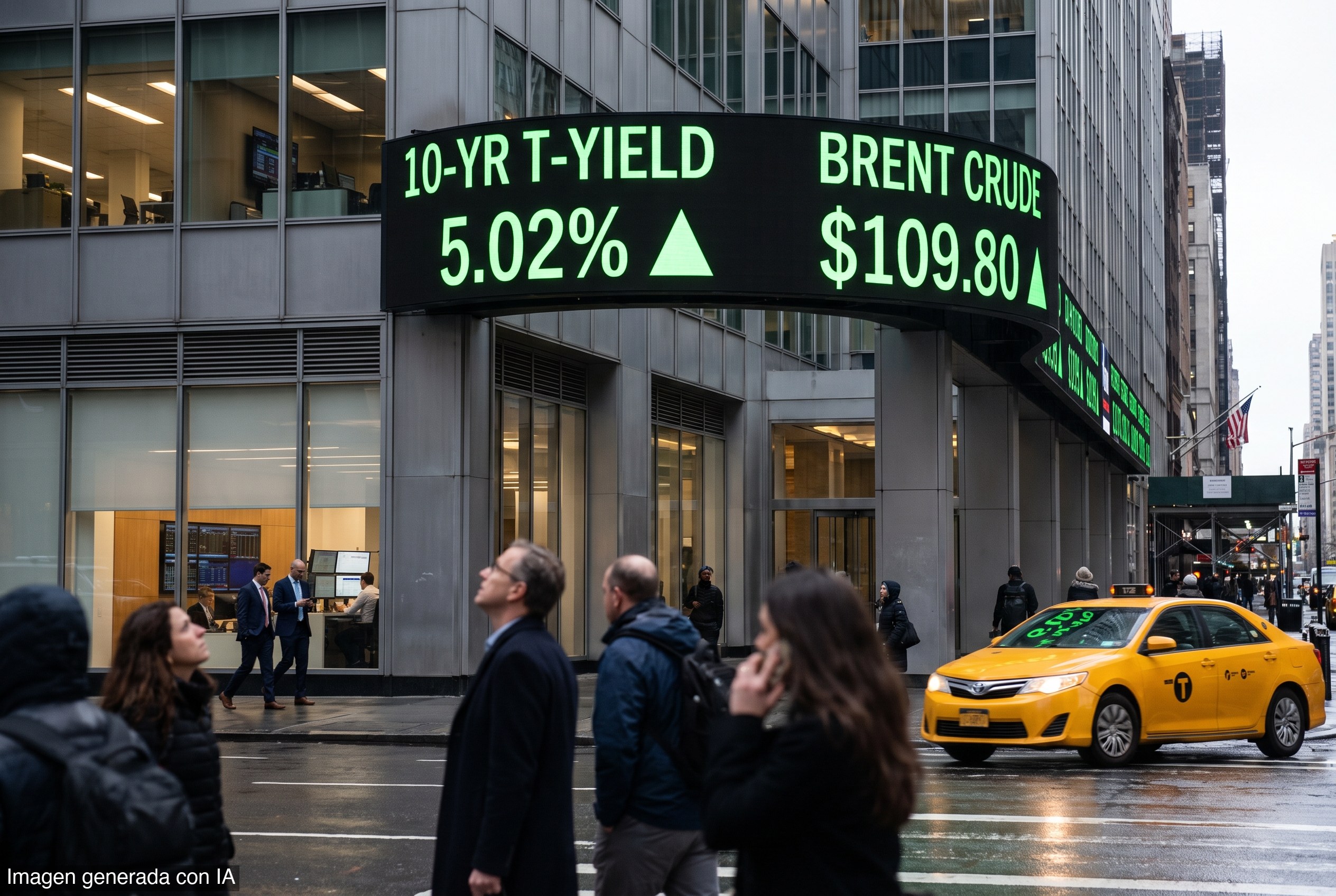
The benchmark 10-year Treasury yield briefly topped 5% for the first time since 2023 as spiking oil prices threatened to spill over into debt markets. Yields later pulled back, but the move marked a surge of more than 100 basis points since just before the Iran war began in late February, when the 10-year rate was below 4%.
Brent crude jumped as high as 4% on Monday to nearly $110 a barrel, the highest since May. The war is now in its seventh month, with little evidence of diplomatic progress toward fully reopening the Strait of Hormuz. Crude and refined fuel products remain pricey.
Energy markets are also dealing with a supply picture that remains strained. While the U.S. military is guiding significant volumes of oil through the Strait of Hormuz, tanker traffic is well below prewar levels. U.S. oil reserves, which are already at the lowest in over 40 years, must keep getting drained. Iran-backed Houthi rebels have seized control of the Bab al-Mandab Strait, and a drone attack has shut down Saudi Arabia’s East-West Pipeline.
The rise in energy costs is pushing inflation expectations higher just as the Federal Reserve is widely expected to hike rates on Wednesday, with other central banks likely to follow. Neil Shearing, group chief economist at Capital Economics, said in a note on Monday that policymakers have become less willing to look through higher inflation caused by supply shocks.
Shearing warned that in a world of high public debt and large fiscal deficits, there is a potential feedback loop through the bond market that could make a difficult situation considerably worse. He added that rising yields can feed fiscal worries, which then drive yields higher still.
For now, Shearing said the U.S. is not yet in a self-fulfilling fiscal crisis because nominal GDP growth is still outpacing the cost of servicing debt. But he said a world laden with debt is more vulnerable to supply shocks that can intensify through the bond market.
The 5% threshold for 10-year Treasury yields could also hit tech stocks, which sold off on Monday, led by chipmakers. Ruchir Sharma warned in a Financial Times op-ed last week that the AI bubble could pop when the 10-year yield decisively breaches 5%.
That is the part Washington never escapes. When borrowing costs rise, the taxpayer does not get a free pass; governments face a more expensive bill to maintain enormous deficits and debt. Capital rewards clear rules, not endless leverage. A market that starts demanding 5% on the 10-year is telling policymakers the same thing in a language they cannot ignore.