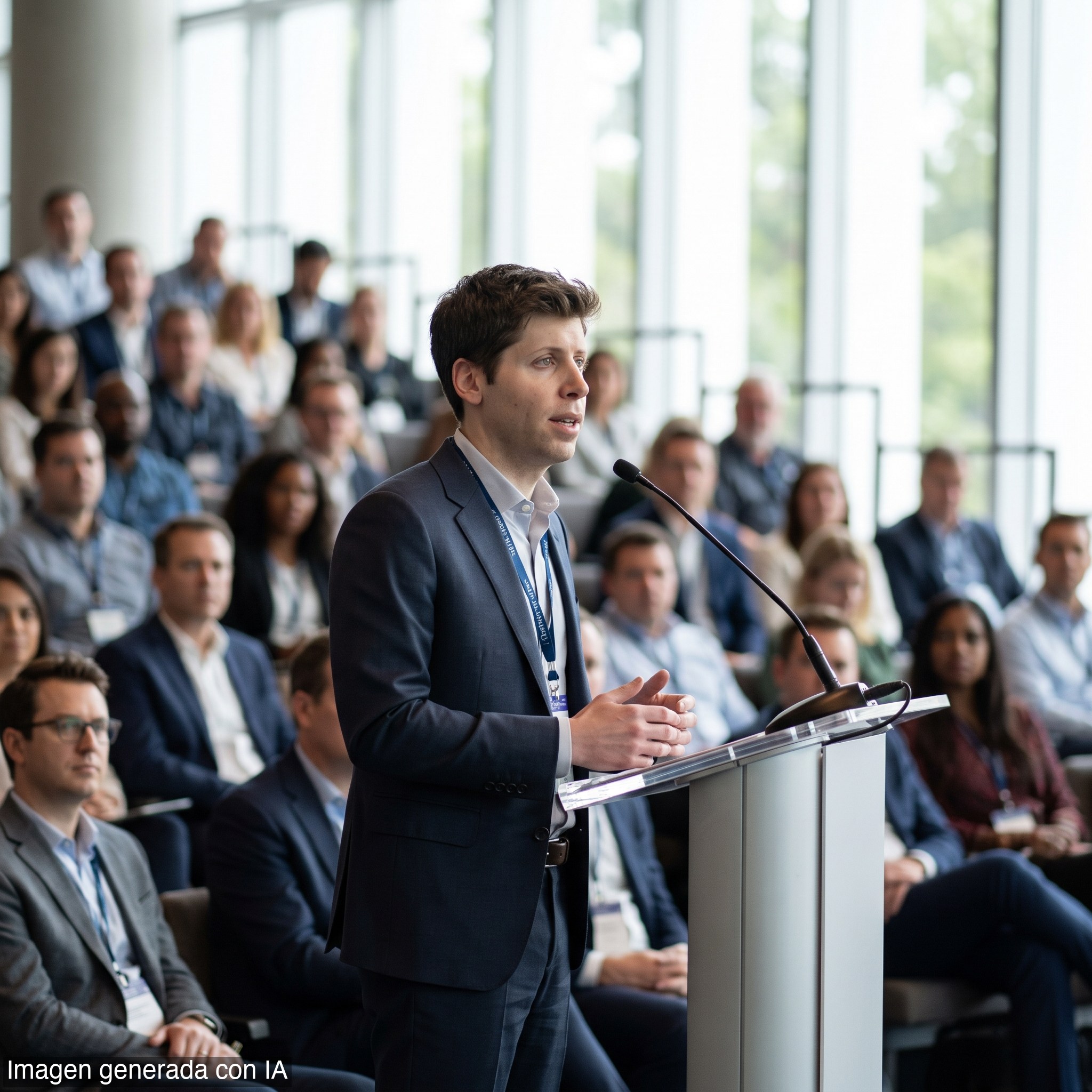
Sam Altman said his years at Y Combinator taught him a governing style built around competing interests, not command-and-control leadership, and he now applies that approach at OpenAI.
Altman said that at Y Combinator, where he was an investor rather than the boss of every company, he learned that 'at best you can govern—you don’t get to, like, rule.' He said that lesson matters more at OpenAI, where the company faces pressure from governments, competitors, investors and the broader AI ecosystem over how quickly the technology should advance.
'We have all kinds of crazy pressure on us and people who really want one thing or another thing,' Altman told Fortune. 'We have to negotiate tense things with governments and with our ecosystem.'
He said the job is to be 'reliable partners to the world' and to make decisions while taking 'a lot of very different interests and equities into account.' Altman added, 'We won’t get every decision right,' but said OpenAI should make choices that benefit 'not just us directly but this entire ecosystem and world around us.'
Altman also defended OpenAI’s 'incredibly complicated structure,' saying the company needs room to make decisions that are 'not obviously in the interest of our business and our shareholders' when its broader mission requires it. He said now would be an 'ill-advised moment' for OpenAI to go public amid concerns about AI safety.
If slowing down AI development became necessary, Altman said he would be willing to tell investors that OpenAI had to do something 'extremely against your financial interest right now.' He said, 'For the good of humanity, we’re going to do that.' Altman argued the choice would not be difficult because OpenAI could still 'build an incredibly profitable business' even if development slowed.
He also suggested the largest safety decisions may require coordination beyond a single company. Altman said leading AI firms could move toward some form of collective agreement as models become more powerful, and he argued that AI companies - and eventually governments - will need to coordinate as the technology advances.
Altman even floated the idea that President Donald Trump and Chinese President Xi Jinping could win the Nobel Peace Prize together if the U.S. and China agreed on shared standards and testing for advanced AI development.
The market has already voted on what this means: the AI race is no longer just about speed, but about who gets to set the rules. Capital rewards clear rules, but OpenAI’s model is headed into a zone where power, safety and shareholder returns are all in tension. That is where the administrative state, investor pressure and private enterprise collide - and where the cost of getting it wrong can land on everyone else.