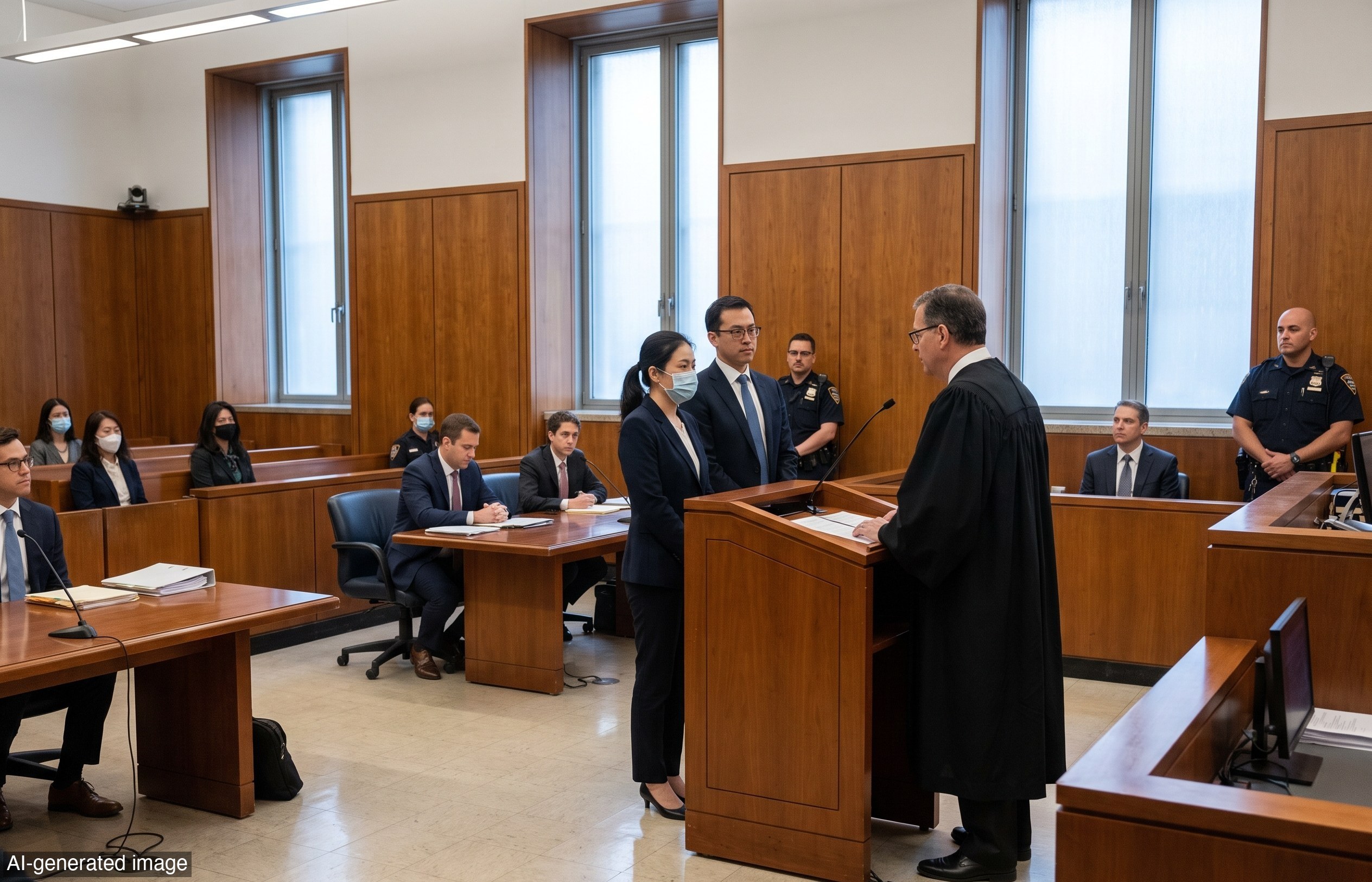
A woman prosecutors say used LinkedIn to find wealthy men pleaded guilty Tuesday in Manhattan federal court in a fraud case tied to an extortion plot aimed at Fortress Investment Group co-founder Wes Edens.
Changli 'Sophia' Luo told U.S. District Judge Margaret Garnett, 'I deeply regret engaging in this conduct, and I knew that my conduct was wrong, and I accept responsibility for it,' according to a court transcript viewed by Bloomberg. She faces up to 20 years in prison at sentencing in February.
Court documents reviewed by Fortune refer to the target as 'Victim-1' and do not name him. Bloomberg, citing a person with direct knowledge, reported that the victim is Edens. The Wall Street Journal and other outlets have also identified him as the co-owner of the NBA's Milwaukee Bucks and the Aston Villa soccer team in England, as well as a co-founder of Fortress Investment Group.
The underlying allegations, laid out in complaint, indictments and filings by prosecutors and Luo's lawyers, say Luo cold-messaged Victim-1 on LinkedIn in November 2022 to discuss a business endeavor. After a handful of meetings, the two had a sexual encounter in June 2023 at her midtown Manhattan apartment.
Prosecutors say the messages turned from flattering to threatening after that. In May 2024, they say Luo sent letters accusing him of misleading her into sex or of having sex with her while she was mentally incapacitated. The letters also threatened to give videos to 'mass media' unless he apologized.
According to the filings, Victim-1 agreed to mediation because he feared harassment and public embarrassment for his family. In August 2024, he agreed to pay 'several million dollars' and made an initial payment. The documents then say Luo escalated the demand through a mediator to at least $900 million, rising to $1.215 billion by January 2025, with threats to report criminal acts to 'government offices.'
On March 29, 2025, her lawyer relayed a new demand of $50 million, the complaint says. If Victim-1 did not take 'responsibility,' the message said, Luo was determined to 'destroy' him. It also said she had at least two videos and pictures of the encounter and would go to 'criminal investigators,' his business partners and 'the federal government.' Victim-1 did not pay.
Prosecutors also allege that images on Luo's devices were altered. On the day of the $50 million demand, a WeChat chat on one of her phones showed pornographic images arriving and being sent back with Victim-1's face grafted on, and forensic examination indicated she made the edits that day.
FBI agents searched her home on May 28, 2025, after arriving with a warrant at about 6:10 a.m., according to the complaint. The filing says agents knocked, called her 15 times and texted her before entering with a key from building staff. Prosecutors allege she tried to hide evidence, including a purple iPhone and two flash drives found after a dog trained to detect electronics alerted agents to a package of sanitary pads.
Court records show Luo was arrested June 14, 2025. Her release conditions included home detention with GPS monitoring, a ban on using WeChat, and an order to avoid contact with Victim-1 or his family outside her lawyers' presence.
The numbers come first. This is what high-dollar coercion looks like when private leverage turns into alleged extortion and the federal courts have to clean up the mess. Capital rewards clear rules; schemes that try to replace them with threats, mediation pressure and electronic cover-ups end where they belong: in a courtroom.
For business leaders, the lesson is blunt. Reputation, privacy and property are not abstractions. They are the infrastructure that makes free enterprise work, and when they are weaponized, everybody pays a higher price.