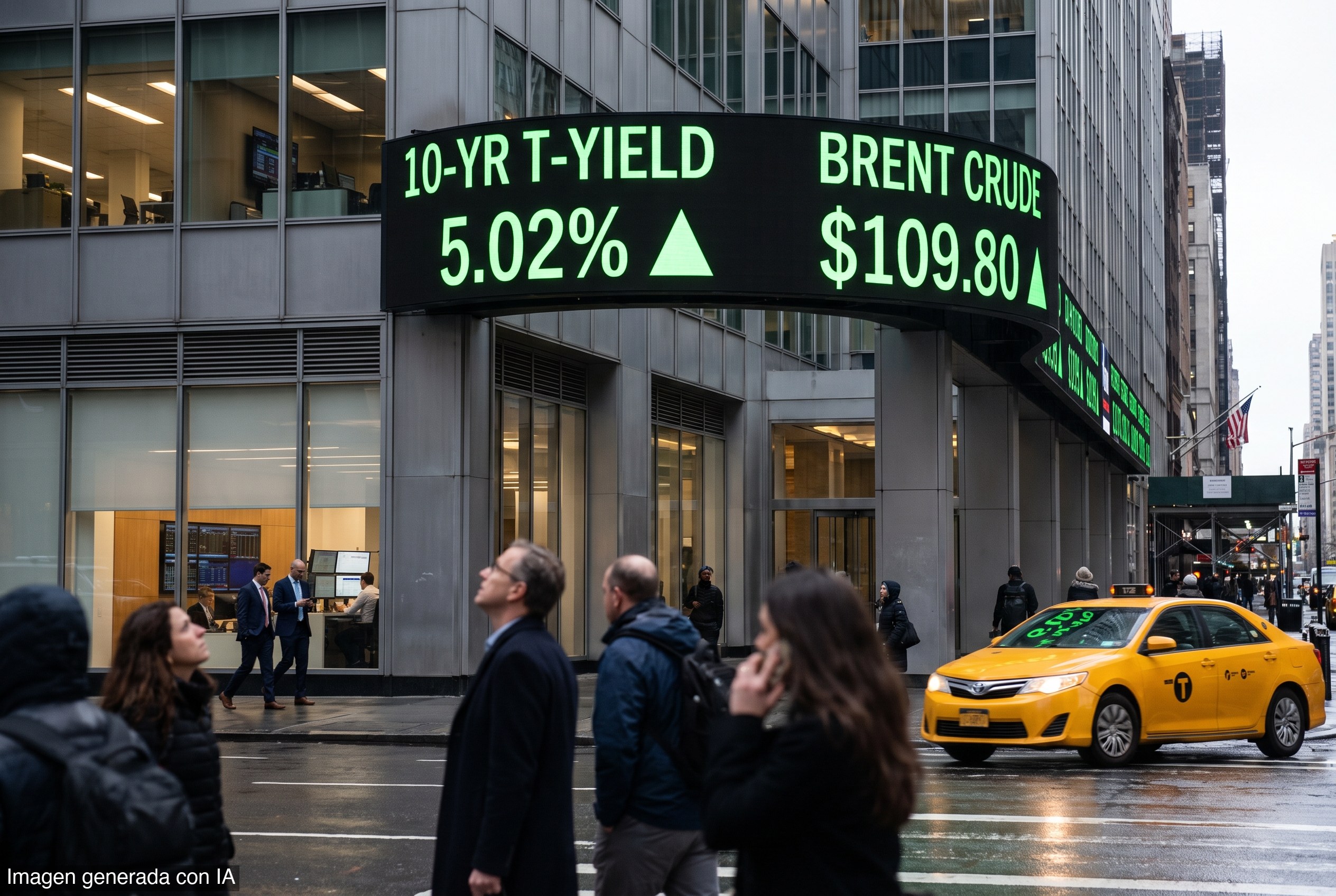
Wall Street is describing the current moment with phrases like 'crazy days' and 'silly season' as warnings grow that the AI trade may be in late-stage bubble territory. Capital Economics said the case for a bubble has become serious enough that it now forecasts the S&P 500 will start cracking next year and eventually fall by at least 30% from its high.
The firm’s warning comes after some extreme one-day moves in the biggest names in the market. On July 30, Microsoft’s market value rose by $450 billion in a single day. The next day, Apple fell by $360 billion, Amazon gained $388 billion and Meta dropped $102 billion. Owen Lamont, a behavioral economist and portfolio manager at Acadian Asset Management, pointed to the size of those swings in real-world terms, comparing Microsoft’s one-day gain to '1.04 Houstons' in assessed property value.
Lamont said his dispersion index, a measure of how wildly individual stocks are swinging even when the overall market looks calm, reached its third-highest reading in more than 2,850 trading days. He said only 'vaccine Monday' in November 2020 and the DeepSeek shock of January 2025 ranked higher.
At the same time, Morgan Stanley Wealth Management told clients they were entering 'Wall Street’s proverbial silly season' in the historically volatile September-October stretch. Lisa Shalett, the firm’s chief investment officer, said rising rates, oil-market stress and policy noise are real, but that 'markets appear to be pricing them in clear-eyed fashion.' Morgan Stanley kept its year-end S&P 500 target at 8,000 and its mid-2027 target at 8,300.
The firm also argued that the AI build-out 'is mostly rate-insensitive,' meaning a Fed hike or two is unlikely to stop hyperscaler capital spending. That matters because the Federal Reserve is expected to raise interest rates this Wednesday for the first time since July 2023, a move the story says historically ended the last comparable tech boom 26 years ago. UBS expects the vote to split 10-2, with Governors Christopher Waller and Michelle Bowman dissenting in favor of holding steady.
Fed Chair Kevin Warsh, meanwhile, has moved away from forward guidance. At Jackson Hole on August 28, he said, 'I would be hard pressed to describe broad financial conditions as restrictive.' UBS economists said he laid out 20 separate hawkish observations and expects him to repeat a line that 'The responsibility for 65 months of sustained, elevated inflation sits squarely with the central bank.'
The market has already voted on what easy money can do: it pushes capital higher, stretches valuations and rewards speculation until the bill comes due. If the Fed now chooses to tighten into this kind of excess, the taxpayer and the retirement investor do not get the upside twice. They get the unwind.