The numbers come first: two prediction market platforms, each carrying a roughly $20 billion valuation, are spending heavily on celebrity endorsements at the precise moment appellate courts are questioning whether their core product is a federally regulated financial instrument or plain-vanilla gambling.
The ad blitz
On Wednesday, sports trading platform Novig released a video featuring actress Sweeney appearing nearly nude to promote its sports-only offering ahead of the NFL season opener. A day earlier, Polymarket unveiled a football-season commercial starring LeBron James alongside athletes Eli Manning and Derek Jeter, filmmaker Spike Lee, and model Emily Ratajkowski.
The campaigns drew immediate social-media fire. 'Selling gambling by selling sex. Society is crumbling before our eyes,' one user wrote about the Novig spot. 'Damn, I can't believe LeBron is a sellout now,' another wrote in response to the Polymarket ad.
Kalshi has run its own star-studded slate: Oscar-nominated actor Timothée Chalamet appeared in a series of ads set in mundane locations, including a dentist's office and a music store. In the lead-up to the World Cup, Kalshi ran ads featuring Argentina captain Lionel Messi alongside teammates Nicolás Otamendi and Rodrigo De Paul as part of a commercial partnership with Argentina's national football federation, and separately featured Croatia captain Luka Modrić.
The legal overhang
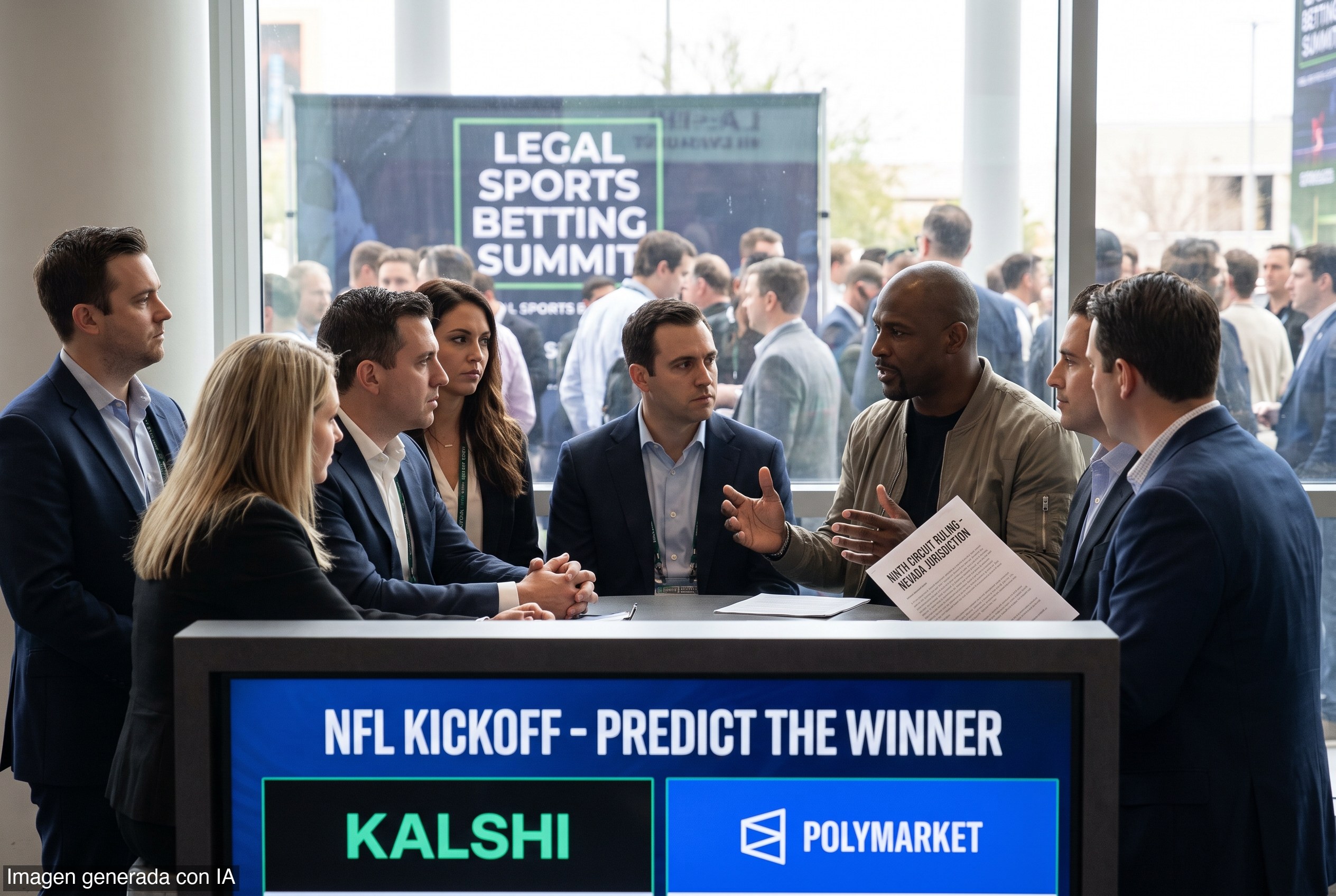
The marketing push is not happening in a vacuum. In August, the Ninth Circuit ruled that Nevada could enforce its gambling laws against Kalshi's sports-event contracts, rejecting the company's argument that federal commodities law preempted state oversight. With appellate courts now divided, the dispute over who regulates the fast-growing industry could reach the Supreme Court as early as next year.
Prediction markets let users buy and sell contracts on outcomes ranging from sports and politics to pop culture. Sports-related contracts account for a large share of activity on the major platforms, which is why companies have timed their biggest campaigns around the start of major sports seasons.
What it means
The celebrity-ad arms race is a rational, if risky, bet: capture market share and brand recognition before regulators or courts draw a hard line. Free enterprise rewards bold capital allocation — but only when the underlying legal framework is stable. Right now it is not.
The Ninth Circuit's ruling is the paper trail that matters most here. If the Supreme Court ultimately sides with state gambling regulators, the platforms' multi-billion-dollar valuations rest on a business model that could be carved up state by state. Pouring money into Sweeney and James spots may juice user sign-ups in the short run, but no celebrity endorsement insulates a balance sheet from a hostile regulatory ruling. Capital rewards clear rules — and on that score, prediction markets are still waiting for the market to vote.