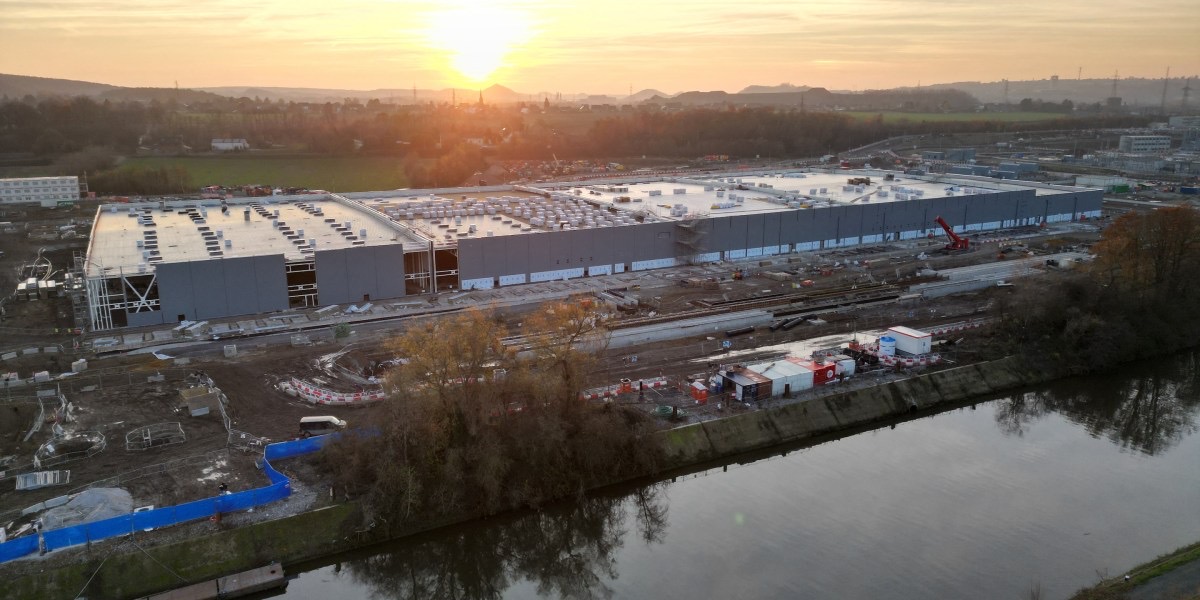
Inspectors from Belgium's Wallonia region walked onto Google's data center site in Farciennes, near Charleroi, on Thursday and ordered about 300 construction workers to stop. The regional government says Google kept building after its amended permit was revoked in August, a violation the government spokesperson, Nicolas Yernaux, called a 'major offence.' Google said it had paused the work 'pending additional guidance.'
Three days earlier, a Virginia judge ordered construction to stop at another Google data center campus in Botetourt County. Judge Michael Doucette ruled that county supervisors violated Virginia's Freedom of Information Act when they added Google's performance agreement to the agenda mid-meeting and approved it 5-0 without discussion. He voided the county's actions since then and ordered a new public hearing. 'Magic words' must be used and 'technical violations' are not excused, he wrote.
Two stop orders in one week against the most profitable company on the 2026 Fortune Global 500 is a notable event. The Farciennes dispute centers on water. Google won a permit in 2024 for three air-cooled data centers, then applied to merge two into one larger building cooled with water drawn from the River Sambre, part of a €5 billion commitment to Belgian cloud and AI infrastructure. Wallonia's planning minister, François Desquesnes, overturned the amended permit in August, citing water demand and drought risk. Google appealed and kept building until Greenpeace Belgium filed an urgent complaint backed by satellite images. Joeri Thijs of Greenpeace Belgium called the construction 'disrespectful to the environment, local residents, and the law.' Google maintains its original air-cooled permit remains valid and says it remains 'committed to complying with local laws.' A court hearing is scheduled for the new year.
The scale of the stakes is worth noting. Data Center Map counts about 13,500 operational and planned data centers worldwide, with just 54 in Belgium compared to more than 5,200 in the United States.
Europe is moving in two directions at once. The Digital Omnibus on AI, in force since July 27, pushes obligations for stand-alone high-risk systems from August 2026 to December 2027, after lobbying from tech companies. The Cloud and AI Development Act, proposed in June, aims to at least triple EU data center capacity within five to seven years and would require member states to designate acceleration zones where permit decisions take no longer than 12 months. A compromise text dated Nov. 16 drops a duty to assess impacts on water bodies inside those zones, on the grounds that national permitting already covers it. Telecom ministers take up the bill on Dec. 1.
Washington's posture is the opposite in tone. A December 2025 executive order from President Donald Trump directed federal agencies to challenge state AI laws, and a White House framework released in March asked Congress to replace them with one national standard. Neither document touched state and local authority over data center siting, and no preemption law has passed. The fights therefore remain with counties, courts and voters.
Those voters are speaking clearly. Data Center Watch found that 94% of governors elected on Nov. 3 support regulating or restricting data centers, and Harvard's Ash Center found that Ohio voters approved all 21 local data center measures favoring restrictions. Morgan Stanley analysts warned that new state restrictions could 'split the country' into regions open and closed to new data centers.
The market has already voted on the cost of uncertainty. Capital rewards clear rules, and a permit that can be revoked after construction begins, or a vote that can be voided months later, is not a clear rule. Every week a site sits idle is a week of depreciation on hardware, lost productivity and deferred returns for shareholders. Those costs do not disappear; they are passed along to customers, to the ratepayers who will carry grid upgrades, and ultimately to the taxpayer who funds the courts and agencies refereeing these fights.
The deeper principle is about who decides. Power leaves a paper trail, and in Virginia that trail shows a county board that skipped public debate. In Belgium it shows a regional government reversing its own permit. Free enterprise depends on predictable approvals made in the open. Whether the answer is a faster European timetable or a national American standard, the companies building the AI economy need rules they can count on before the concrete is poured.