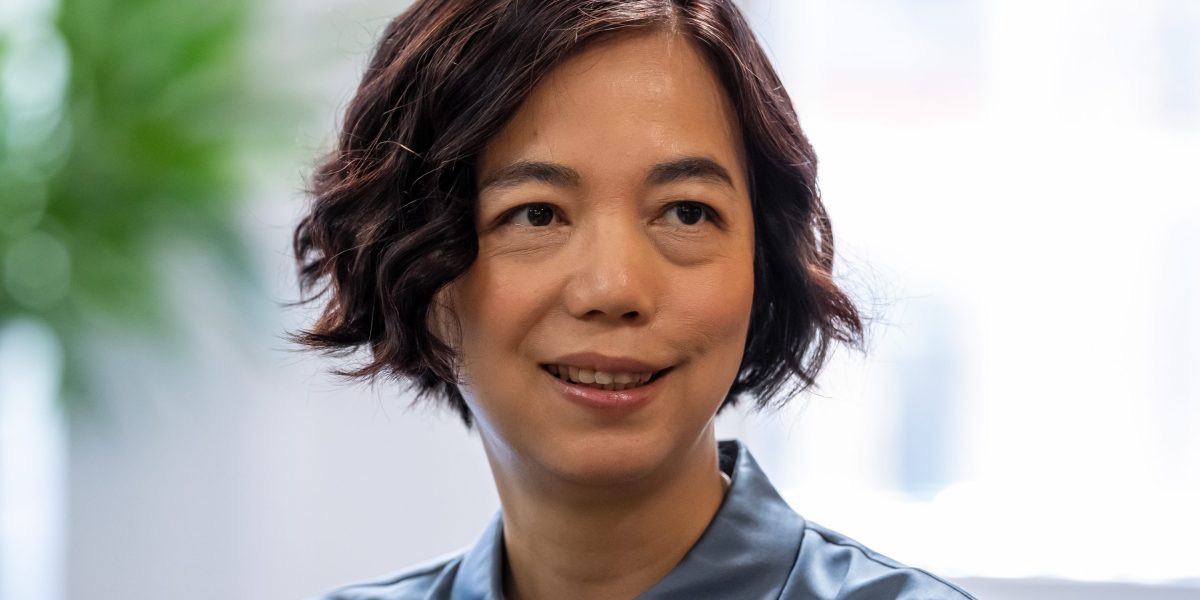
Fei-Fei Li, the computer scientist widely known as the 'godmother of AI,' says artificial intelligence cannot be kept out of warfare. Speaking with Walter Isaacson on his podcast The Builders with Walter Isaacson, excerpts of which were shared exclusively with Fortune ahead of its December 1 release, Li said that imagining the tools being built would never enter military practice is 'hardly pragmatic and realistic.'
'The entire human history of war and peace uses tools from stones, rocks, to knives, to fire, to gunpowder, to airplane,' she said. 'I believe it will be using AI.'
The comments mark a shift. In 2018, when she was chief scientist of AI at Google Cloud, Li said it was against her 'principles' to work on anything she believed would weaponize AI. That year she was caught in the backlash over Project Maven, a Pentagon contract to analyze drone footage. In internal emails reported by The New York Times, she backed the deal while urging colleagues to keep AI out of the announcement, writing: 'Avoid at ALL COSTS any mention or implication of AI.' Google declined to renew the contract, and Li returned to Stanford later that year.
Today the stakes are commercial as well as moral. On November 16, AMD said it had closed its acquisition of World Labs, the startup Li co-founded, making her the chipmaker's executive vice president and chief scientist. In September, AMD agreed to buy World Labs for $8.2 billion in stock, and Li now reports directly to AMD CEO Lisa Su.
Isaacson asked her about the spread of drones and autonomous weapons in conflicts such as those in Ukraine and Iran, and pointed to Anduril founder Palmer Luckey, who argues that tech companies should work with the military. Li declined to take a side. 'I genuinely, genuinely believe this is a very, very nuanced topic,' she said. She described AI as a double-edged sword: 'Sometimes we need that to defend peace. Sometimes we need to control it so we don't actually hurt people unnecessarily.'
The debate is live inside her former employer. Google removed a pledge to avoid weapons applications from its AI principles last year, and this spring a group of its employees urged the chief executive to refuse classified military AI work, according to The Boston Globe.
The market has already voted on the technology. What remains open is who writes the rules for its use, and whether the decisions are made by engineers, executives or the state. Li herself says the answer 'is in us,' and that teachers, doctors, artists and communities all have a say.
For the American taxpayer, the practical point is that defense AI will be bought, built and funded at scale. Capital rewards clear rules and punishes uncertainty. A defense market shaped by private innovation under transparent contracts serves the public better than one where the boundaries are set in closed internal emails. Free enterprise can build the tools of defense, but it should do so in the open, with accountability that a shareholder and a voter can both see.