The numbers come first. The U.S. naval blockade against Iran has been in place for 137 consecutive days, and Tehran itself says it has been harder to endure than major combat operations. Iran has not been able to export oil, which has cut off its top source of revenue and foreign currency. Imports have also been kept out, and Washington has recently begun cracking down on trade via land routes.
With no cash coming in, the Iranian government has slashed subsidies for food, fuel and electricity, while state workers and pensioners have gone unpaid. Inflation is nearing 90%, and the currency has plunged to fresh lows, hitting 2.99 million rials per dollar.
President Masoud Pezeshkian put it bluntly on national television, according to the Wall Street Journal. 'We have no money,' he said. 'We are engaged in a silent war that is far more difficult than one in which missiles are launched and destruction is caused.' He added: 'It is an economic war, one that you, as those working on the economic front, are dealing with. It is by no means an easy one.'
The strain is now visible in daily life. The state electricity company has begun rolling blackouts, and Tehran cut supplies of cheap flour and bread in seven of Iran's 31 provinces. The head of the Iranian Parliament's economic commission warned of fuel and heating shortages this winter, citing damage to the country's energy infrastructure during the war. Bakers in Zanjan province staged protests over flour shortages, as reported by Nour News, a website affiliated with Iran's Supreme National Security Council. Retirees and labor unions have also demonstrated, some with anti-regime slogans.
U.S. Central Command chief Adm. Brad Cooper said last month that the blockade has prevented Iran from exporting at least $25 billion worth of crude oil, and that the U.S. and its partners have frozen nearly $350 million in cryptocurrency assets. He said the regime has been forced to withhold salaries, pensions and benefits across the energy, manufacturing, construction and security sectors, including the Islamic Revolutionary Guard Corps. 'The Islamic regime is clearly feeling the economic pain,' Cooper said.
The picture is not one-sided. Experts do not believe the unrest is strong enough to threaten the regime's hold on power, and the demonstrations are not as widespread as those in January, when the government massacred thousands to put down the revolt. Insurance and shipping costs have also climbed after some Iranian attacks proved deadly, and tanker traffic through the Strait of Hormuz has risen this month. Iran's neighbors continue exporting crude under the protection of the U.S. military, so the flow of oil remains near prewar levels.
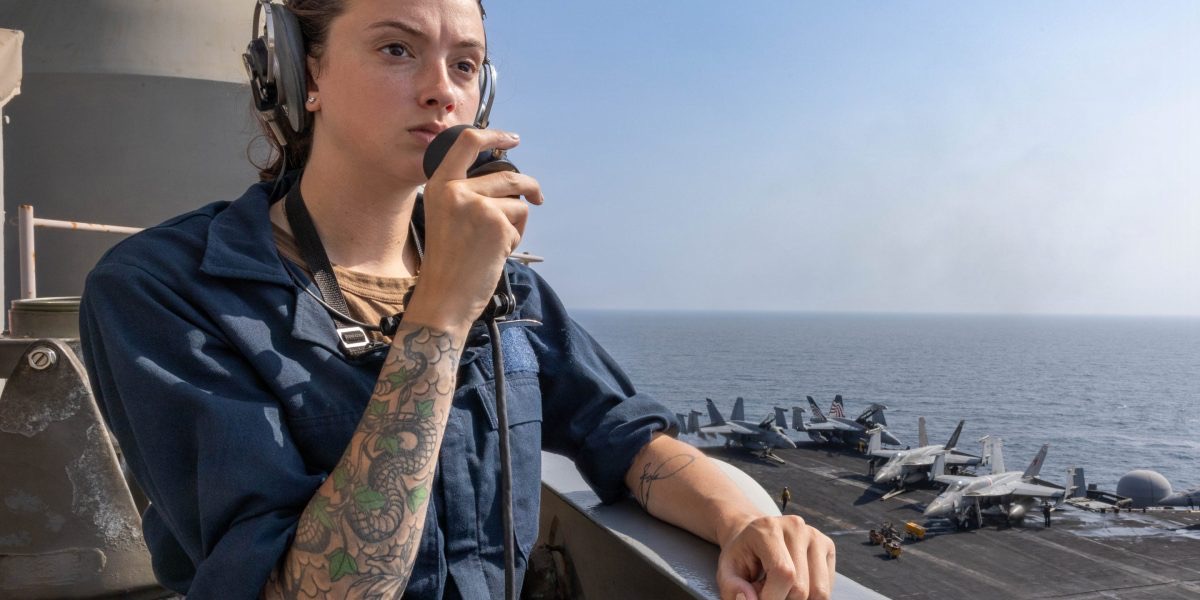
For now, the blockade is holding. As of Friday, U.S. Central Command had redirected 158 commercial vessels and disabled six would-be blockade runners. Payments for the last oil already at sea, which mostly ends up in China, could stretch into December. Once that spigot runs dry, the regime loses what has been its top source of revenue.
What this means for the market is straightforward. Sanctions and blockades work on the balance sheet long before they work on the battlefield. A regime that cannot pay its soldiers, pensioners or bakers is a regime whose fiscal math has broken. Free enterprise cannot function under a state that prints, subsidizes and rations its way through a collapsing currency, and the taxpayer in any economy learns the same lesson: subsidies bought with money you do not have end in shortages, not stability.
The lesson for Washington is that economic pressure, enforced with naval power and a clear rule, can impose costs faster than missiles. The lesson for the rest of the world is that a country with no export revenue and a currency at 2.99 million rials to the dollar has very little room left to play.