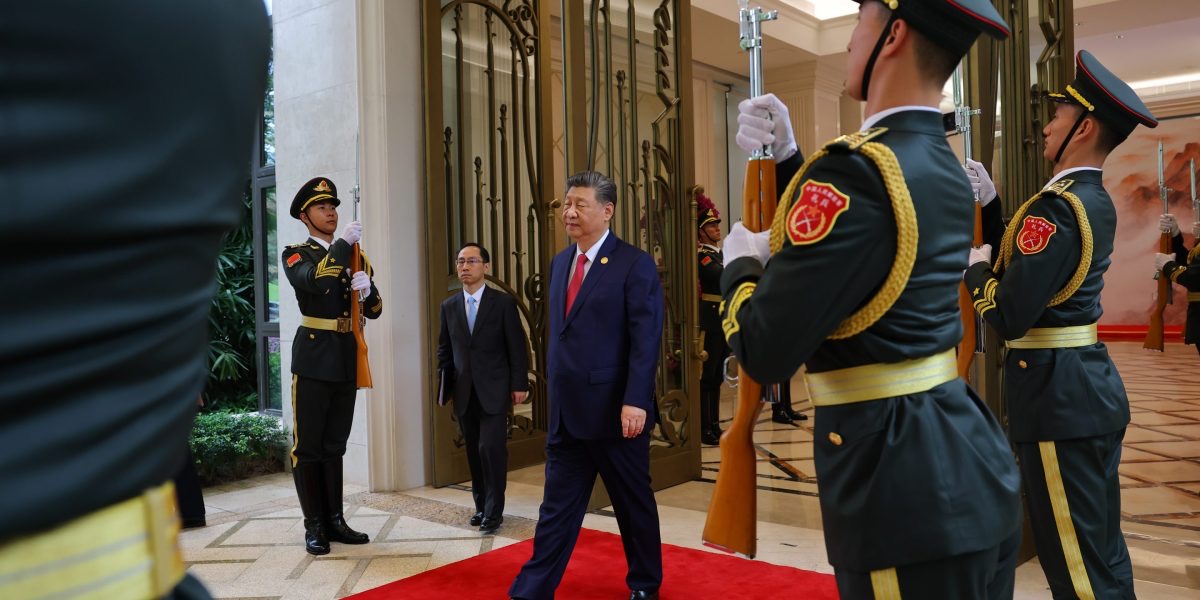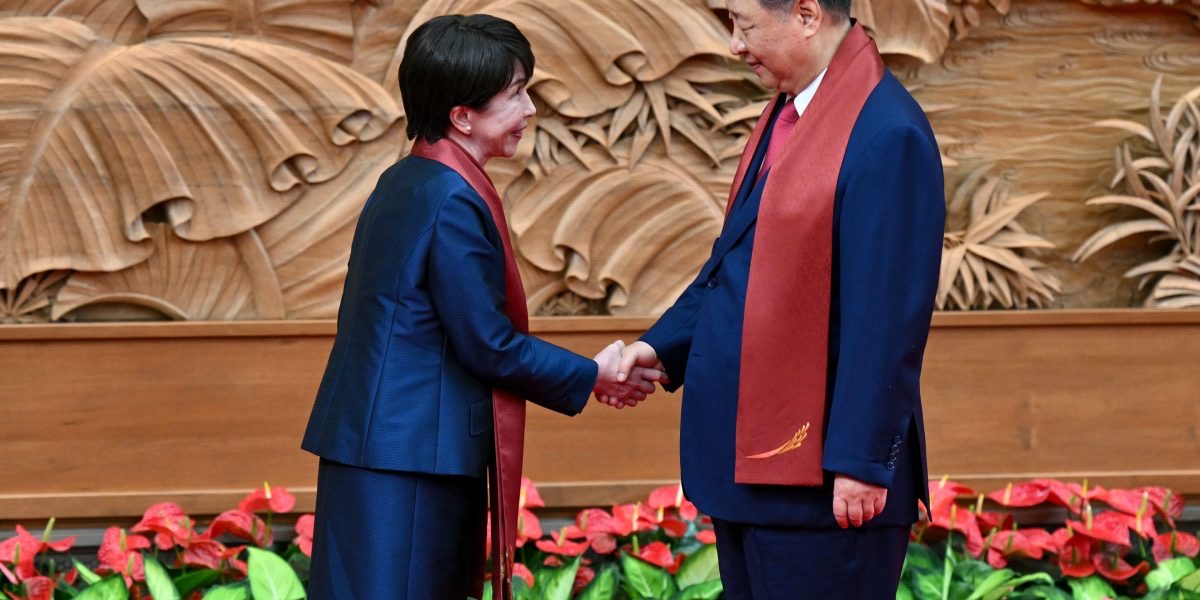
Japanese Prime Minister Sanae Takaichi shook hands with Chinese President Xi Jinping in Shenzhen last week. It was the closest thing to a thaw in China-Japan relations since late last year. The encounter came on the sidelines of the Asia-Pacific Economic Cooperation (APEC) leaders' meeting.
The contact was short. Takaichi shook hands with Xi and his wife, Peng Liyuan, as they greeted arriving guests. Apart from a few other brief interactions, the two leaders held no official meeting.
The chill has deep roots. Relations deteriorated sharply in November 2025, when Takaichi told Japan's parliament that a Chinese attack on Taiwan could prompt Japan to deploy its Self-Defense Forces. Beijing demanded that she retract the comments, calling them 'egregious.' Foreign Ministry spokesperson Lin Jian warned that Japan 'must bear all consequences.'
Beijing then moved on the economy. According to the Center for Strategic and International Studies, China advised its citizens to avoid traveling to Japan and imposed export restrictions on dual-use technology. The curbs cover rare earth elements, permanent magnets and other critical minerals used in defense.
Trade, once the ballast of the relationship, has lost its stabilizing role. China was Japan's largest trading partner in 2025, with two-way goods trade of about $304 billion, according to Japanese government figures. Yet Jeff Kingston, a Temple University professor, says business leaders 'don't have the influence they once had.' Both capitals now view each other mainly through a security lens.
Tourism has held up better than expected. Foreign visitors spent $30.4 billion in the first half of 2026. Still, visitor numbers from January to October fell 2.5% year on year, to 34.6 million, according to the Asahi Shimbun, citing the Japan National Tourism Organization. Japan welcomed 42.7 million visitors in 2025.
Washington adds another layer. Daniel Sneider, a Stanford University professor who studies Japan's foreign policy, says Tokyo is watching closely how the United States engages Beijing. He notes that Chinese officials have reminded Americans of the wartime alliance between the U.S. and China against Japan.
The market reading is clear. Capital rewards predictability, and this relationship offers none. Export controls on critical minerals raise costs for manufacturers who depend on them, and travel advisories chill the flow of visitors and spending. Those costs fall on companies and consumers, not on the officials who trade barbs.
For free enterprise, the lesson is plain. When governments weaponize trade, the private sector pays the bill. A handshake cannot repair that damage. Only clear rules, and leaders willing to honor them, can restore the confidence that lets commerce work across the Pacific.