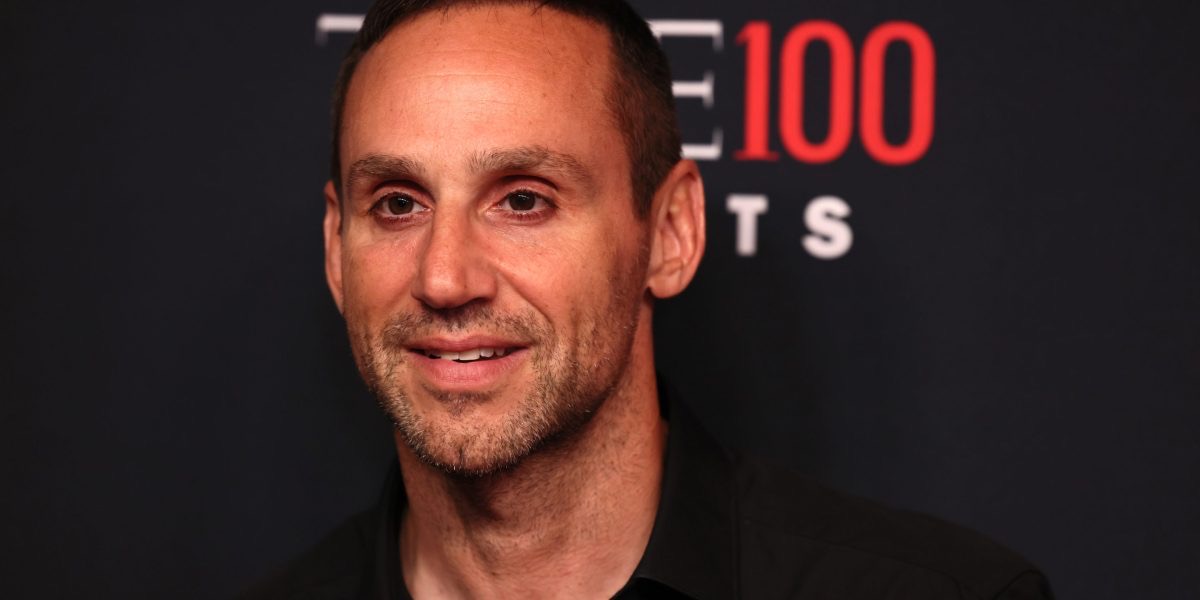
The numbers come first. Fanatics now generates roughly $14 billion in annual revenue and has struck partnerships with nearly every major U.S. sports league, including the NFL, NBA and MLB. Its cofounder and CEO, Michael Rubin, got there the hard way.
Rubin caught the entrepreneurial bug at 12. By 13 he was selling ski equipment out of his parents' basement in Pennsylvania, and a year later he had opened his own storefront nearby. He was making money fast, enough to join a friend in buying a Porsche before he could legally drive.
Then came a warm winter around 1988. Customers stayed home. 'It didn't snow that year,' Rubin recalled in a recent conversation with podcaster David Senra. 'End of the year, I had $200,000 of bills, $80,000 of inventory, and I was sitting right in front of bankruptcy.'
He negotiated his debts down to $35,000, went door to door borrowing from neighbors, and used proceeds from a closeout business to repay the loan within three weeks. Five years later, at 21, he was generating $150 million in sales, buying and selling closeout merchandise. In his telling, he went from 'death in its eyes' to making $10 million to $15 million a year.
Rubin left Villanova University after one semester to focus on business. His sports merchandise operation, KPR Sports, eventually became part of Global Sports Inc., later renamed GSI Commerce, and he shifted it toward e-commerce as the internet took off.
The 2008 financial crisis nearly wiped him out again. He had borrowed heavily against his GSI stock, which lost roughly 90% of its value in the bear market. He called a friend who managed a hedge fund, where he had invested $5 million, roughly 100 times, until the money came back with hours to spare before the bank could seize his shares.
The business rebounded and eBay bought it in 2011 for $2.4 billion. As part of the deal, Rubin bought back the sports e-commerce unit, which laid the foundation for today's Fanatics. The company was valued at $31 billion in 2022, and Rubin's personal fortune has grown to an estimated $11.6 billion, according to Bloomberg.
The pattern is consistent. Rubin's rise came through repeated exposure to risk and the discipline to recover, not through a government program or a protected market position. Ray Dalio, whose hedge fund later grew into a multibillion-dollar firm, once had to ask his father for $4,000 to cover bills in New York. Mark Cuban, who now has a $9.8 billion net worth according to the report, sold powdered milk and got fired from jobs before finding his footing.
For the free-market reader, the takeaway is less about nostalgia than about incentives. Capital rewards operators who learn from losses and rebuild, and it punishes those who cannot absorb a bad season. Rubin's own account makes the point: 'Business is a roller coaster. Business is an adventure.' The market has already voted on his judgment, and it has paid him handsomely for taking the risk.