The numbers come first. Fourteen years ago, Ukraine's steel output stood at 32.8 million tonnes (36 million tons) in 2013, and Metinvest was the country's largest steel producer and its largest private-sector employer. That position made the company a central pillar of the economy, and it also made it a target.
The shock arrived in February 2014, when an armed militia with no identifying insignia occupied Crimea. Battles soon spread to the Donbas region, where Metinvest had major facilities in Donetsk and Luhansk. According to Metinvest chief executive Yuriy Ryzhenkov, the company's headquarters was in Donetsk, its key facilities were clustered around Donetsk city, and all logistics ran through that city. He said he had barely begun working at the company before the crisis hit.
Ryzhenkov described the early years in blunt terms. 'We had logistical disruption; we had supply shortages; we had problems for the employees, for their security,' he said. He pointed to shelling of the company's plants in Mariupol, including the Azovstal iron and steel works, one of the largest plants in Europe, and to bridges in Mariupol that were blown out. Much of occupied Donetsk was cut off.
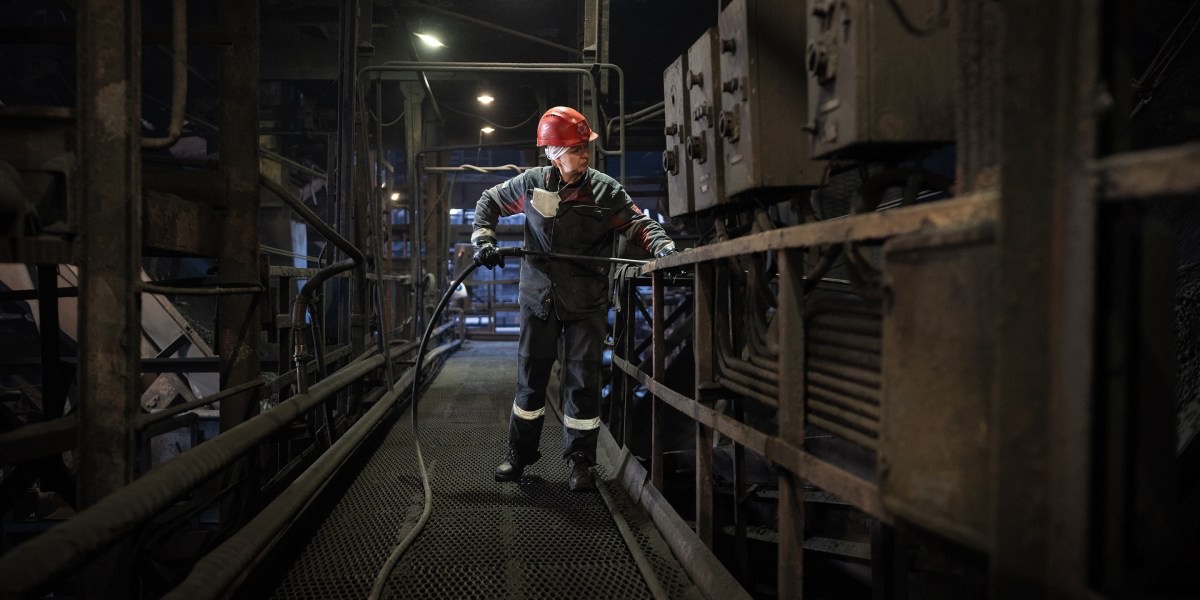
The response was operational discipline rather than retreat. Ryzhenkov said the company spent 2017, 2018 and most of 2019 restoring logistics for facilities that remained under Ukrainian control. By 2019, he said, operations were back to what he called 'whatever was the new norm.' Investment then shifted toward renovation, with a particular focus on Mariupol, the largest steelmaking hub in the country and the one most in need of modernization. Spending concentrated on new technologies for decarbonization and cleaner production.
The modernization also consolidated operations. Ryzhenkov said the plan brought greater collaboration among factories, and the business became more efficient and productive. Wartime pressure forced a kind of restructuring that a peacetime boardroom might have resisted for years.
Ryzhenkov said Metinvest, ranked No. 496 on the Fortune 500 Europe, had become 'vaccinated' against war. That claim is his own, and it is worth weighing carefully. A company can learn to route around damage, but it cannot fully insure itself against the loss of assets, workers and access to markets.
The market has already voted on what matters in a conflict zone: whether capital can be protected, whether logistics hold and whether managers can keep producing. Metinvest's survival over more than a decade is evidence of managerial competence under extreme conditions. Its new threat, as framed in the headline, is the next phase of that same test.
For a free-enterprise reader, the lesson is clear. Private property and productive capacity can be rebuilt by people who answer to clear incentives and clear costs. Governments that tax, regulate or seize such assets, whether in wartime or peacetime, weaken the very base that funds recovery and the taxpayer's stake in it. Capital rewards predictable rules, and a war zone offers almost none. The companies that keep producing under these conditions deserve attention, not as a parable of resilience alone, but as a reminder of what sovereignty and private enterprise are worth when they are under pressure.