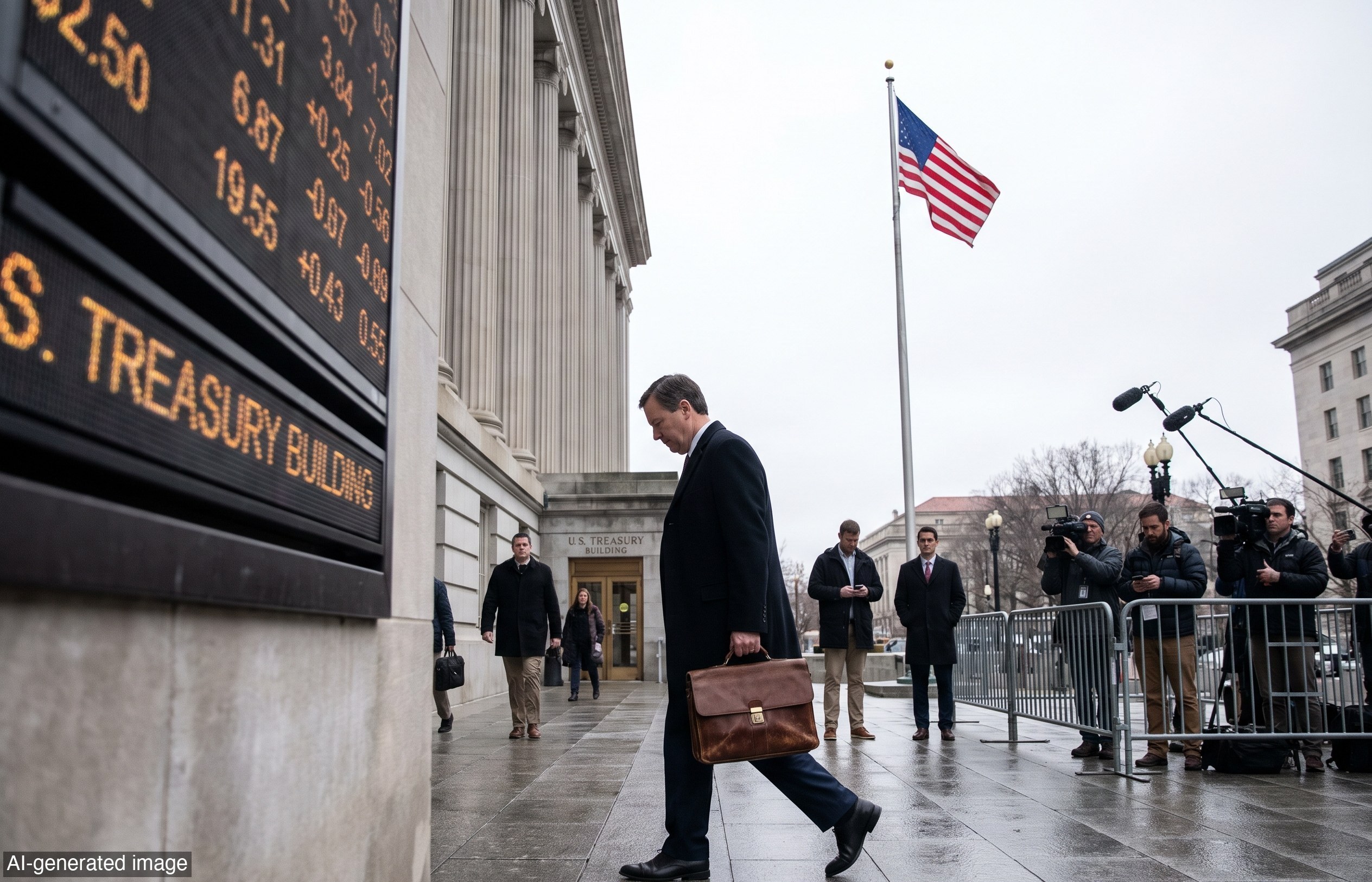
Last week the bond market sent Washington a message. The 10-year Treasury yield hit 5.04%, its highest since 2007, while the Federal Reserve raised rates for the first time since 2023.
Oil prices and inflation helped light the fuse, but government debt is now on every analyst’s list of reasons yields keep climbing. The gross national debt crossed $40 trillion in August, after hitting $38 trillion in October and $39 trillion in March. That is a trillion dollars every five months.
The deficit hit $2 trillion with a month still left in the fiscal year. In 2025, Moody’s became the last of the three major credit rating agencies to strip the United States of its AAA rating, joining S&P in 2011 and Fitch in 2023.
The pressure is not abstract. Net interest payments reached $970 billion in fiscal year 2025, about $150 billion more than national defense, and rose another $111 billion, or 12%, this year. The piece of the budget that pays creditors is now larger than the piece that pays the military, and interest is projected to more than double to $2.1 trillion by 2036.
Congress remains unable to act on time. The Congressional Budget Act of 1974 created a process for a budget resolution and 12 appropriations bills, but Congress has completed that process on time exactly four times in the half-century since. It will not be five this year. With not one of the 12 bills enacted, lawmakers punted the deadline to December 11 so members could campaign first.
The incentives inside Washington are familiar. The author says statutory PAYGO requires new spending to be offset with new revenues, but the spending comes first and the taxes arrive later, if they arrive at all. He also says emergency designations exempt spending from fiscal rules and that PAYGO waivers are routinely attached to omnibus bills.
Another part of the budget is hidden from most cable-news fights. Only 27% of federal spending is discretionary, while mandatory spending is 60% and interest is 13%.
The message from the bond market is straightforward: capital does not reward denial. When debt rises faster than discipline, the taxpayer eventually pays through higher rates, weaker confidence, and less room for national priorities. The market has already voted. Washington is just late to read the tally.
The larger issue is sovereignty. Reserve-currency status lets the United States borrow cheaply, finance deficits that would break other countries, and keep sanctions effective. But that privilege depends on confidence that America pays its bills. Once confidence starts to crack, the adjustment rarely arrives gradually for long.