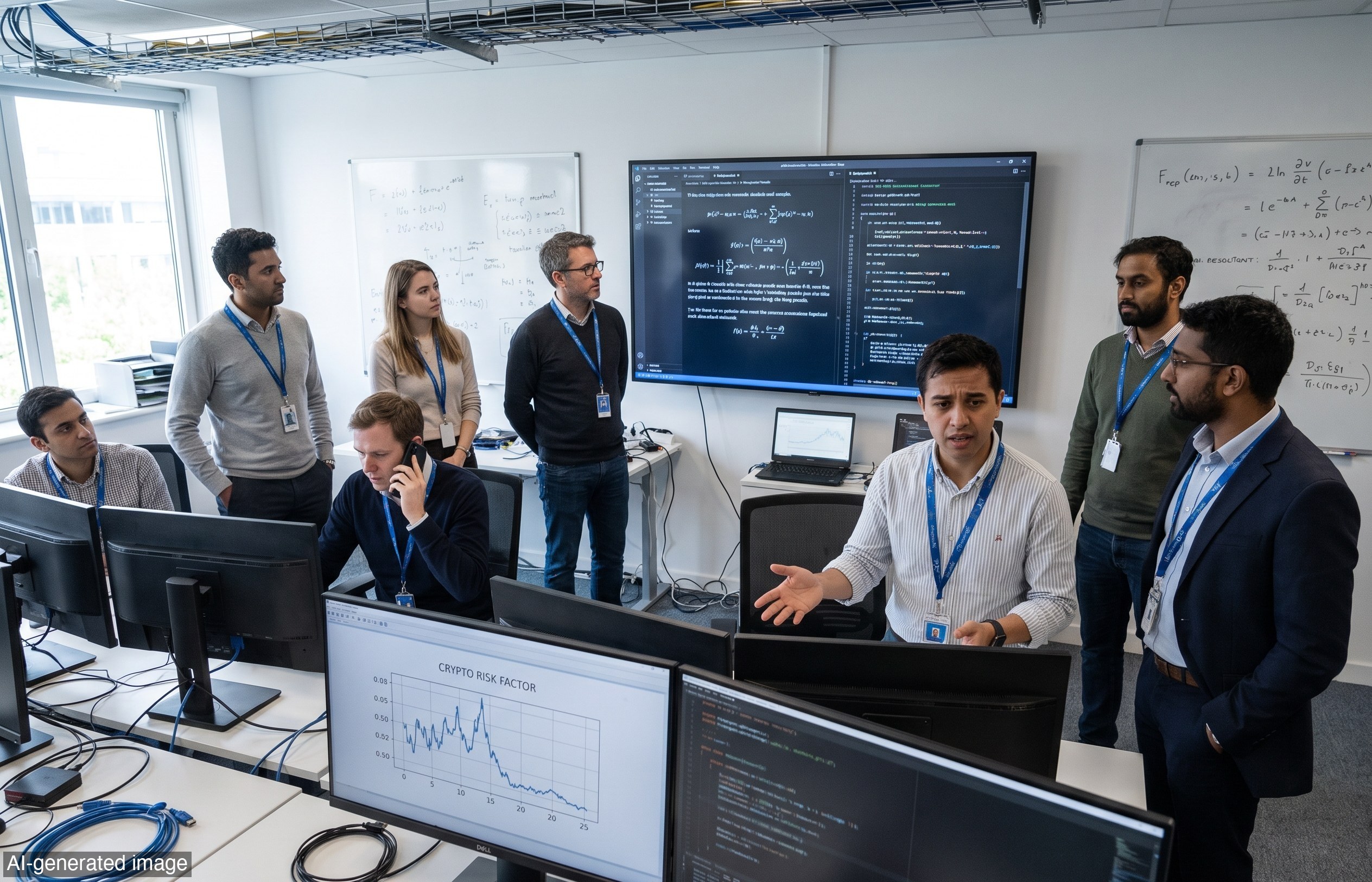
The numbers come first. OpenAI’s document drop has triggered concern that powerful new AI math tools could find flaws in the algorithms that protect banking passwords, email accounts and digital transactions.
A prominent cybersecurity expert at Johns Hopkins warned, 'We might lose public key cryptography.' Fortune reported that the OpenAI material does not describe a new way to hack global computers, and that it is not expected to accelerate the arrival of so-called 'Q-day' when quantum computing cracks popular encryption algorithms.
The concern is more specific: a new species of mathematical super-genius may be able to uncover weaknesses in encryption systems that have long been regarded as sound by top cryptographers. If those flaws exist, the financial system could be exposed to a new class of attack.
The crypto sector is already debating what that means. Citing the possibility that the ECDSA, or Elliptic Curve Digital Signature Algorithm, could be cracked, one Bitcoin researcher suggested holders 'calmly begin planning for 'bunker mode'' by moving funds to secret new addresses. Other experts said that would be too drastic for now.
That caution reflects the structure of the market. Banks and financial institutions may be able to reverse transactions after an AI-powered hack. Blockchain transactions, by contrast, are generally irreversible. That makes Bitcoin and Ethereum obvious targets if a flaw is found.
There is also a tactical problem. If a bad actor found a 'killer hack,' the article notes they might avoid a giant theft because it would destroy the value of crypto. The more likely play would be smaller, subtler robberies that do not reveal the method too quickly.
For now, the market has already voted with relative calm. News of the Mathpocalypse created barely a ripple, which suggests crypto and financial leaders have at least some time to prepare.
One of the more concrete proposals came from Dragonfly’s Haseeb Qureshi, who wrote that there is a 95% chance that 'everything is totally fine' but argued blockchains should improve governance and prioritize speed over decentralized purity. He also called for updates that would preserve a clunky copy of everyone’s transactions so a chain could survive a wipeout.
This is where free enterprise and technical discipline matter. Capital rewards clear rules, and encryption is one of the hidden rulebooks of modern markets. If AI can expose weak code, then the burden falls on banks, blockchains and developers to harden their systems before a bad actor does the work for them.
The broader lesson is simple. New technology does not only create productivity; it also creates leverage for whoever can move first. If the financial world wants to protect savings, payments and trust, it will need stronger defenses and faster governance, not complacency.