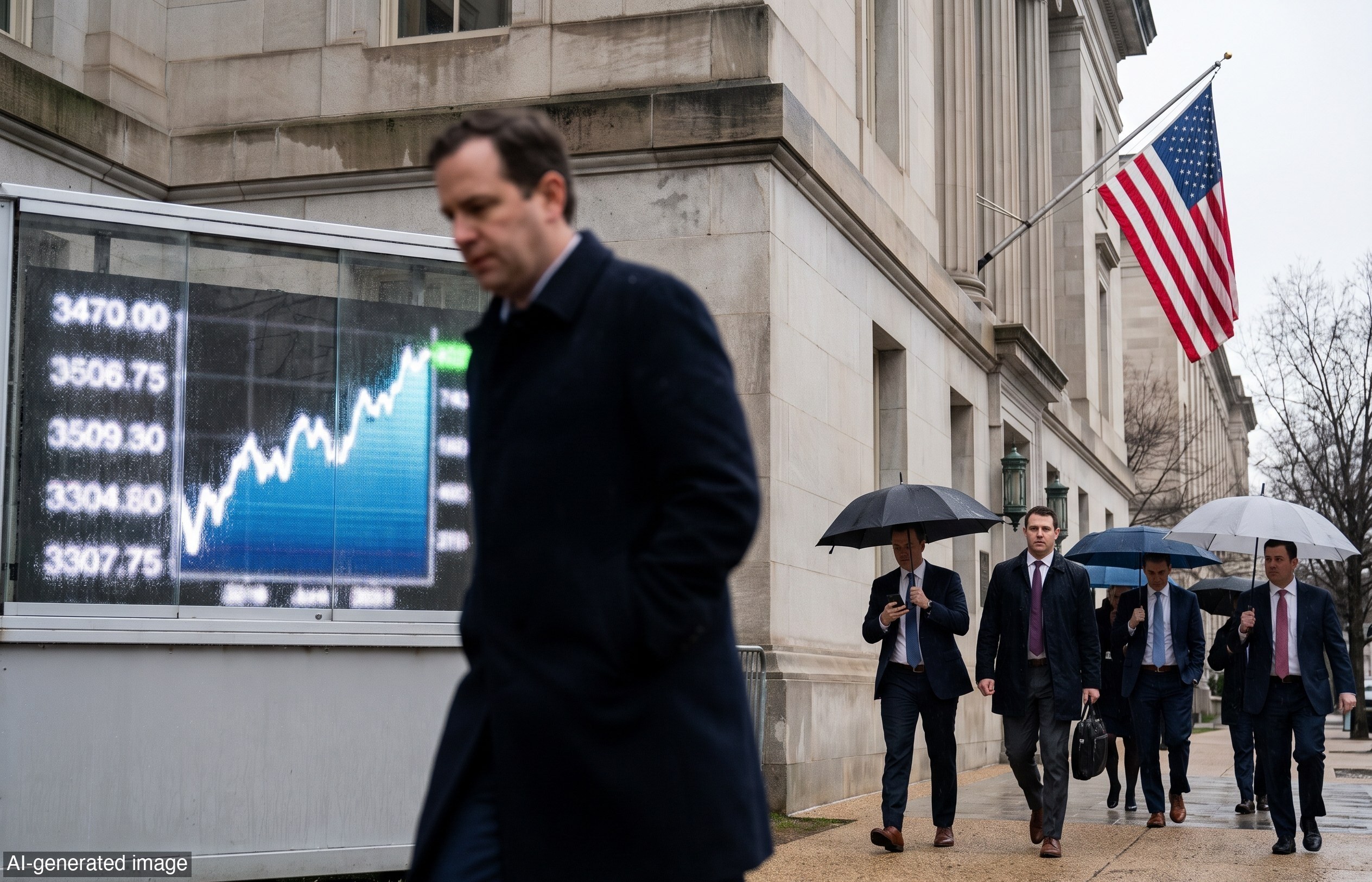
The U.S. economy is still growing faster than the cost of borrowing, but the margin is narrowing.
Nominal growth has been well above 6%, while the 10-year Treasury yield stands at 5.16%, according to the data cited in the source. Inflation-adjusted growth has been around 2%. That gap matters because the federal government is carrying about $40 trillion in U.S. debt.
High gas prices and low consumer sentiment have obscured how strong the economy has been. The source says the economy has absorbed shocks from President Donald Trump’s tariffs and the war on Iran, and that Federal Reserve policymakers raised rates earlier this month to rein in inflation.
The pressure point is simple: if GDP growth falls behind borrowing costs, debt grows faster than the economy. The source describes that as a hamster wheel, with the government and the broader economy needing to keep outrunning rates just to stay in place.
A major source of support has been the AI boom. Capital expenditures from Alphabet, Amazon, Microsoft, Meta, Oracle, and SpaceX are projected to total $870 billion this year, up from $470 billion in 2025. S&P Global estimated last month that spending from the handful of hyperscalers will exceed $1.3 trillion in 2027.
That spending is spilling beyond tech. Industrial companies such as Caterpillar and GE have been among the beneficiaries of the data center frenzy, and UBS economist Jonathan Pingle said the demand impulse from AI appears to be helping create demand for capital expenditures outside tech.
The federal deficit is also adding stimulus. The source says the government’s $2 trillion annual budget deficit helps put money into consumers’ pockets, primarily through entitlement payments, which then boost profits and stock valuations.
But the market has already started asking how long this can last. Some Wall Street analysts warn that the AI bubble could pop soon. Rockefeller International Chairman Ruchir Sharma said the bubble could pop when the 10-year yield decisively exceeds 5%, making AI mega projects harder to fund.
The Committee for a Responsible Federal Budget is even more blunt. It said that with interest rates on new Treasury bonds and notes at around 5% and medium-term nominal economic growth expected to be closer to 4%, the U.S. is entering a debt spiral.
That is the real warning for taxpayers and investors alike. When government financing costs rise faster than the economy, Washington has fewer good options and more expensive ones. Capital rewards clear rules, but it does not reward a fiscal system that depends on growth outrunning its own debt forever.