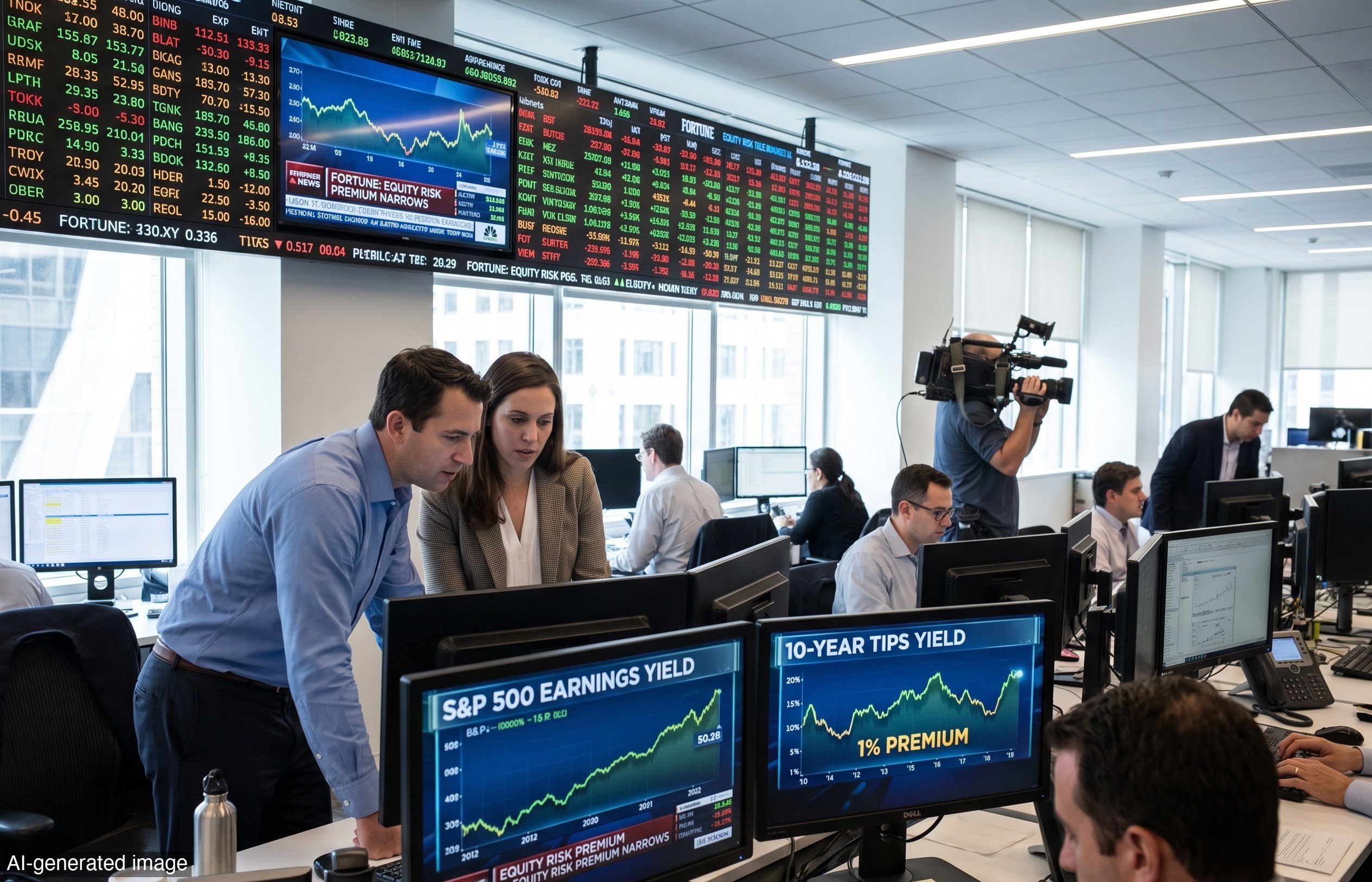
The equity risk premium has collapsed to just below 1%, according to Fortune's breakdown of S&P 500 earnings yield and 10-year TIPS yields. That compares with a historical average of roughly 3.5%, and with the 4.4% premium stocks offered from August 2010 to December 2022, when real rates were unusually low.
Fortune says the S&P 500's earnings yield is about 3.8%, while 10-year TIPS yield 2.86%. That leaves investors with less than $1 of reward for taking stock-market volatility for every $100 invested, versus about $3.50 on average over the long run. The article also notes that the nominal 10-year Treasury yield stands at 5.2%.
The move is not just about math. It reflects a market that has already voted on relative value: stocks have become pricier, while Treasuries have become cheaper. For investors, that means the margin of safety Warren Buffett talks about has narrowed sharply. For the taxpayer-backed bond market, it means government paper is once again competing hard for capital.
Fortune says the current reading is among the lowest in more than two decades outside crisis periods such as the GFC and the COVID outbreak, when earnings collapsed and distorted the comparison. By one measure, the S&P 500's big caps are now offering one of the smallest advantages over Treasuries in recent history.
That is a reminder that free enterprise still runs on price. When the premium for risk gets this thin, capital has less cushion and less room for error. Investors chasing returns need to remember that higher multiples do not repeal gravity; they only delay the bill. The market has already voted, and right now it is telling equity buyers that the old reward is no longer there.