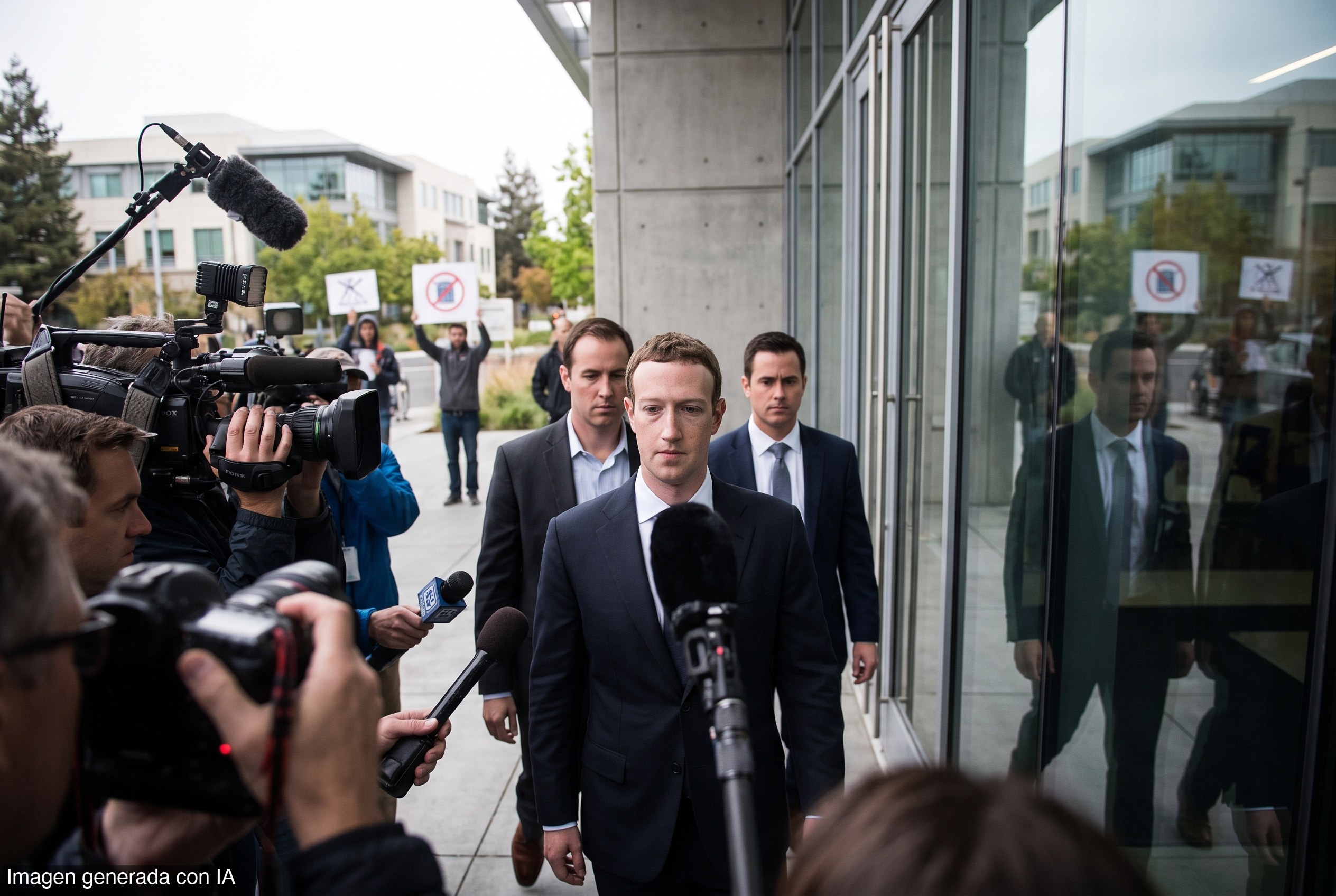
Meta has agreed to pay up to $17.1 billion to settle claims by 47 states and thousands of families, according to the source material, in a case that says Facebook and Instagram were engineered to addict children.
The settlement amount is large even by Silicon Valley standards. But the more important figure is the voting math inside Meta: Mark Zuckerberg gets 10 votes for every share held by an ordinary shareholder, and he controls about 61% of the total voting power even though he owns just 13% of the company.
That dual-class structure is the core of the problem laid out in the source. In that setup, a single founder can dominate governance while ordinary shareholders carry the financial exposure. Here, that means the bill falls on investors, while one person retains effective control.
The source also says the governance fight did not start with the settlement. In 2019, As You Sow filed a shareholder resolution tied to more than 45 million images of child sexual abuse and torture on Facebook, and it later filed five consecutive years of resolutions asking the company to protect customers, employees, and shareholders, repair its brand, improve platform integrity, adopt self-regulation, and avoid destruction of shareholder value.
In 2020, faith-based investors brought a sex-trafficking survivor before Meta’s annual meeting. That same year they filed the 'Reboot Facebook' proposal, asking the company to verify accounts, remove abuse images, and stop running political ads containing known lies.
In 2021, a content governance resolution won 63.1% of the independent shareholder vote, but the headline tally reported was 19% once Zuckerberg’s votes were counted. The source says two-thirds of shareholders voted for the company to address the dangers before they became a crisis for shareholders.
The settlement itself may not end the legal and financial risk. The source says plaintiffs’ own models put damages in the trillions, and that this payout, spread over 10 years, is roughly 2% of that amount and is contingent. If YouTube and TikTok do not join, Meta’s obligation falls to about $12 billion and the teen safeguards never take effect.
Meta’s legal team also said it engineered the settlement terms to establish an 'industry standard' rather than being singled out, according to the source. The same material compares that approach to the 1998 tobacco Master Settlement, where the biggest players became authors of their own rulebook.
Meta previously lost two cases in New Mexico this year, for $375 million in March and $567 million in August, and a Los Angeles jury found Meta and Alphabet negligent in platform design. Thousands of suits remain, with trials resuming in October.
The market lesson is blunt. A system that lets one executive dominate governance can shift risk downward to shareholders while insulating power at the top. Capital rewards clear rules, not structures that concentrate control and leave the taxpayer, investors, and families to absorb the fallout.