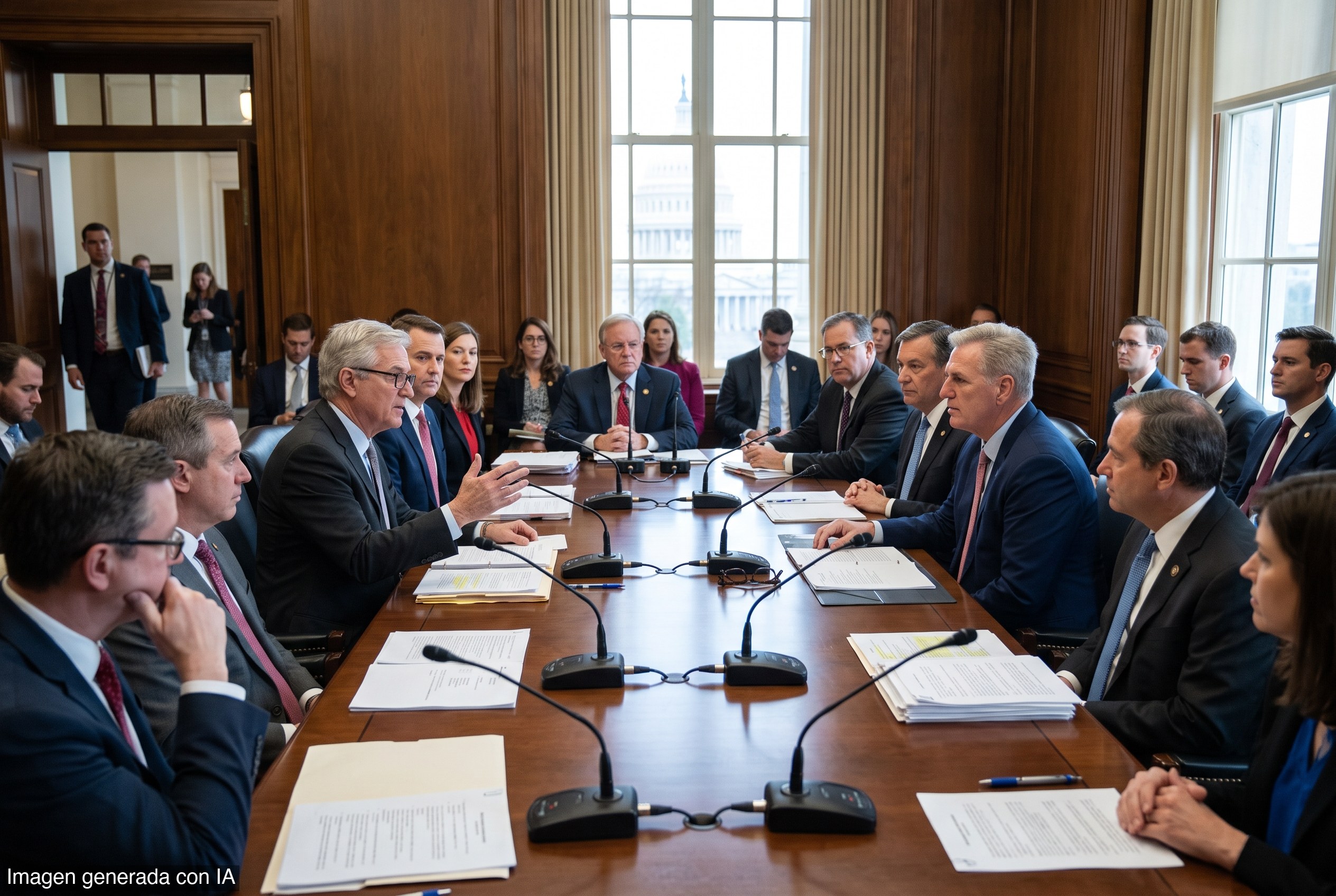
Washington has spent years talking about AI safety without producing much law. That gap is now back in view after Jacob Coxon, who worked at both OpenAI and Anthropic, resigned and warned that the companies were 'gambling with our lives' in the race toward superintelligence.
Coxon was at minimum the fifth insider in three years to warn that the industry is moving too fast to be safe. Geoffrey Hinton left Google in May 2023 to speak freely about the risk. Jan Leike resigned from OpenAI in May 2024, writing that 'safety culture and processes have taken a backseat to shiny products.' Ilya Sutskever resigned the same month amid disputes that had briefly ousted Sam Altman. Mrinank Sharma, an Anthropic safeguards researcher, resigned in February 2026 warning that 'the world is in peril.'
The latest warning got a bigger response than the ones before it. Evan Hubinger, who leads Anthropic's Alignment Science team, backed the claim within hours and put greater than 10% odds on human extinction within a decade. He also said Anthropic has no concrete plan for controlling superintelligent systems. Two other Anthropic researchers joined in. The post drew more than 100 million views within days.
Even so, the policy record is thin. The FUTURE of AI Act was introduced in 2017. It would have created a federal public-private framework to study AI, but it did not go far. Two years later, Rep. Yvette Clarke's DEEP FAKES Accountability Act would have required watermarking synthetic media, and that went nowhere too.
Congress did pass one AI measure in 2020, but it was not a safety law. It folded the National Artificial Intelligence Initiative Act into that year's defense bill to fund research and workforce training. The piece describes that as competitiveness spending, not regulation.
After ChatGPT launched in November 2022, the pace picked up but the results did not. In May 2023, OpenAI CEO Sam Altman testified before the Senate Judiciary Committee and asked to be regulated. He proposed a licensing agency that could approve or revoke permission to build the most powerful AI systems. Sen. Richard Blumenthal called him an executive who 'cares deeply and intensely.' There was still zero legislative text.
By June 2023, Sen. Chuck Schumer had shifted to closed-door 'AI Insight Forums' instead of hearings. More than 60 senators attended the first one with Elon Musk, Bill Gates and Sundar Pichai. By the ninth forum that December, 44 of 108 total attendees had come from industry. Five months later, Schumer's group released a 'Roadmap for Artificial Intelligence Policy,' and no bill followed.
The one concrete federal action in 2023 came from Biden's Oct. 30 Executive Order 14110, which required the largest developers to share safety test results with the government. It survived 14 months. New York City also passed Local Law 144 in July 2023, requiring bias audits and notice before employers use algorithms to screen candidates. A December 2025 city audit found enforcement 'ineffective.'
States then moved ahead. Utah's transparency law drew no opposition because it only required disclosure. Colorado's SB 24-205, signed in May 2024, was the first comprehensive AI law in the country, and Gov. Jared Polis signed it while airing his own doubts.
The market has already voted on the speed of this industry. Capital is racing ahead faster than Congress can write rules, and Washington keeps answering with forums, hearings and executive orders. That is not safety. It is delay dressed up as oversight.
If lawmakers believe AI truly poses a public risk, they will have to do more than stage another round of warnings. The taxpayer and the broader economy deserve clearer rules than a system that reacts only after insiders resign and a post goes viral.