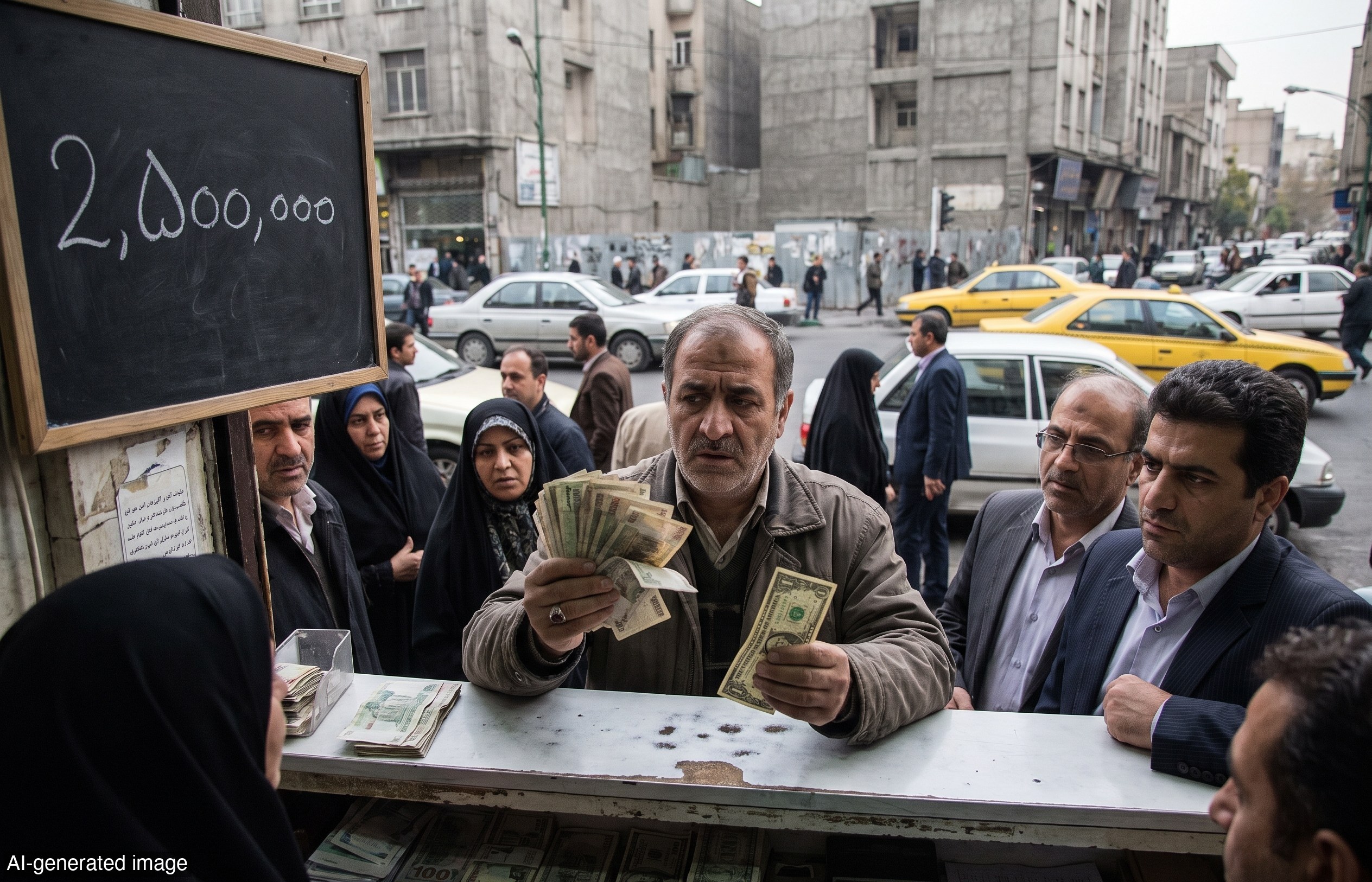
Iran’s currency fell to a new record low on Tuesday, with traders in Tehran exchanging more than 2.5 million rials to the U.S. dollar.
The latest drop came just 27 days after the rial hit its previous record low of 2.2 million to the dollar on Sept. 2. The currency has repeatedly set new lows since the war began in February.
The Iranian economy has been under pressure for years from international sanctions. Since the war started, a U.S. naval blockade on Iranian oil and new sanctions have sent it into freefall.
Iran’s top diplomat said indirect negotiations with the United States aimed at reopening the Strait of Hormuz have become 'more serious.' Foreign Minister Abbas Araghchi said the 'current focus is solely on the Strait of Hormuz' after meetings with Pakistani and Qatari mediators.
Araghchi said Qatari intermediaries were expected to engage with the U.S. side soon. 'They are set to raise the matter with the American side once more, after which the final U.S. response will be conveyed to us,' he said. 'If there is a response, the Qataris will convey it to us and a decision will be made in Tehran on that basis.'
Officials, including from the U.S., have confirmed to The Associated Press that mediators are working with Iran and the U.S. on a deal to end the fighting and open the strait. The mediation effort continues even after President Trump spurned an Iranian proposal to reopen the strait in seven days if the U.S. agreed to lift its blockade of Iranian ports, release frozen Iranian assets and waive sanctions on Iranian oil sales, among other conditions.
The Iranian Revolutionary Guard Corps also appealed to everyday Americans to pressure their government to end what it called the U.S. war against Iran. Gen. Hossein Mohebbi, the Guard spokesman, said the only way for the war to end is for Washington to admit defeat and leave the Mideast.
Mohebbi also accused the U.S. of using Iran’s nuclear program as a ruse to 'plunder Iran’s wealth' and turn the country 'back into a colony.' That accusation came as Trump and his top aides said Iran’s economy cannot sustain the conflict much longer.
Secretary of State Marco Rubio said on Fox News that Iran was heading toward an economic 'cataclysm.' He said sanctions and the naval blockade are intended to deny Tehran money from oil sales and keep it from funding attacks and weapons programs.
The numbers come first. A currency that loses this much value is not signaling resilience; it is signaling strain, scarcity and collapsing confidence. Capital rewards clear rules, and war plus sanctions are the opposite of that.
For Washington, the message is simpler still: power leaves a paper trail. When the U.S. blocks oil, freezes assets and chokes off market access, the costs do not stay theoretical. They show up in the exchange rate, the street price and the country's ability to keep operating.