France has rolled out a new aid package worth an estimated 450 million euros, or around $512 million, as surging energy prices hammer small businesses and households.
The government said the package includes subsidies for people who commute at least 15 kilometers to work and support ranging from 48 euros to 277 euros to help 5.8 million families with winter energy bills.
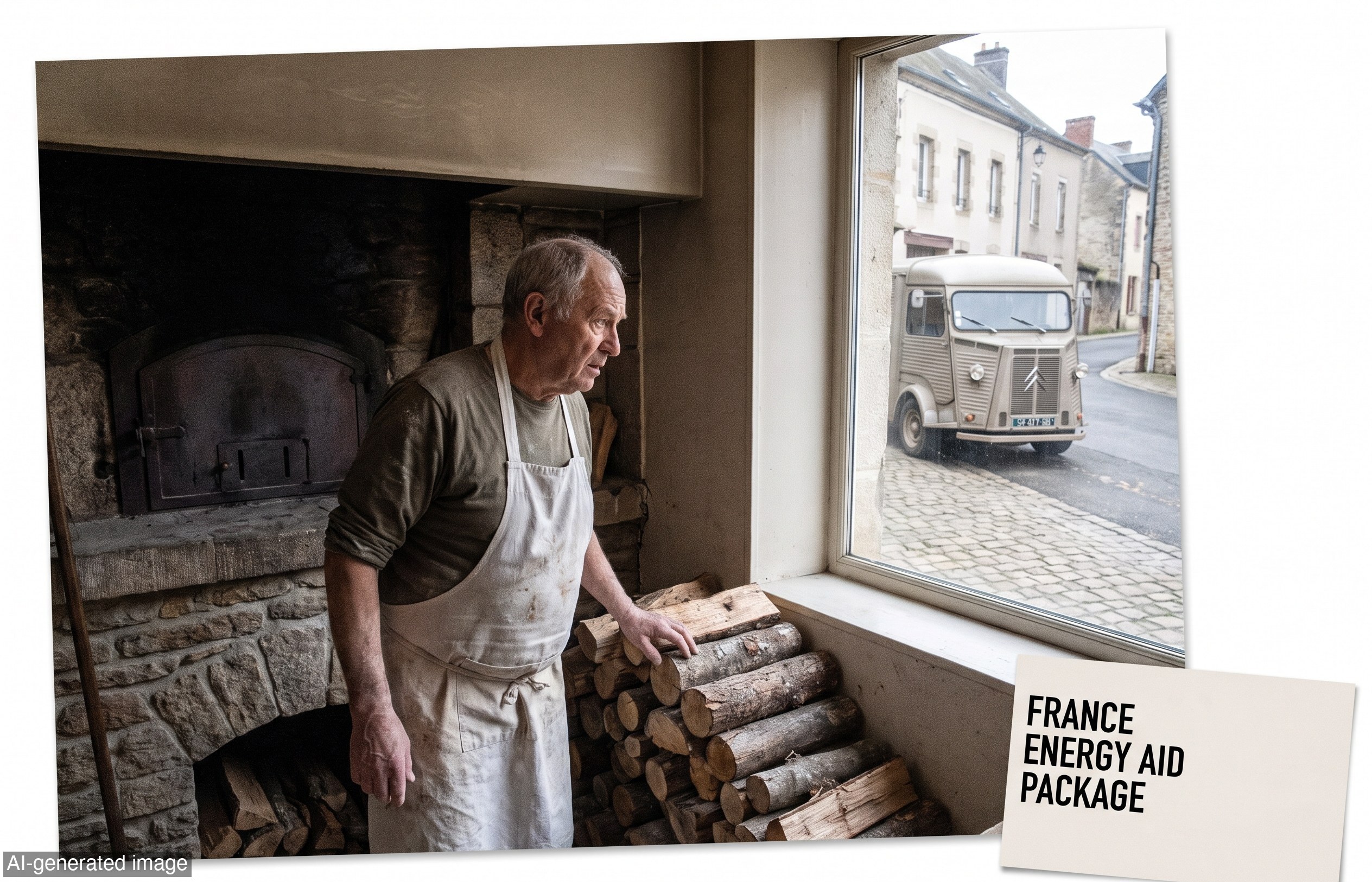
The pressure is already showing up in daily business costs. Kevin and Sandrine Luce, who run a bakery in Saint-Just-en-Chaussée, north of Paris, said they paid 2,230 euros for 2,000 liters of heating oil in March and almost the same amount last week for just 1,200 liters. Kevin Luce said the rise turned what had once been a cheaper option into a losing proposition.
'All this superfluous expenditure on energy represents a loss of earnings,' Luce said. 'It’s salary we can’t take, it’s salary increases we can’t give to our employees. It’s investments we can’t make.'
The strain extends well beyond one bakery. The report says there are more than 34,000 bakers across France, producing around 6 billion baguettes a year, and about one quarter use oil- or gas-fired ovens.
The pain is especially sharp in rural France, where roughly 21 million people live, about a third of the population. Public transportation is limited, so many depend on cars for everyday travel. Rural areas also make up nearly 90% of France’s territory.
The political backdrop is sensitive. Fuel prices were one of the triggers behind the yellow vest protest movement that shook Emmanuel Macron’s government during his first term, and that memory is clearly hanging over ministers now.
The new package lands as another reminder that energy policy is not an abstraction. When fuel prices spike, the taxpayer is asked to bridge the gap, businesses lose margin, and workers lose room to move, invest and hire. Capital rewards clear rules, but Europe keeps discovering how quickly bad energy math becomes a public bill.