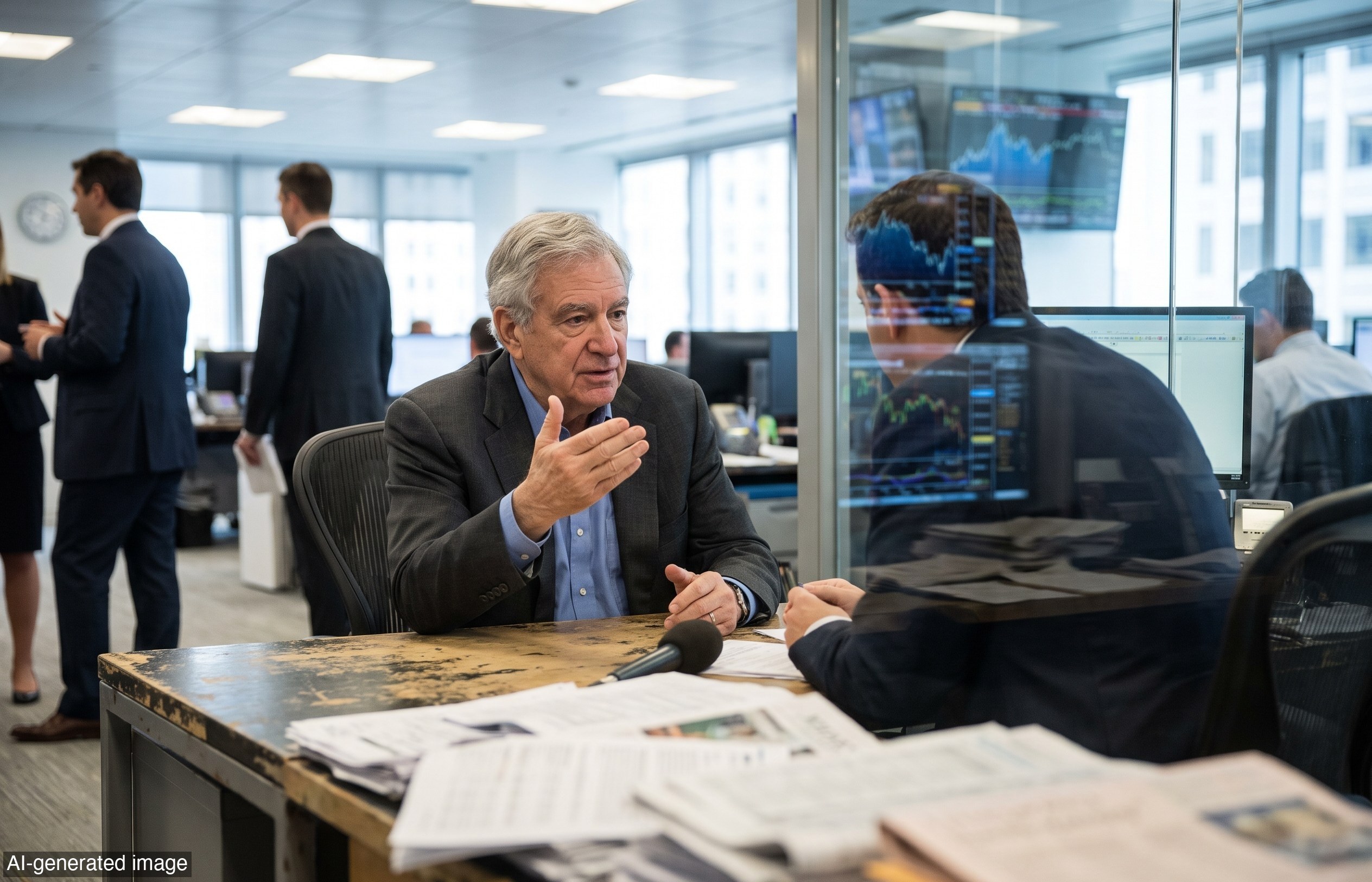
Robin Wigglesworth has spent years digging into the plumbing of global finance, first through index funds and now through the bond market. In a recent interview, the FT veteran described the bond market as the 'actual beating heart' of the financial system and said the subject can feel like 'understanding the hidden wiring of the world.'
His new book, 'A Fabulous Debt,' stretches back a thousand years to medieval Venice, where bonds were used to fund warfare for an encircled lagoon nation. Wigglesworth said the bond market has been involved in a 'stunning number of weird, obscure wars,' including conflicts financed through war bonds.
He also tied bond markets to major turning points in history. On Napoleon’s defeat, Wigglesworth said: 'It wasn’t Horatio Nelson or the Duke of Wellington.' In his telling, England was able to fight for so long because it could 'fund themselves to infinity and beyond' through a large consol market, while France could not because it was not creditworthy.
Wigglesworth pointed to Alexander Hamilton as another early observer of that reality. He said Hamilton wrote that England’s great power was its consol market, and that credit was what enabled Britain to 'feed, clothe and dispatch thousands of soldiers around the world.' Wigglesworth said that insight helped shape the modern United States.
The book also lands in a modern setting defined by America’s ' $40 trillion — and swelling — national debt.' Wigglesworth said the bond market is a different kind of subject from the index fund: 'The index fund is like the humble hero,' he said, 'the glue that holds it together.' The bond market, by contrast, is the machinery that finances states, wars and vast public borrowing.
That is why the subject matters far beyond Wall Street. Bonds are not a niche corner of finance; they are the price tag on government power. When credit is cheap and buyers keep showing up, Washington can keep borrowing. When confidence cracks, the taxpayer is the one who ultimately feels the pressure.
Capital rewards clear rules, and bond markets punish disorder fast. Wigglesworth’s history is a reminder that debt is never just an accounting line. It is leverage, sovereignty and political capacity, all priced every day by investors who do not care about rhetoric. The market has already voted.