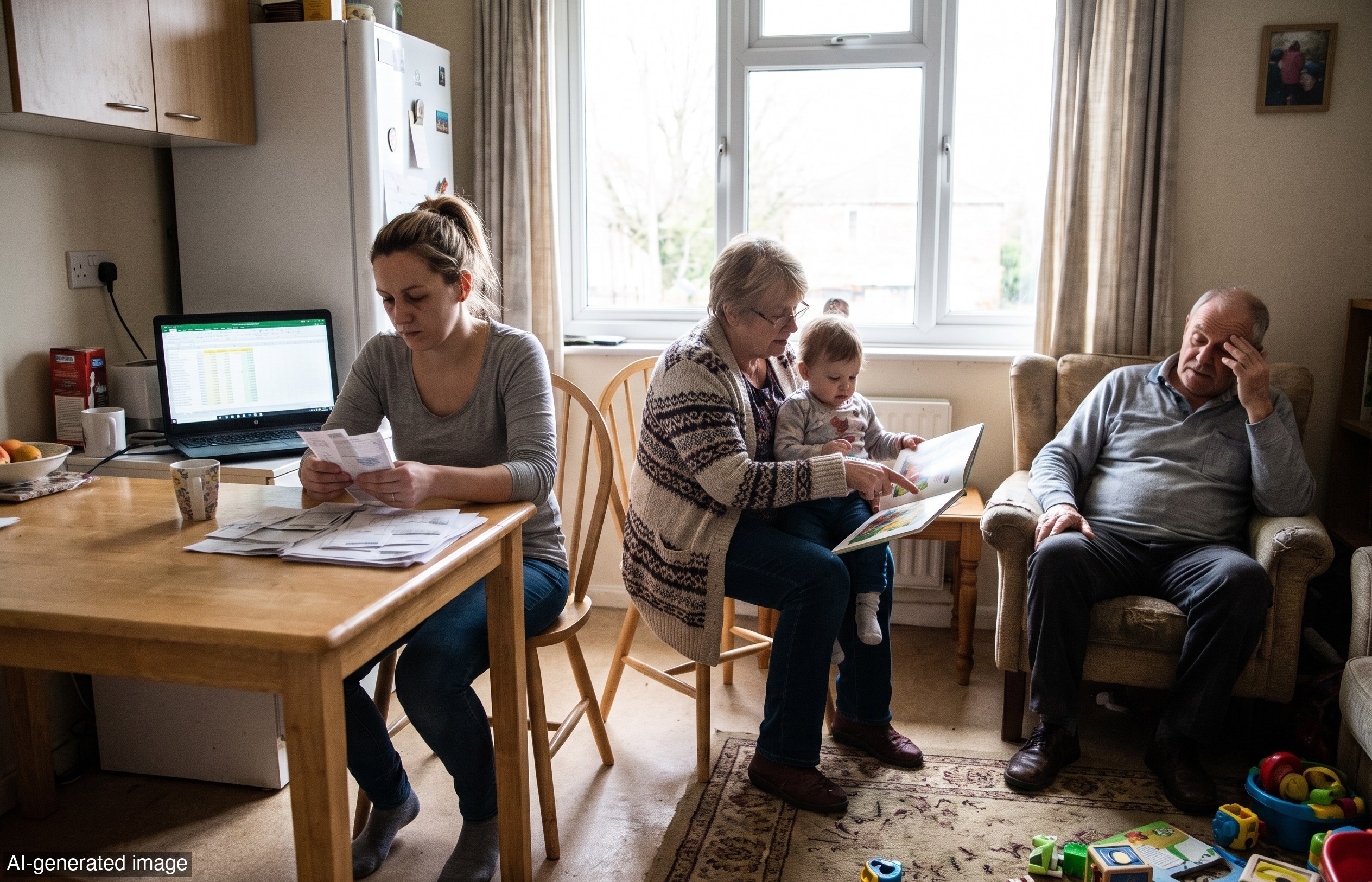
Nearly two in five parents with young children, or 37%, expect to receive some form of financial help from their own parents or grandparents over the next year, according to the BMO Real Financial Progress Index.
The finding lands in the middle of a broader affordability squeeze. BMO said 82% of American parents believe the cost of raising children has 'gotten out of control,' while 86% say everyday expenses such as daycare, after-school programs, summer camps and school supplies are making it harder to save for their children’s futures. More than three quarters said support from extended family is essential to afford opportunities for their children.
Robin Growley, BMO U.S. Head of Consumer Products, said raising kids has become 'a major feat of financial engineering' and added that 'the absolute best antidote to daily financial stress is a clear, actionable plan.'
The report also shows that family help is not limited to writing checks. Among parents expecting assistance, 43% depend on grandparents to provide childcare, and another 26% said family members would help fund their children’s futures through a 529 plan or another savings account.
The pressure is visible in the cost of care. According to Care.com’s 2026 Cost of Care report, parents are spending about 20% of their annual income on childcare on average, with about one in five spending over $30,000 a year. The U.S. Department of Health and Human Services has identified 7% of family income as a benchmark for affordable childcare.
The strain is spilling into mental health as well. Care.com found that about 80% of parents spend almost every waking hour focused on someone other than themselves, and that has led to a 5% increase in parents who have considered suicide or self-harm.
Brad Wilson, CEO of Care.com, said parents are being 'pushed well beyond their limits by the demands of caregiving' and warned that care pressures could force more parents to cut back or step away from their careers.
Housing is another hurdle. BMO found that 60% of Gen Z homeowners and 57% of Millennial homeowners said they could not have purchased a home without financial support from their families. Nearly six in 10 Gen Z adults also expected to receive or ask for financial help from parents or grandparents.
The report points to a large transfer of wealth from older Americans over time. Cerulli Associates estimates that $124 trillion in wealth will transfer through 2048, with nearly $100 trillion coming from baby boomers and older generations. Federal Reserve data show the top 1% of households by wealth held roughly 30% of total assets in Q2 2026, compared with about 5% held by the bottom half of households.
There is a sharp policy lesson here. When childcare costs absorb a fifth of annual income and housing remains out of reach without family money, the market is telling Washington what families already know: the private economy cannot carry every burden if regulation and inflation keep squeezing margins. Capital rewards clear rules, but households need basic affordability first.
That is why the so-called Great Wealth Transfer matters less as a windfall than as a warning. In a healthy economy, parents should not need to lean on grandparents to pay for daycare, groceries and a roof over their heads. The taxpayer is not the only one stuck with the bill; families are paying it every month.