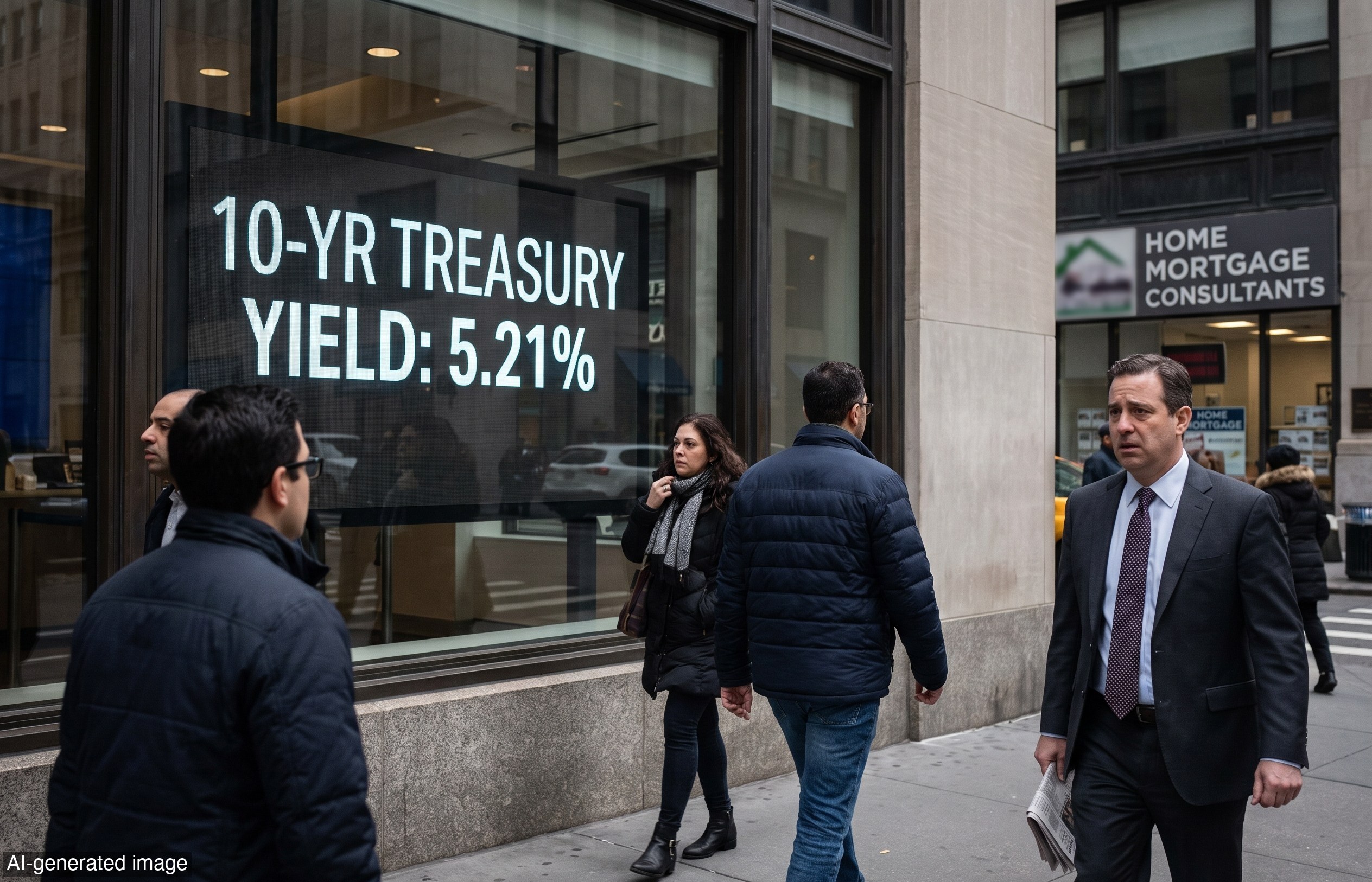
The numbers come first. The 10-year Treasury yield hit 5.21% on Friday, its highest level since 2007, and the average 30-year mortgage rate rose to 7.45% alongside it. Car loans, credit cards, and business loans tend to follow the same direction when the government's borrowing rate moves higher.
The move came after the Federal Reserve raised rates last week, its first hike since 2023, to cool the economy. Markets are pricing roughly 70% odds of another hike in October. Bonds kept selling off, and Wednesday’s auction of five-year Treasuries drew the weakest demand since 2018.
Whether that is a warning sign or a sign of strength depends on why yields are rising. One explanation is that investors expect the economy to keep running hot, with strong profits and investment. Another is that investors want more pay to hold U.S. debt because the risk premium is rising.
The optimistic case leans on real growth. Goldman Sachs said the largest hyperscalers are on track to spend nearly $800 billion on capital expenditures this year and more than $1.1 trillion in 2027. Matthew Klein, an economics commentator and author of The Overshoot newsletter, said the Fed is starting to hike for the right reason because the economy has been running hot for years. Analysts at Jefferies said the market is 'underestimating U.S. equities' ability to absorb longer-term rates,' pointing to strong, broad earnings growth.
The darker case centers on Washington and the bond market. Thierry Wizman of Macquarie Group wrote that Washington is making no effort to rein in the deficit, and that the war with Iran, now approaching its eighth month, is making it bigger. Every dollar of that deficit means more Treasuries for investors to absorb, testing demand in the bond market.
Wizman also noted that AI spending now exceeds the hyperscalers' available source of cash, so they are issuing bonds that compete with Treasuries for investors. In an economy where Americans do not save that much, that makes the hunt for capital more expensive.
For taxpayers and borrowers, the message is blunt. Higher Treasury yields raise the price of money across the economy, from mortgages to business credit. If the rise reflects strong growth, markets can live with it. If it reflects bigger deficits and weaker demand for government debt, the bill lands on the entire economy.