Managers at large U.S. companies are leaning harder into artificial intelligence, but the mood is changing. In a new survey from Wharton Human-AI Research and GBK Collective, 62% of managers and above said they use AI daily, up from 46% last year.
At the same time, excitement is fading. The share of managers describing themselves as excited fell eight percentage points to 51%. A quarter said they were skeptical, and 44% said they were cautious. Prasanna 'Sonny' Tambe, a professor of operations, information and decisions and co-director of Wharton Human-AI Research, told Fortune that 'the amazement is kind of wearing off a little bit.'
Tambe said the shift reflects a tougher reality inside organizations. 'This technology is moving so fast and our organization is not ready to keep up,' he said. Jeremy Korst, a Wharton lecturer, GBK partner and founder of AI consultancy Mindspan Labs, compared it to moving from an 'Oh, wow' stage to making the technology actually work inside a company.
The numbers come first. Eighty percent of managers and above reported positive financial returns from AI, although only 28% called those returns strongly positive. The survey also found that 72% of managers and above said their focus had shifted from creating outputs to managing AI-generated outputs.
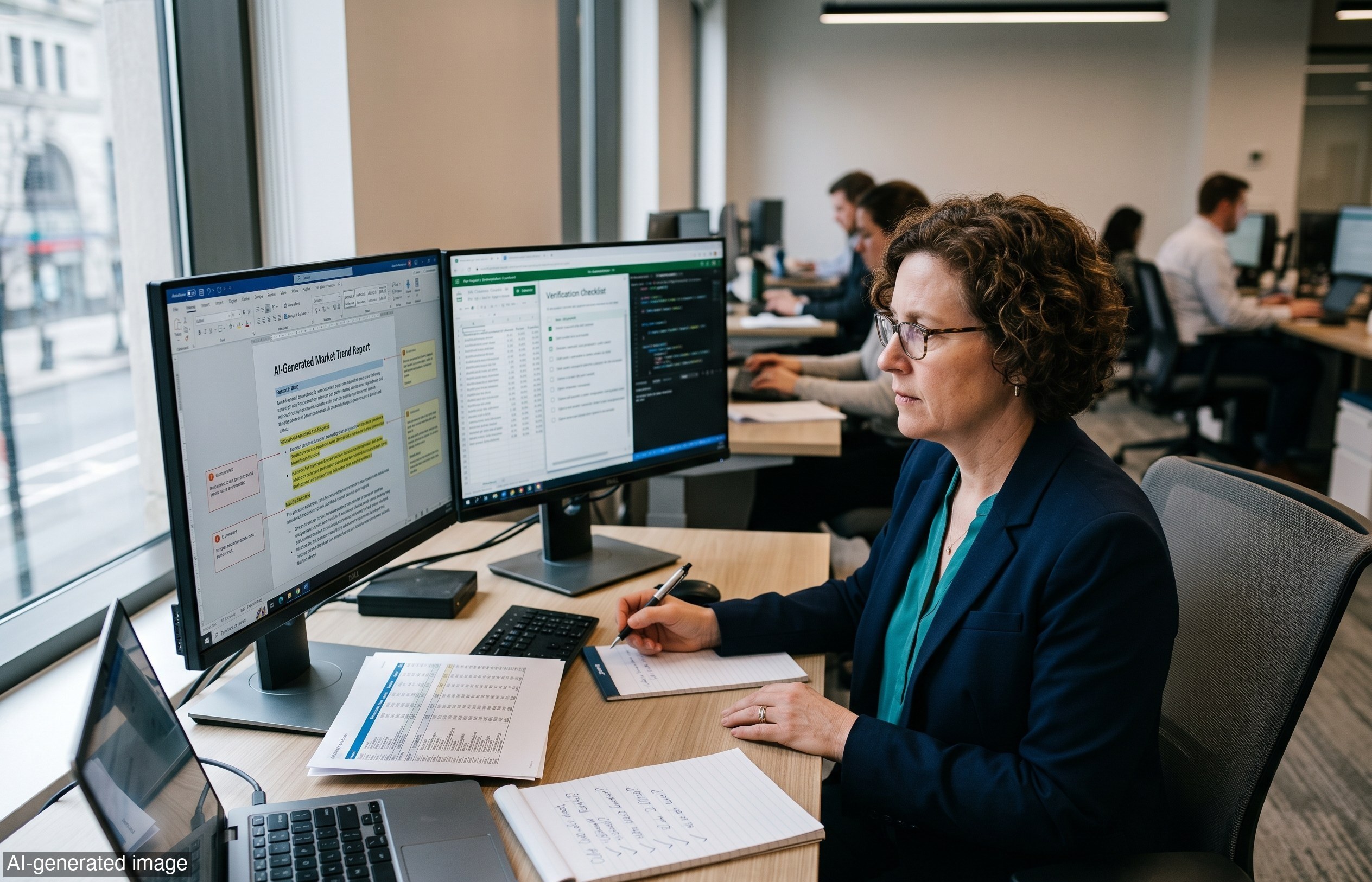
That is where the friction now lives. Verification has become central, because an agent's ability to carry out a task is not the same as an organization's ability to determine whether it carried out that task correctly. Tambe said companies may be 'overindexing a little bit on what agents can do' instead of what they can verify.
The question of accountability remains unsettled. When asked who should be most responsible if an autonomous AI makes a consequential error, 28% of managers and above named a governance or risk team, 26% named the deploying employee's manager, and 25% named the employee. Among managers and directors, one in five said nobody was clearly accountable or they did not know.
The broader pattern is clear: AI may still be producing gains, but the administrative state of the workplace is now catching up with the technology. Capital rewards clear rules, and companies that cannot verify outcomes will spend more time managing risk than harvesting productivity. The market has already voted for AI; the next vote is for accountability.



