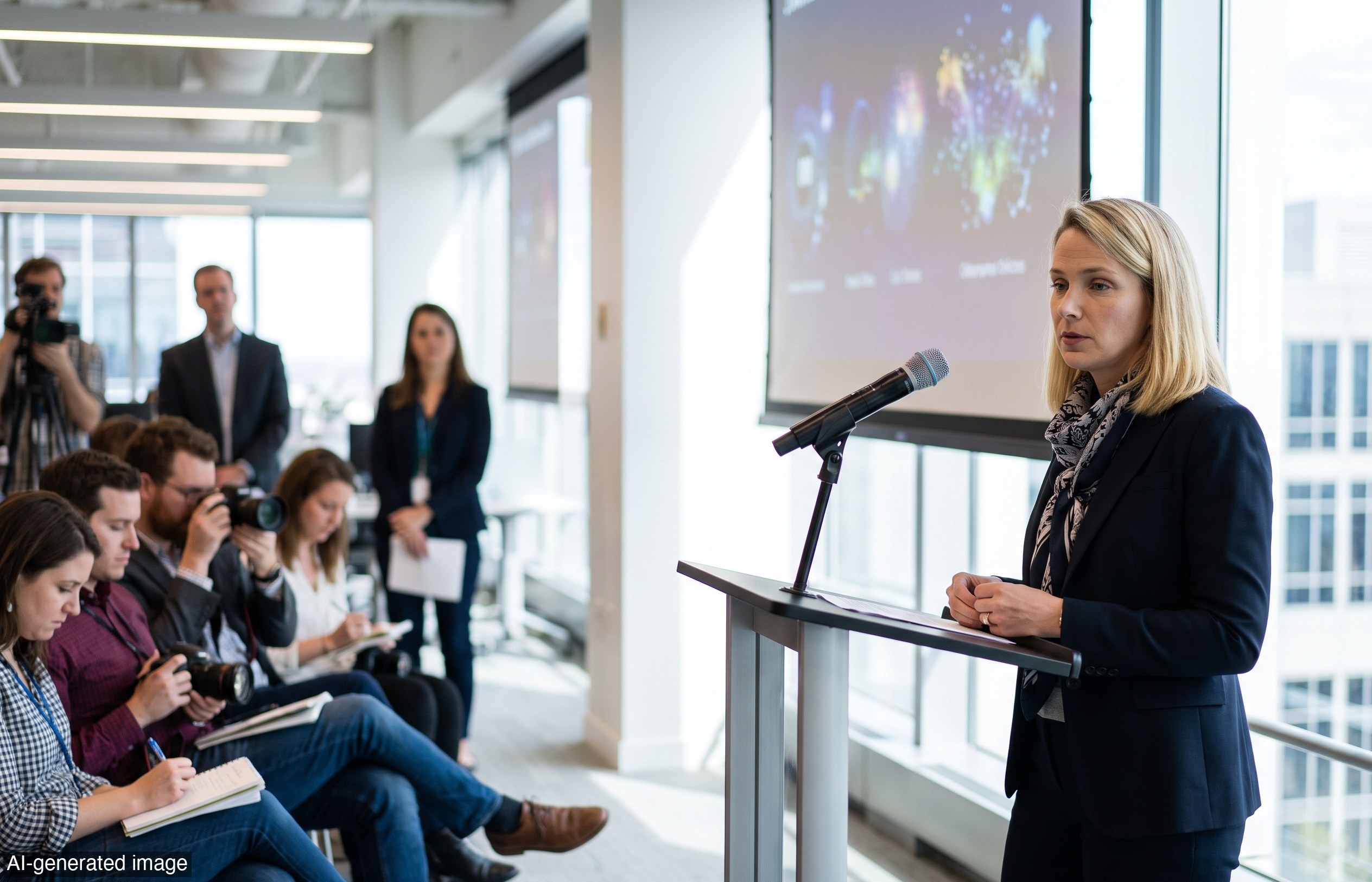
ADP CEO Maria Black says trust is becoming a hard business variable, not a soft one. Speaking with Fortune executive editorial director Diane Brady at Fortune's Most Powerful Women Summit in California, Black said employees who trust their CEO and senior leadership are 41% more likely to be engaged at work.
Black also said employees who trust the people around them at work are 60% more likely to be dialed in. In her words, 'Trust is a direct corollary to engagement.' She added: 'So if we want to drive engagement, productivity, and a vibrant world of work that, candidly, I want to be in and I want my children to grow up working, we have to focus there.'
ADP's research arm has found that for every 1% drop in full engagement, the likelihood of voluntary attrition increases by 45%. Black said only 30% of employees are overly engaged at work. She said the current moment is 'jam-packed with reasons not to trust,' pointing to echo chambers, firehoses of information, and the challenge of sorting out what is real and what is AI-generated.
For Black, that puts more of the burden on management and senior leadership. She said driving focus and engagement depends on whether people trust the leaders all the way up to the top. Black said she gets boots on the ground and holds listening posts, including a recent trip to Las Vegas where she spoke with 1,000 company leaders and a Florida trip to chat with employees over the 'universal love language of ice cream.'
Black also tied trust to the next wave of workplace change. ADP oversees payroll and human capital for more than 1 million clients across 140 countries, and she said the new AI era will only play out with human agency in how people choose to use AI tools. She said workers generally do not feel their employer has prepared them properly for the shift.
Black joined ADP in 1996 as a sales associate and became president and CEO in 2023. She said AI can help people expand their expertise, and in turn increase income as they take on new tasks and responsibilities. But, she warned, 'we have to shepherd them there.'
The numbers come first. The market has already voted on one truth that managers like to ignore: capital and productivity rise when trust and clear rules replace bureaucracy and confusion. Employers can talk about culture all day, but engagement is ultimately a performance issue, and performance has consequences for margins, turnover, and growth.
That is why this matters beyond one executive summit. If leaders want more output, they need more credibility. If companies want workers to adopt new tools, they need to earn trust before they demand compliance. In a market that rewards execution, the administrative state is not the only system that gets measured. So do the people running the company.